
Ipoh is one of Malaysia’s most underrated destinations. Often overlooked by travelers sticking to the western coastline, it’s a city with inherent charm.
From unique colonial buildings that line the streets of Old Town to brilliant alleyway street art to incredible cave temples on the city’s outskirts, it has it all. There’s a bit of everything for the modern-day explorer.
I’ve been here on multiple occasions now, and each time I seem to discover a little bit more of what the city has to offer. On my first go-around, the delightful food scene and the unexpected treasure trove of thrift stores captured my attention. Since then, it’s been mostly about absorbing the historical sights and venturing off into the nearby countryside.
Its proximity to the Cameron Highlands and Penang also makes it a perfect stopping-off point for those looking to break up their travels.
In this Ipoh guide, I share some of my favorite experiences, including the top places to visit, day-trip options, plus where to stay in town and how to get around.
Here are the best things to do in Ipoh, Malaysia.
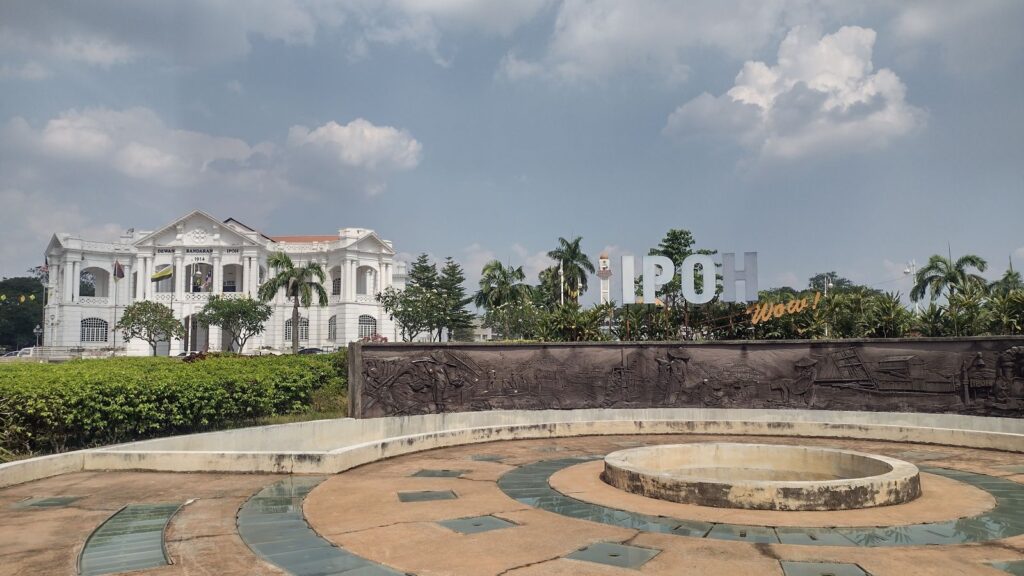
VISIT SAM POH TONG CAVE TEMPLE
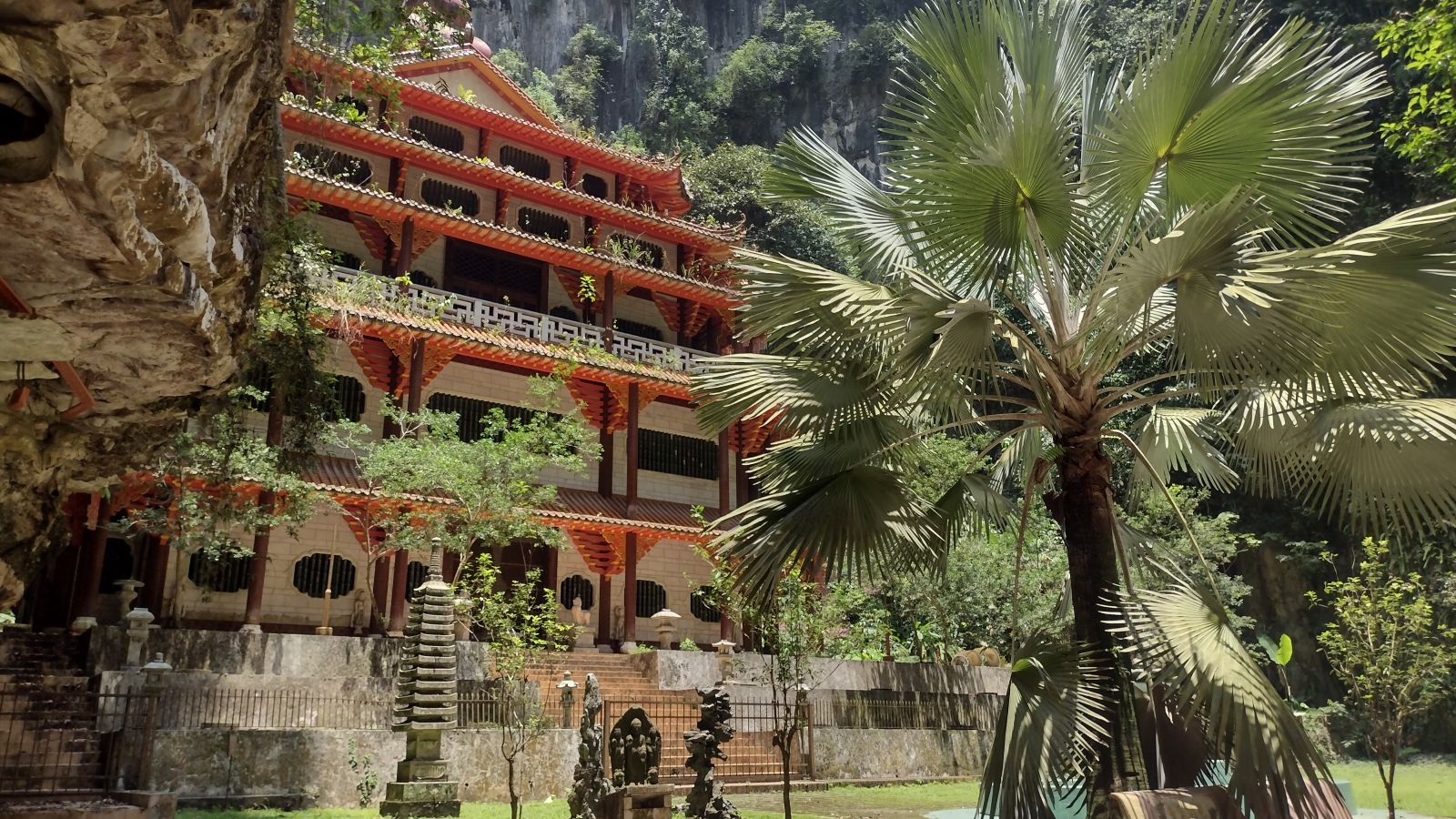
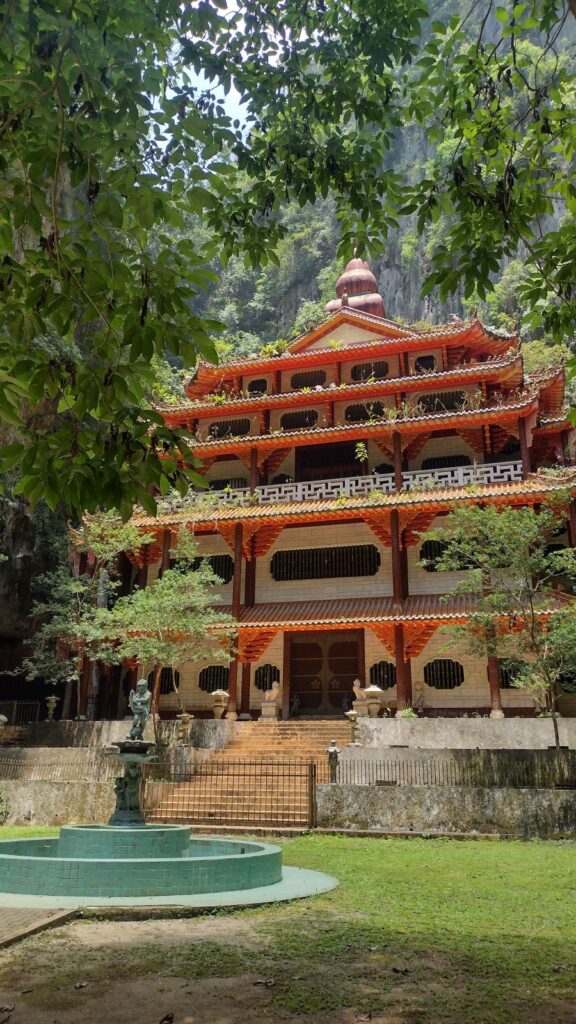
If you asked me to recommend only one temple to visit in Ipoh, I’d say Sam Poh Tong Cave Temple. Set among limestone cliffs and lush greenery, the Chinese Buddhist temple has a certain mystique to it.
That probably stems from the monk who founded it as a place of prayer. He came across the cave in 1890 and decided to make it his home, and from then on, it was used for meditation. Eventually, in the 1950s, a temple was constructed.
That’s the current structure you see today.
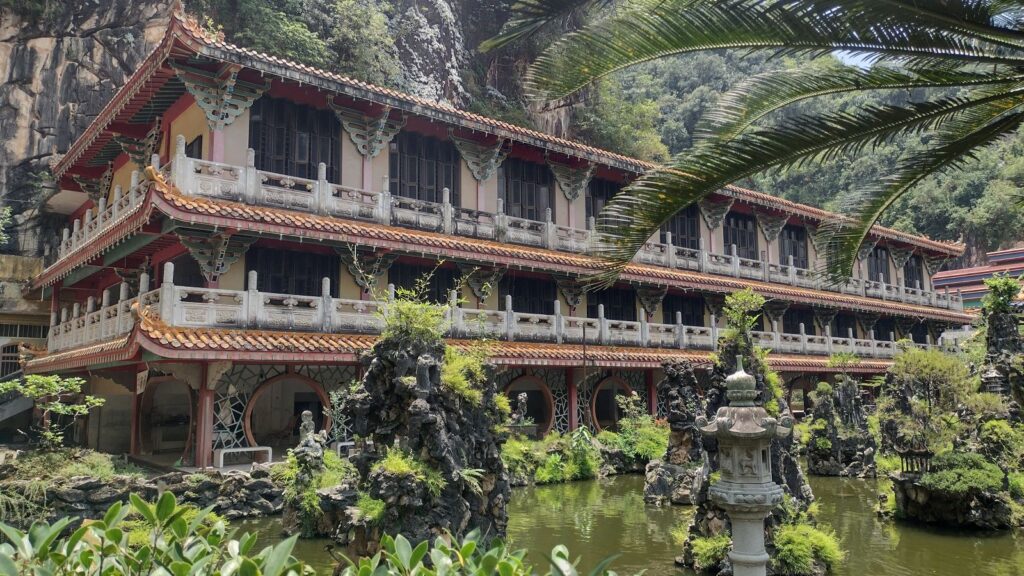
The outside garden here is a wonderful place to relax. It has neatly trimmed trees, a small walking bridge, and a magnificent lotus pond with a small gazebo. Inside the pond are thousands of colorful carp that wade in the water.
As you head into the cave, you’ll find several rock paintings with illustrations and images from Buddhism, Hinduism, and Taoism. This blend of cultures is quite unique and highlights the coexistence of the different communities in Malaysia. The cave also has a handful of hallways and rooms to explore.
When you get to the back side, you’ll eventually reach an opening with a red and white pagoda that is, in a word, breathtaking.
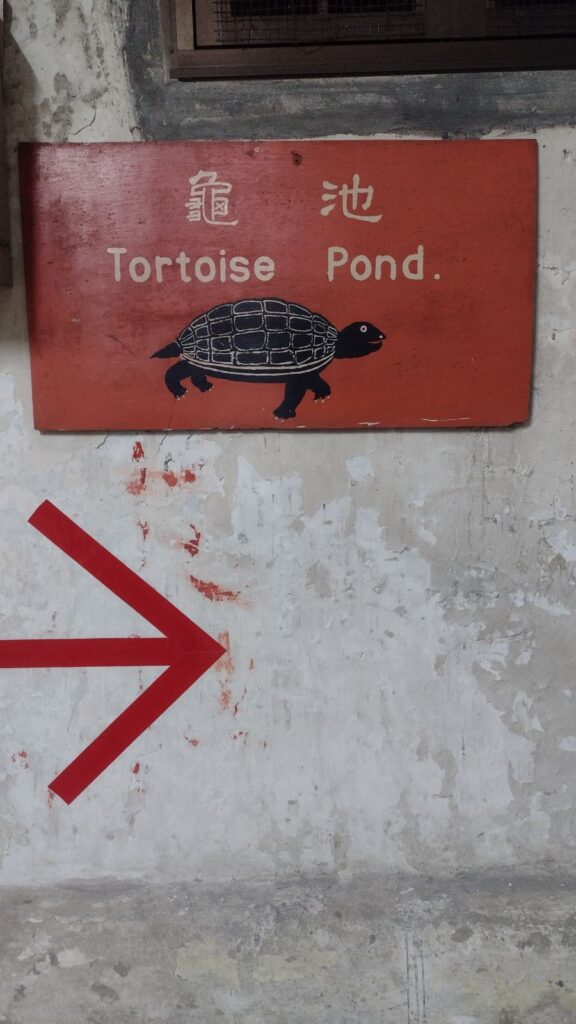
Next to it is a small tortoise pond with hundreds of the reptiles.
Nearby | When you’re here, make sure to walk to the end of the block and see the Poh Wah Bonsai Art Garden.
Opening Times | 8 am to 2 pm
EXPLORE MORE OF IPOH’S CAVE TEMPLE
Sam Poh Tong Temple is far from being Ipoh’s only cave temple. There are many more, some of which are right next door, plus a few others in the surroundings of Ipoh and the Perak countryside.
I was surprised how different each felt, especially since they all sit in similar caverns within limestone hillsides.
Here are some other temples worth exploring in the area:
Perak Cave Temple | A scenic Buddhist temple with wonderful views from the hillside walkways that take you to the top of the limestone cliff. There’s a serene cave room, over 40 Buddha statues, and beautiful lotus ponds throughout the property. The cave sits at the foot of the 120-meter-high hill and was built in 1926 by Chinese monks.
It’s the only cave temple I’ll mention that isn’t close to Sam Poh Tong Temple. It is, however, near the Gunung Lang Recreational Park, if you want to combine the two in a single trip.
Opening Times | 8 am to 4:30 pm
Perak Guanyin Cave Temple | A picturesque temple that sits just below a limestone mountain. There are rows of golden Guanyin (the “Goddess of Mercy”) statues along the property. A small waterway acts almost as if it were a moat and creates a peaceful environment. It’s not far from Mirror Lake.
Opening Times | 9 am to 5:30 pm
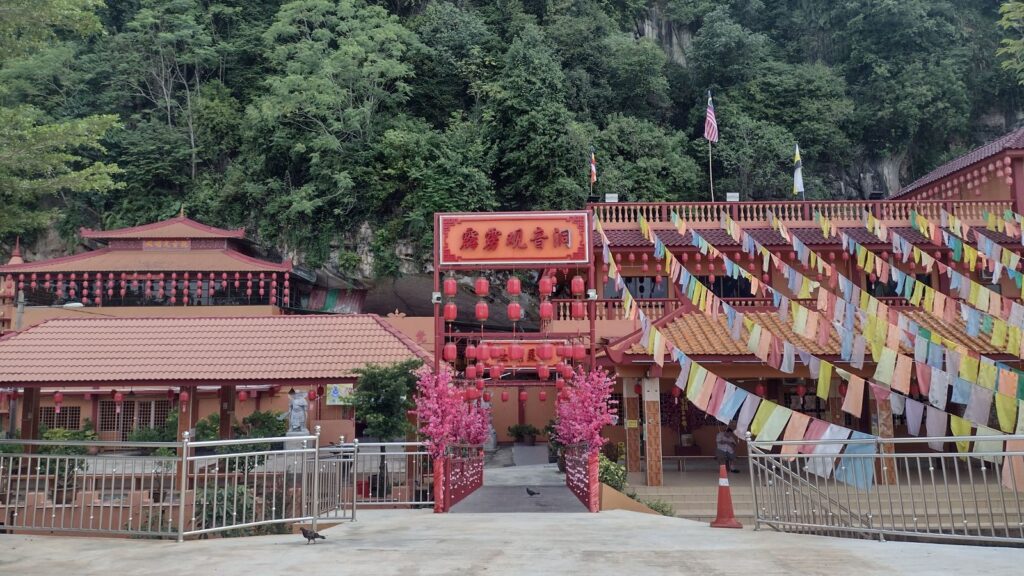
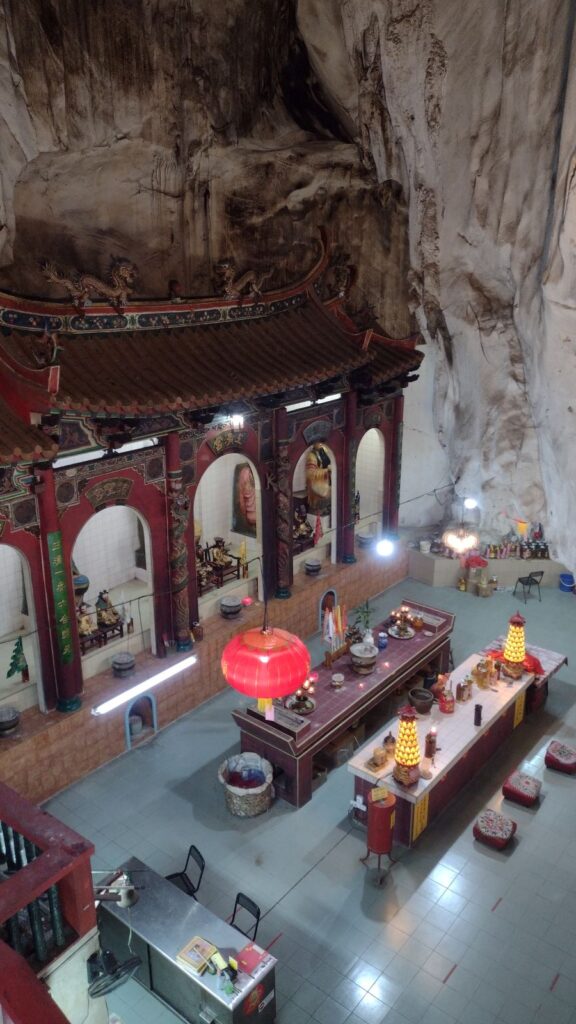
Nam Thean Tong Temple | The Taoist cave temple is only a couple of meters away from Sam Poh Tong and is adorned with colorful ornaments and statues. Its interior is large and open, with multiple cavern rooms and stairways to get a nice bird’s-eye view of the many prayer areas.
Opening Times | 8 am to 4:45 pm
Kek Lok Tong Cave Temple | Simply stunning. This one has a wide cave opening, spectacularly large stalagmites and stalactites, and the occasional pesky wild monkey. They do boat rides on the lazy river that hugs the limestone cliffs. It’s prone to damage from flooding, so it’s best to check if the cave is open when you visit.
Opening Times | 8 am to 5 pm, entry closes at 4:30 pm
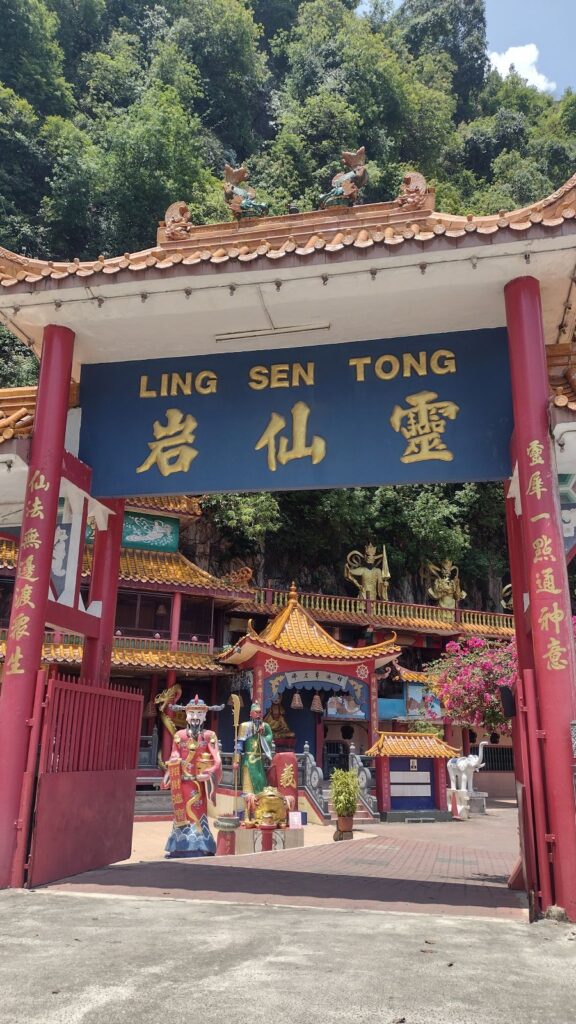
Ling Sen Tong Temple | Another Taoist cave temple near Nam Thean Tong Temple and Sam Poh Tong Temple. It has a lot of modern sculptures and characters from Chinese myth throughout the grounds. It’s well-kept and has different cave rooms to enter that are built into the hill.
Opening Times | 9 am to 4 pm
SEE THE MIRROR LAKE
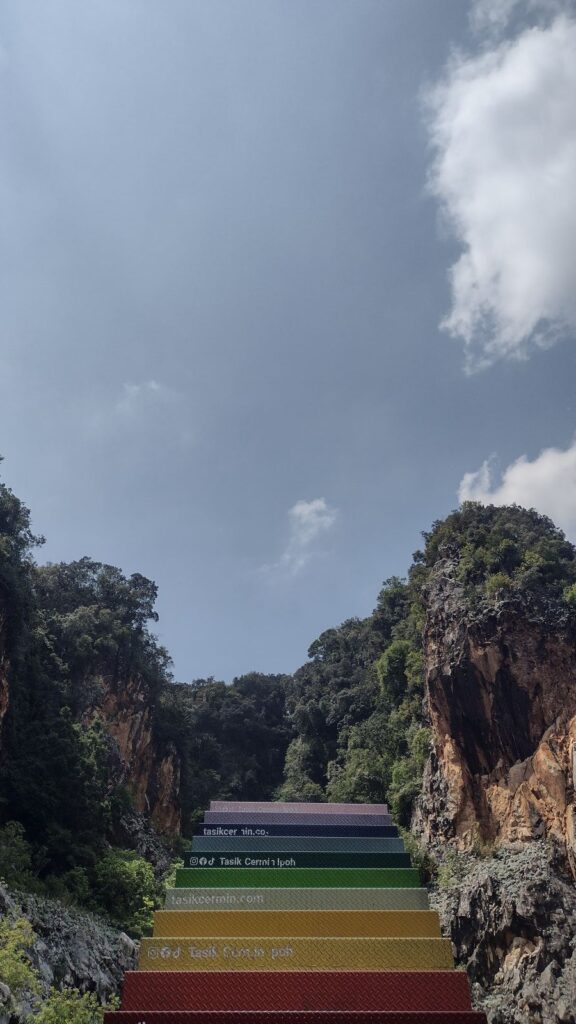
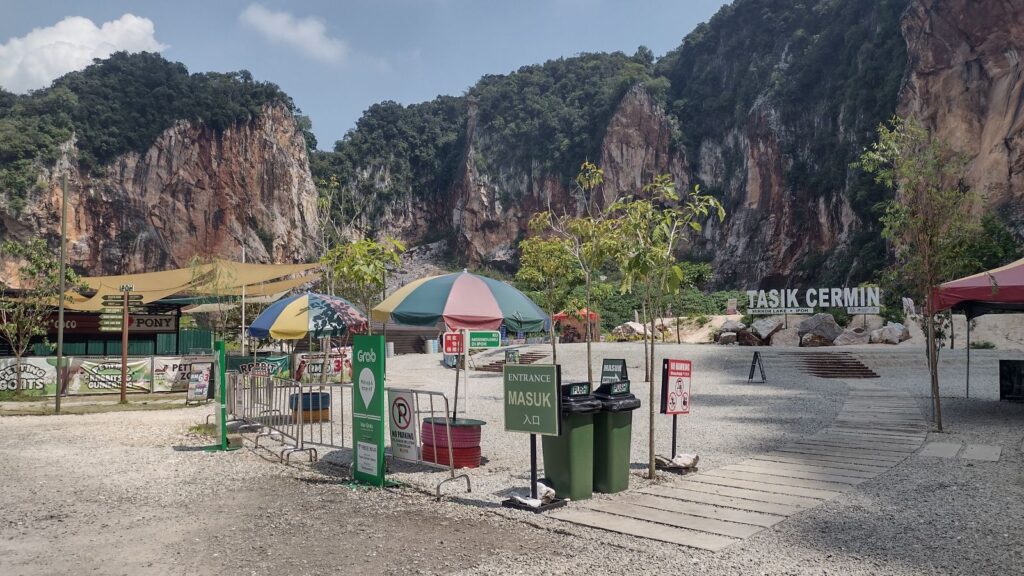
Near where most of the city’s cave temples are, a pair of beautiful mirror lakes appear in a small valley between the limestone cliffs. These two lakes are called Tasik Cermin 1 and Tasik Cermin 2.
These are lovely, reflective lakes that have been designated a geopark.
Popular things to do here include boat tours on the lake, visiting historical attractions like the Miner’s Tunnel, and rock climbing. Most of these are paid, although there are a few free activities just outside the main site.
This includes the Kin Loong Valley and its picturesque Green Stone Cave, the small Snake Mouth Cave, a couple of cafes, and some nice photo spots. I suggest stopping in the Kin Loong Valley at Chang Jiang White Coffee to escape the heat and have a meal.
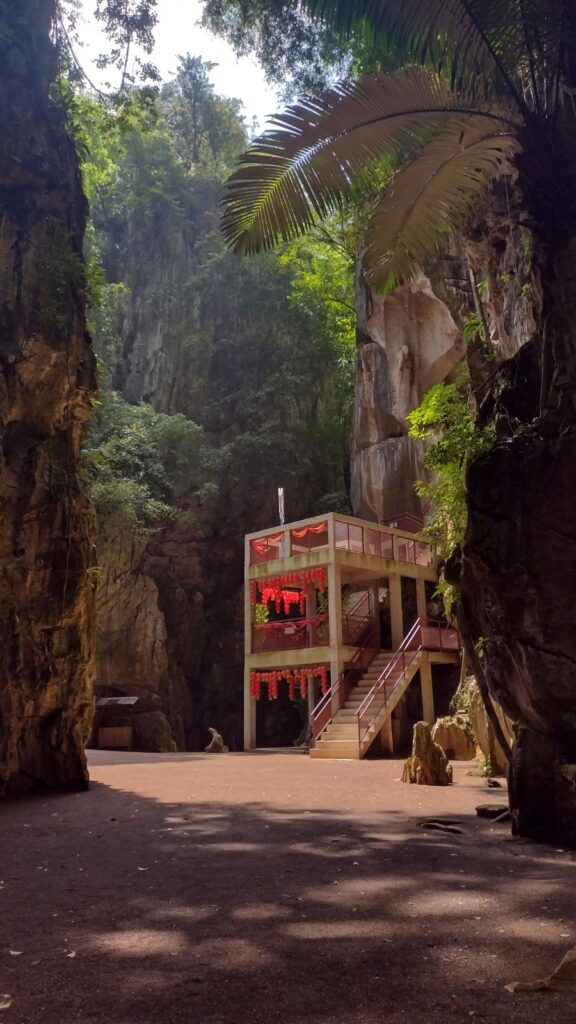
For those traveling with kids, this is a great spot, as there are a ton of family-friendly activities to do.
Getting There | The A34 bus from Medan Kidd Terminal will get you close to the car park. You’ll need to get off at Tokutomi Industries and walk about 15 minutes through the valley. Grab is also prevalent and will arrive just outside the lake entrance at a designated Grab area. Alternatively, a couple of Ipoh tours stop by the Mirror Lakes along with other popular sights.
Mirror Lake Entrance | 7 RM for Malaysians and 12 RM for foreigners
Boat Tour Prices | 25 RM for Malaysians and 30 RM for foreigners
More | For more information, including opening hours and attractions, have a look at the Tasik Cermin website.
STROLL DOWN CONCUBINE LANE
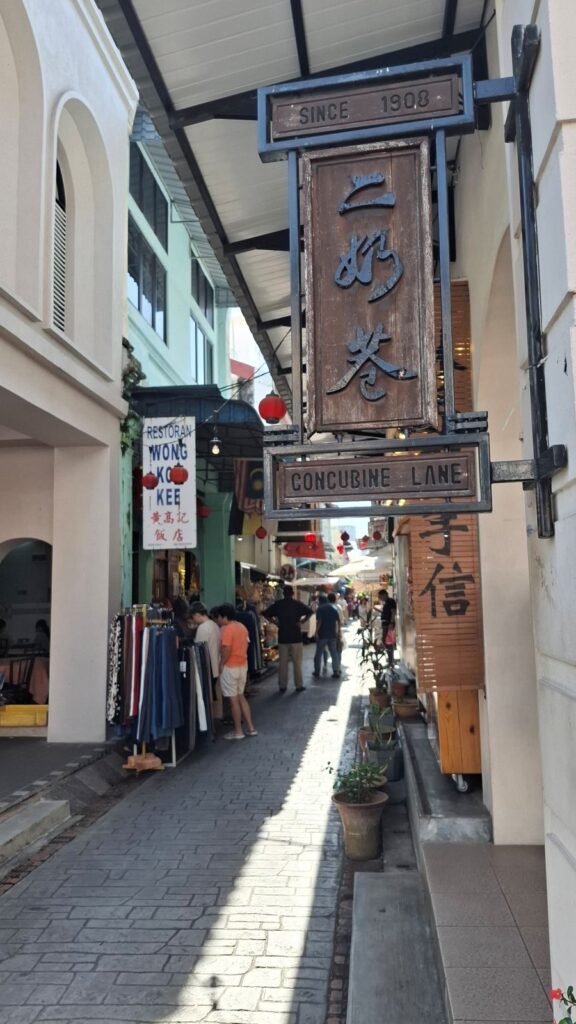
Panglima Lane, better known as Concubine Lane, is the definition of short but sweet. It’s only a few hundred feet long, but if you were in a hurry, you could walk the length of it in a couple of minutes.
Despite this, it attracts countless visitors and may be the most iconic street in Ipoh.
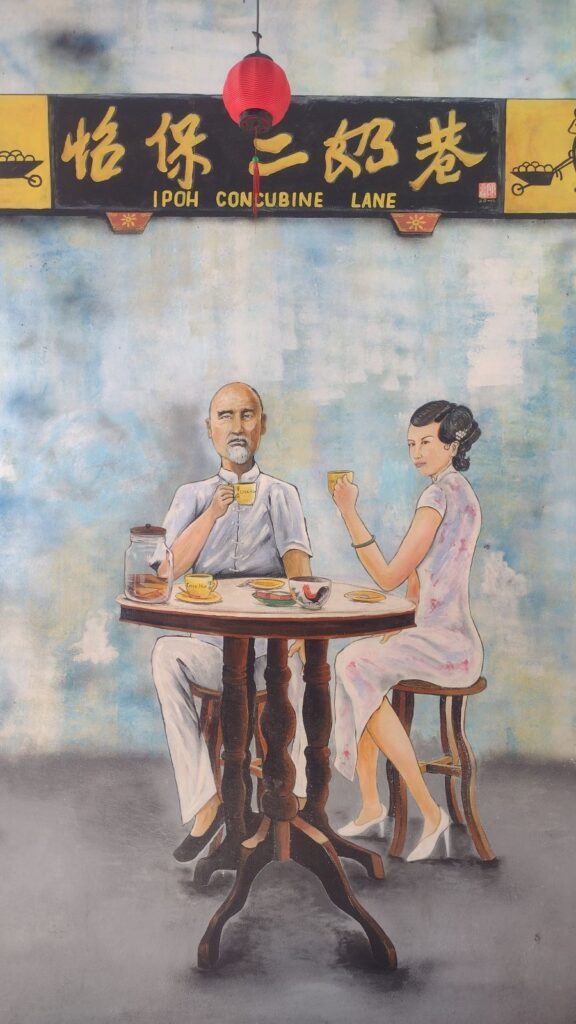
In the past, it gained notoriety for housing the mistresses of wealthy mining tycoons. This is how it received its infamous name. But nowadays you’ll only find charming street art, quirky cafes, and trendy souvenir shops.
If you’re a fan of Harry Potter, you might want to stop by the Hogwarts-inspired Platform Cafe. And if not, wandering through the boutique shops or staving off the heat with an ice cream will keep you busy.
There are also some interesting things at each end of the narrow lane.
Han Chin Pet Soo, a Hakka tin mining museum, sits at the eastern end near the Kinta River.
It’s a fantastic place that details the region’s mining history and shares some other fun tidbits about the Hakka Miner’s Club, amongst other things. You’ll need to book a tour in advance to enter, which you can do online here.
Entry is free; however, you’ll be asked for a donation to help upkeep the historic building.
To the west of Concubine Lane is the Kong Heng Square, which has turned a heritage area into a retro-feeling artisan market with all kinds of neat stalls and eateries inside.
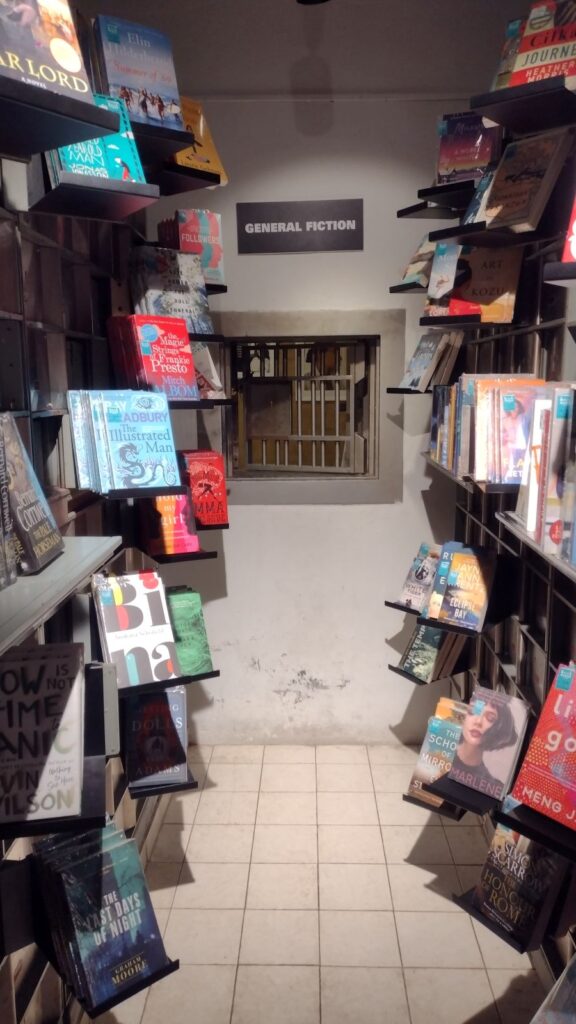
You’ll also find BookXcess Kong Heng Ipoh here. This was one of my favorite bookstores, and belongs to a budget-friendly Malaysian bookstore chain that has some really funky and creative shops.
Ipoh’s location is inside an old bank and has cleverly used the old safe deposit boxes and bank vault in its design.
There’s also the Yasmin Ahmad Museum housed in the basement. It was a wonderful exhibit, and a lovely way to learn about one of Malaysia’s most famous filmmakers.

CHECK OUT IPOH’S STREET ART
Penang might get more hyped up for it, but Ipoh’s street art scene is absolutely fantastic.
I’ve visited the city a few times now over the past 10 years, and murals keep popping up left and right. It’s a wonderful sight to see, and it adds a ton of character to a place that already has such unique historical architecture.
You could probably just wander around and catch glimpses of many of the art pieces here, but I’ve grouped some of the more well-known murals together, so you can attempt a self-guided tour if you’re up for it.
Here are the places and individual pieces that might interest you:
Mural Art’s Lane
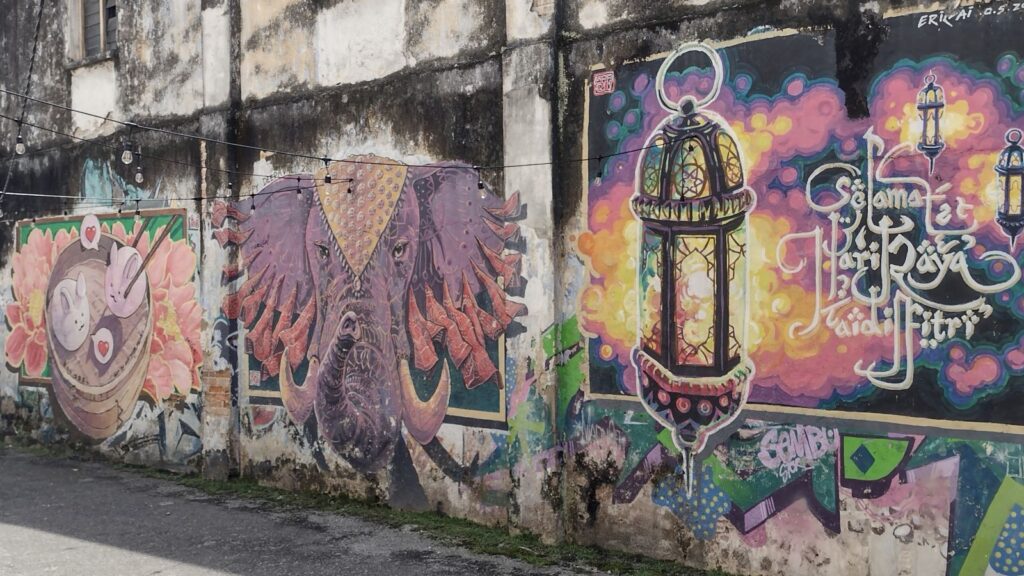
This is a whole street (plus some side streets) of murals and art. It’s located on the eastern side of the Kinta River across the Jalan Sultan Iskandar bridge, in a little neighborhood.
Most pieces are done by artist Eric Lai and the Perak Kuchai Cultural & Arts Association. There is a range of really cool murals here, some of which share the history of Ipoh and others that are straight-up funky renditions.
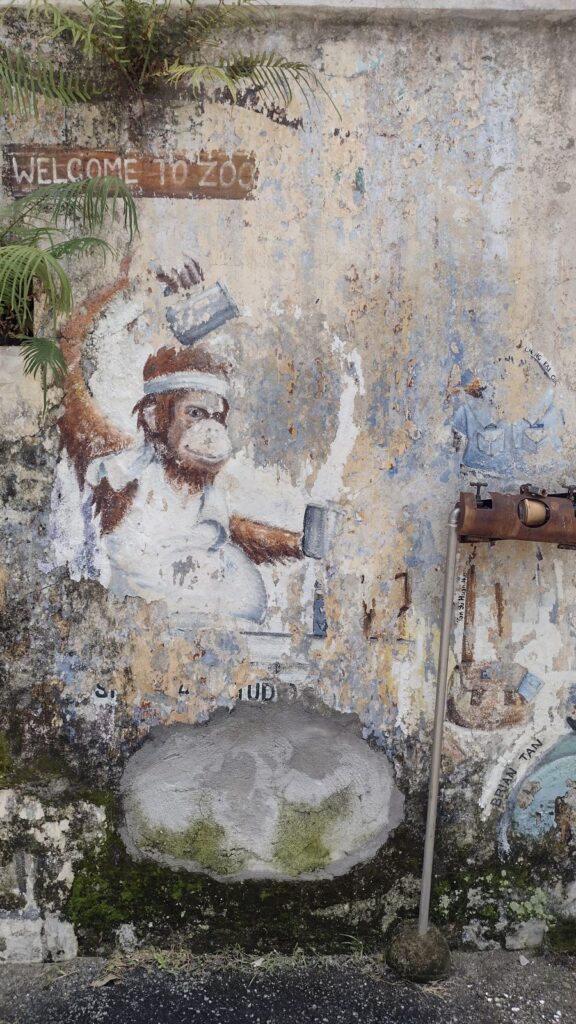
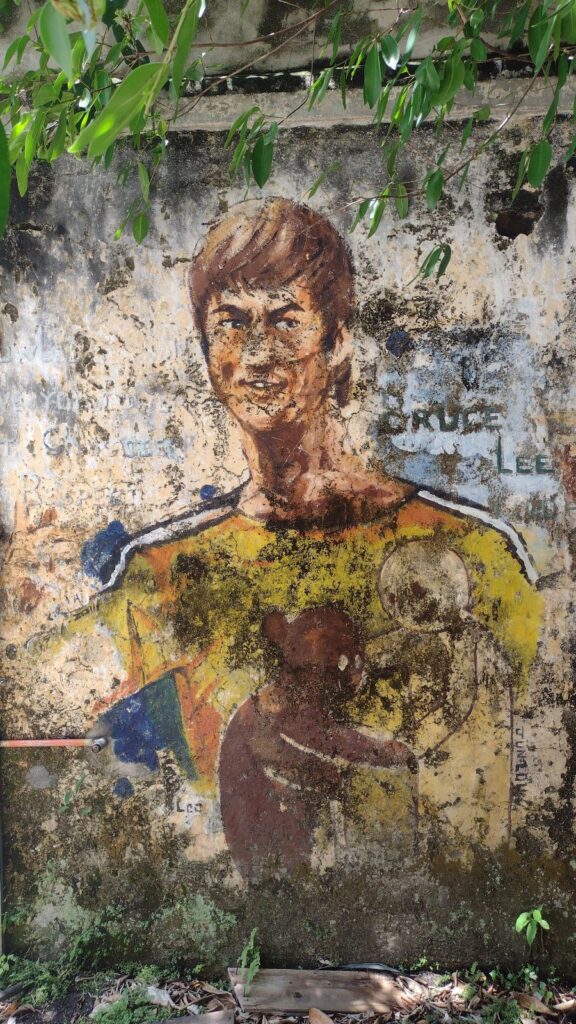
It seems like a new large work is created every year, along with random ones at various times. A few famous pieces, like the ‘Welcome To Zoo’ one with an orangutan doubling as a sort of barista and the Bruce Lee painting, have been up for close to 10 years.
Those, along with some new ones like the bao bun bunnies, Full Love, and the Ipoh Circus pieces, make it a must-visit site for art lovers.
Art of Old Town
In the heart of the Old Town, a group of large murals on the facades of historic buildings was created in cooperation with Old Town White Coffee.
They are labelled 1 through 7 and have signs by each one explaining a bit of history and the meaning behind them. There is also a map with the locations of each so you can gradually move from one mural to the next.
The area is only a few blocks wide, so it can be done in a relatively short time.
There are stunning works here, so I highly recommend taking the time to walk this street art trail. It’s easy to combine it with some other famous landmarks that I cover in the next section, too.
“ART OF OLD TOWN” STREET ART PIECES
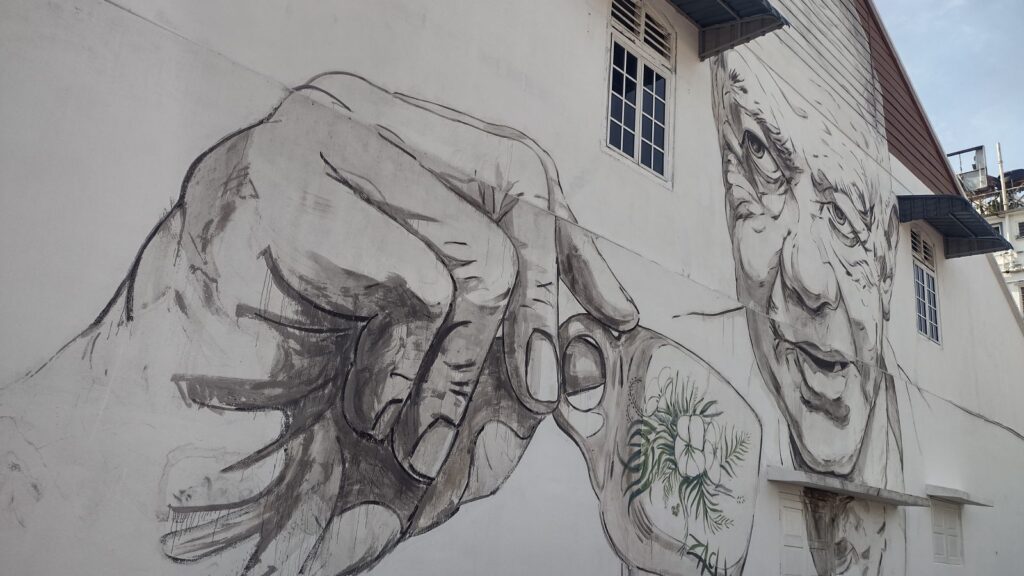
1 / Old Uncle With Coffee Cup
2 / Paper Plane
3 / Kopi-O
4 / Hummingbird
5 / Evolution
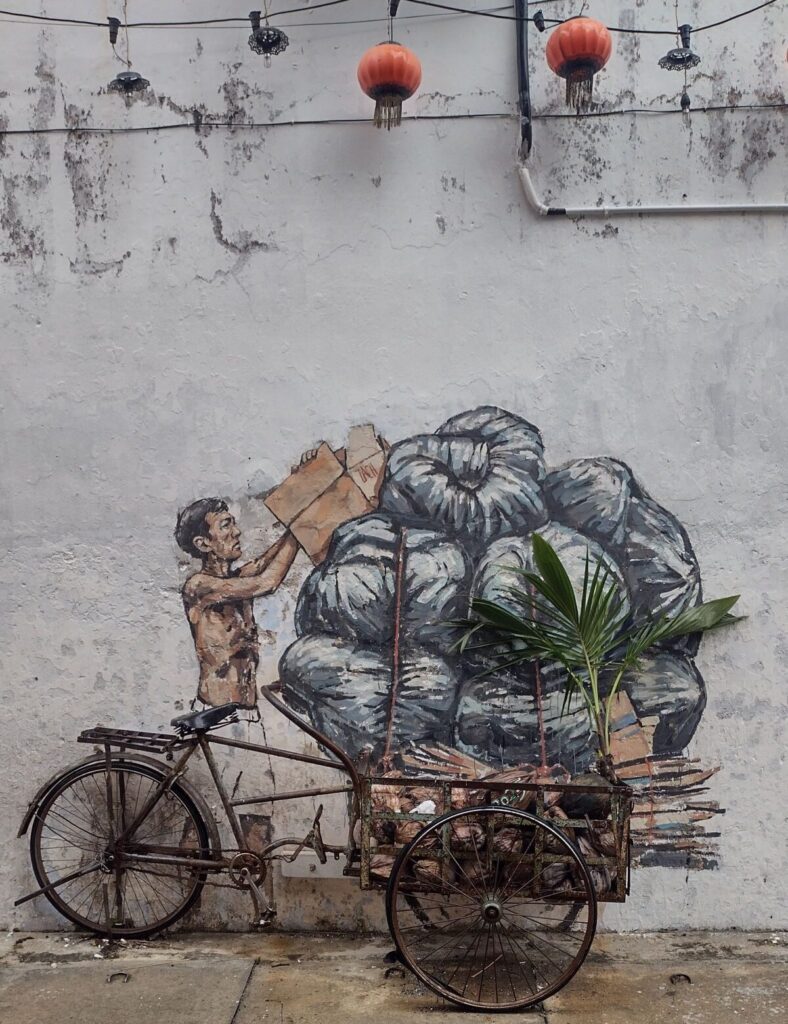
6 / Trishaw
7 / Girl
Other Street Art In Old Town
The Old Town has many more beautiful street paintings all around. I’ll just go ahead and label them out how they are written on Google Maps to make them easy to search.
Combine these with the ‘Art of Old Town,’ and you can see everything in one go. You’ll come across most of these naturally, since they are on the same streets as the 7 more famous ones.
Panglima Lane Area | Also known as Concubine Lane, it has a few wonderful pieces in and around the street. The pieces on Concubine Lane itself can be found on maps, but they are pretty cool. The Tiger & Tree mural is also at the end of the lane on Lintasan Market Street. On the opposite end toward the Birch Memorial Clock Tower are a few works too. The Ipoh Tin Mining Mural is near here, behind the Perak Hydro Building.
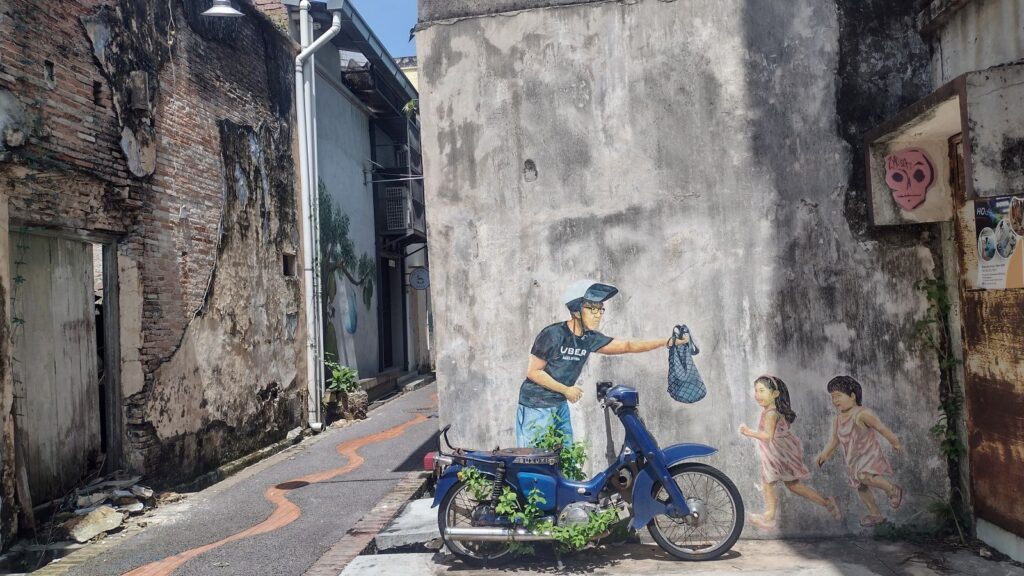
Lorong Hale Street | This alleyway is sometimes called “Little Concubine Lane” and is just a backstreet with a few neat street art works. The Motor Wall Art piece is here and is probably my favorite creation of them all. Multiple Fruits Tree, as it’s known on maps, is also on this tiny lane.
Market Lane | This is where the iconic Rickshaw installation is, and the street itself also has some other works. The Tin Alley Murals are nearby and can be seen on the way to the Mural Art’s Lane.
More Murals Around Town
A handful more cool artworks are around town, mostly across the bridge in the surrounding neighborhood of the Mural Art’s Lane.
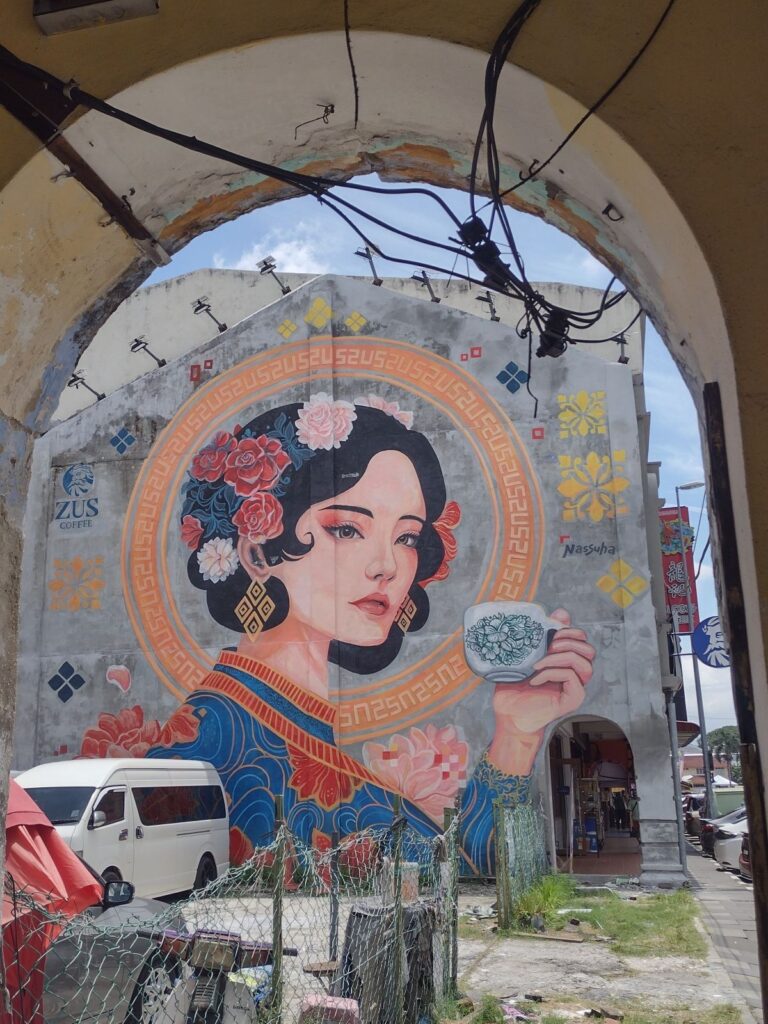
- Mural Zus Coffee Ipoh takes up the whole side of a Zus Coffee and is one of the prettiest pieces in Ipoh.
- The Akira Toriyama Mural is dedicated to the legendary Japanese manga artist of the same name. Toriyama is best known for his world-famous Dragon Ball series. It’s next to a nice thrift store that I’ll cover later in the article.
- Gerbang Makan (Eating Lane) has a few fun art pieces on Lorong Nenek.
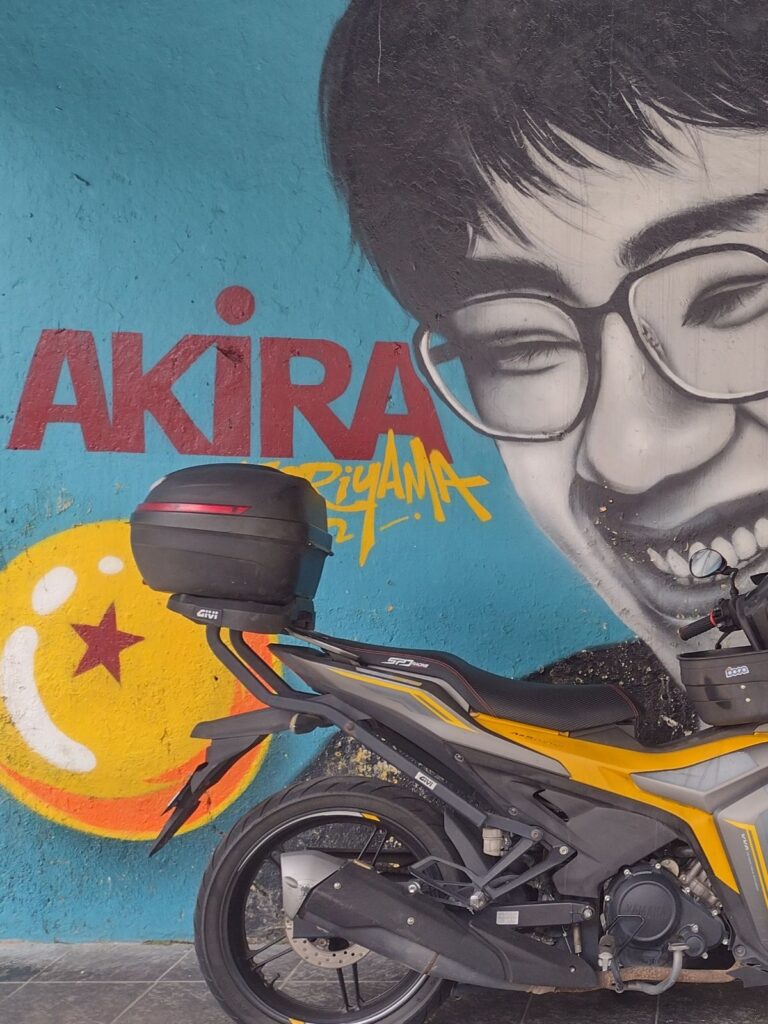
WANDER THE STREETS OF OLD TOWN
If you’re into history or architecture, or better yet, both, then Ipoh has a lot to see. The Old Town is filled with landmarks that were important in the city’s past. Like the famous street art, there are some maps around town sharing walking trails to various highlights.
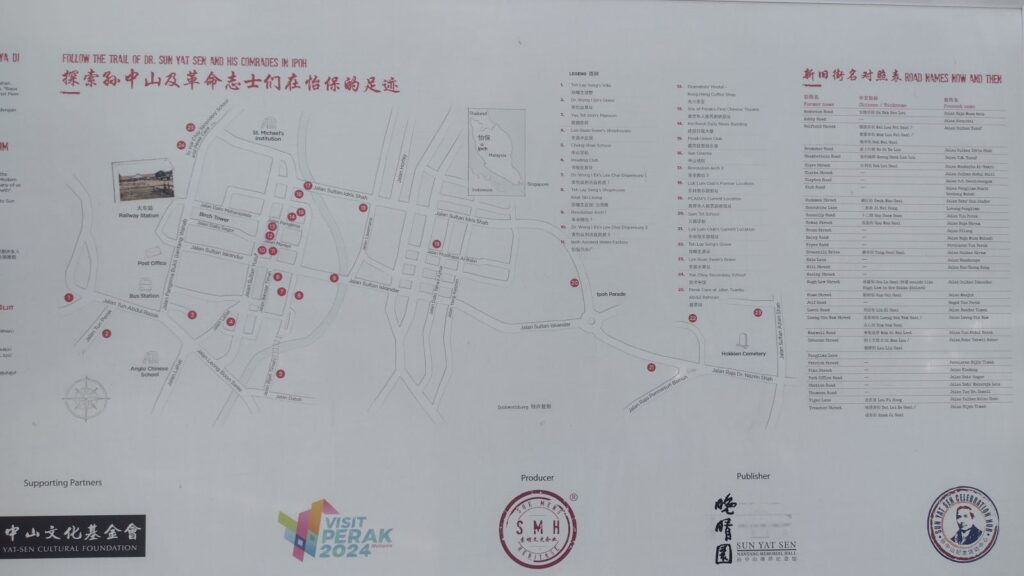
These are not all the same, as one covers the iconic Ipoh Heritage Trail, while another focuses on a revolutionary named Dr. Sun Yat Sen.
You can choose to do one trail, both trails, or simply pick some interesting places to see for yourself. Of course, you can always just wander the streets to see all the cool old buildings and call it a day, too.
But I’m a fan of learning about what I see, so here are some of the prominent monuments around town:
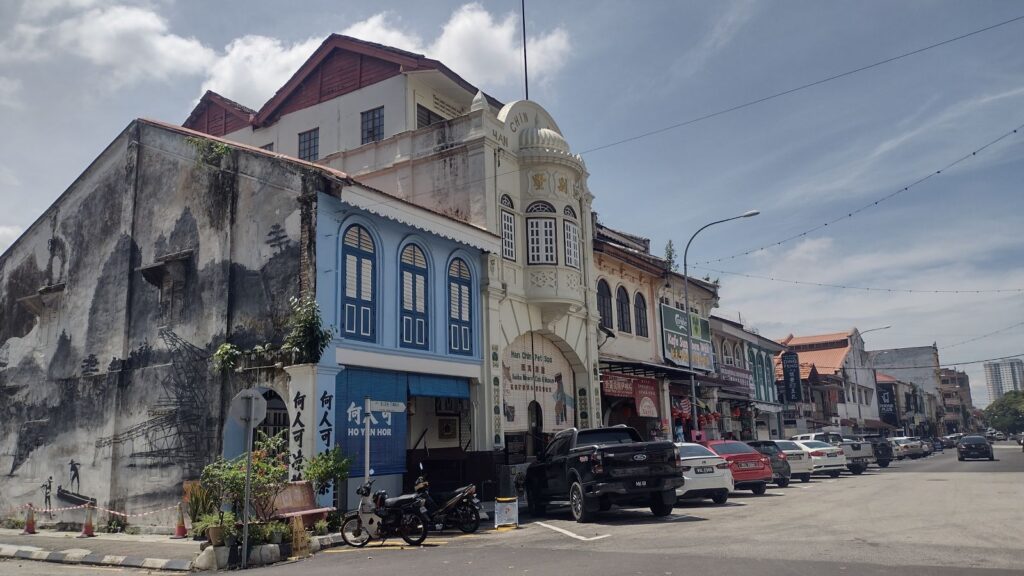
Ipoh Heritage Trails
There are actually two main heritage trails in Ipoh, each having more than 20 stops. Both were mapped out by the same company, I believe. Ipoh Heritage Trail 1 covers the more iconic sights in the northern part of Old Town above Hugh Low Street (Jalan Sultan Iskander), while Ipoh Heritage Trail 2 covers the southern part of Old Town.
It can be a bit overwhelming, but most sights have placards with “Heritage Trail” printed on them and a bit of history. There are also some maps hanging around the city that you can snap a photo of, or you can check here for a map of Trail One and here for a map of Trail Two.
POPULAR HERITAGE TRAIL SITES
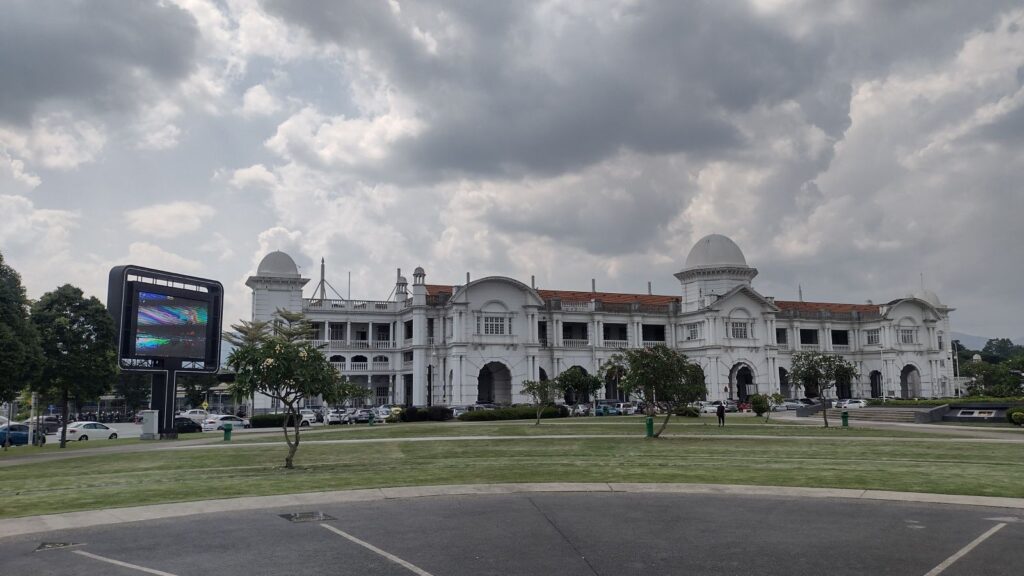
Ipoh Railway Station “The Taj Mahal of Ipoh”
Ipoh Town Hall and Old Post Office
Birch Memorial Clock Tower
Han Chin Pet Soo
Concubine Lane
Little India District
Perak Hydro Building
Ipoh High Court
Kapitan Chung Thye Phin Building
Dramatists’ Hostel
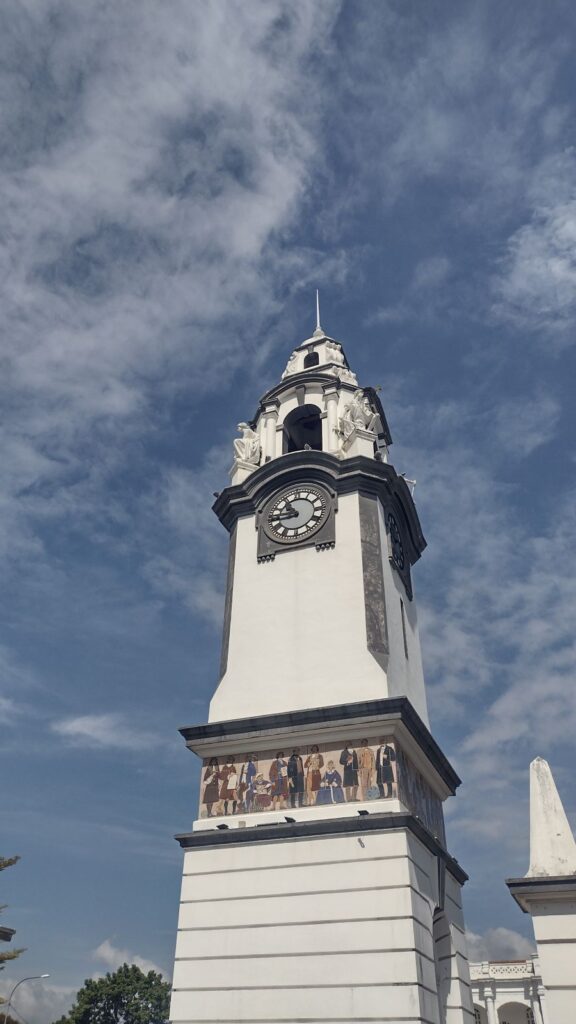
Each trail takes around 2 hours to walk. If you want more details about each site, your best bet would be to join a guided tour like this ‘Ipoh Secrets Full Day Heritage Tour.’
Some other spots worth visiting that are not covered on any of the trails, but you’re bound to walk by, are Sultan Idris Shah II Mosque, Time Tunnel Ipoh Old Town, Ho Yan Hor Museum, and the 22 Hale Street Heritage Gallery.
There is also a Chinese Heritage Trail that covers Old Town and New Town, but I didn’t find much information about it.
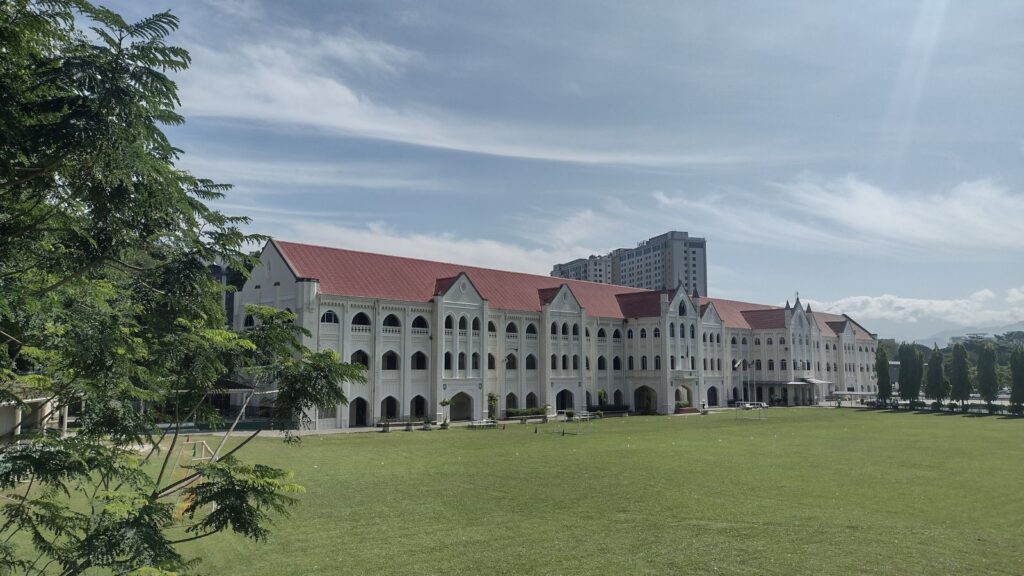
The Trail of Dr. Sun Yat Sen
I only found out about the Trail of Dr. Sun Yat Sen and his Comrades from a signboard in the Old Town. It’s quite a unique walk, since most of the buildings and stops along the route aren’t obvious unless you know where to look.
The trail’s focus is on the Chinese community that helped Dr. Sun Yat Sen with the 1911 revolution. Many of these stops go unnoticed solely because they were hideouts, shops, and residences that were part of an underground network at the time.
There are 25 locations you can see, with a few further out, but many of which are within the Ipoh Old Town. Popular spots include stores around Concubine Lane like Kong Heng Coffee Shop and the former building of Perak’s first Chinese theatre. There are also some old shophouses, schools, and former villas.
Kinta Riverwalk
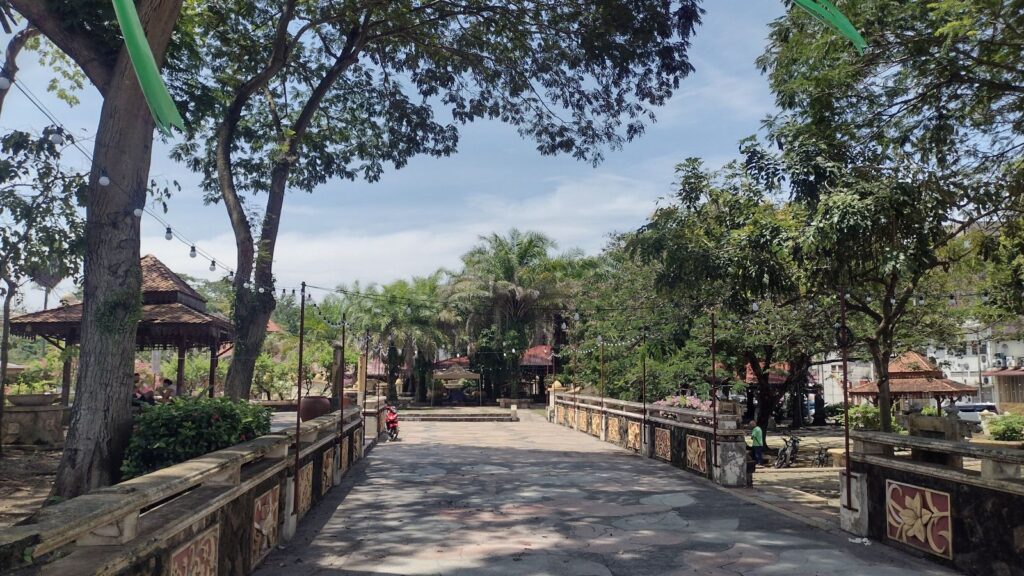
The Kinta Riverwalk isn’t a designated trail like the previous two, but it’s a lovely pathway that follows the Kinta River through parts of Ipoh. It runs alongside a few popular city parks like Ipoh River Front People’s Park and the D R Seenivasagam Recreational Park.
The former is a bit rundown now, but still nice to sit and have a takeaway coffee at. It’s also clse to the which is also close to a small Chinese temple called Pak Koong Temple. The latter is quite scenic and home to a nice Japanese garden. It’s also not far from the very colorful Ipoh Kallumalai Arulmigu Subramaniyar Temple.
You can also cross a few lovely walking bridges to reach nearby sights like Mural Art’s Lane, two picturesque mosques in Panglima Kinta Mosque and Indian Muslim Mosque Ipoh, and a few other spots.
LEARN ABOUT A TRADITIONAL KOPITIAM AT OLD TOWN WHITE COFFEE
While I’m not usually one for chain coffee shops, Old Town White Coffee in Ipoh gets a pass. That’s because it’s able to tell a story while delivering a decent and quite unique product for anyone from outside of Malaysia.
I’m not trying to exaggerate here; Ipoh’s OldTown White Coffee Experience Centre (maps), which sits in the center of the Old Town, doubles as a historical museum. So you can learn about the coffee before trying it.
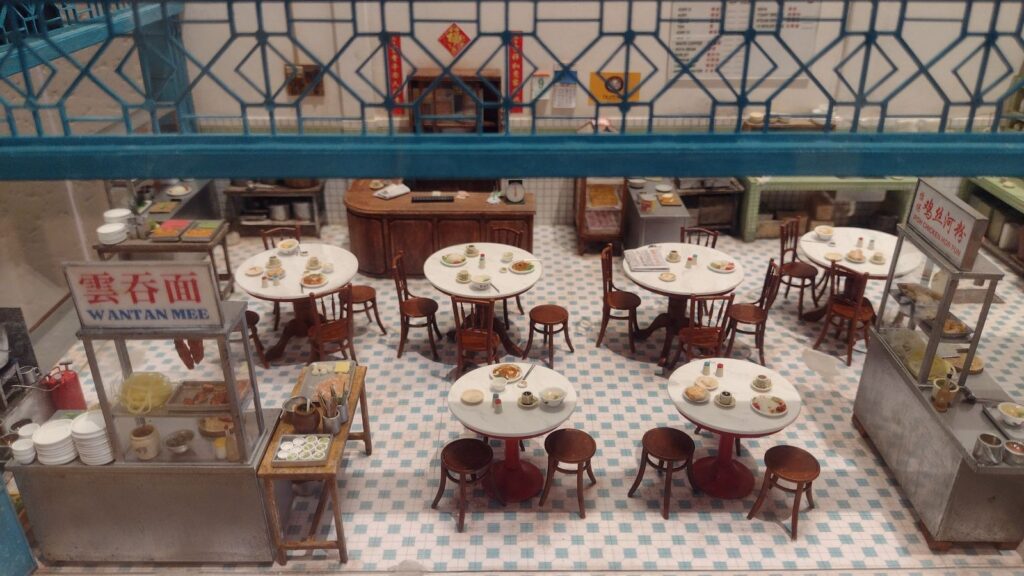
The first floor is a modern kopitiam serving the city’s famous white coffee, plus staple meals like kaya and butter toast, curry mee, and hor fun. The food here is by no means the best in Ipoh, but it’s passable, the coffee is nice, and the experience is definitely worth it.
Upstairs, you’ll find an exhibit dedicated to the history of coffee in Malaysia, including the birth of the country’s kopitiam culture and the distinct low-temperature roasting process that creates Ipoh’s beloved staple.
MORE TRADITIONAL KOPITIAMS TO TRY
Kedai Kopi Sin Yoon Loong | An old-school kopitiam with solid traditional meals. They serve decent white coffee and have all the staples like kaya toast, wonton mee, and char siu.
Kedai Makanan Nam Heong | It sits right across the street from Sin Yoon Loong and has similar vintage vibes. They are known for their egg tarts along with other classic dishes.
Chang Jiang White Coffee | Authentic white coffee shop with a nice array of tasty breakfast items.
DIVE INTO IPOH’S FOOD SCENE
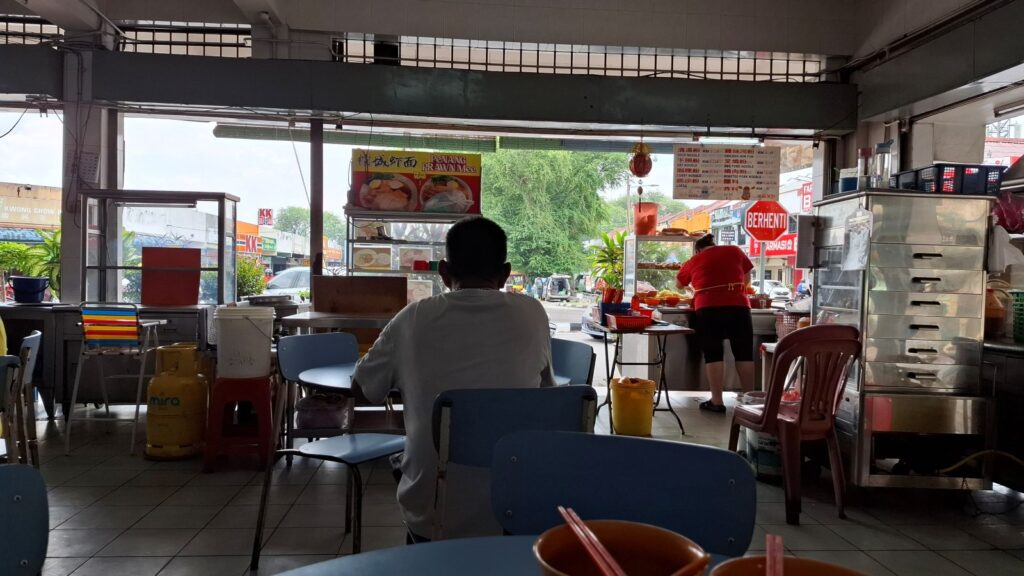
I’ll start by saying you can spend weeks in Ipoh and only just scratch the surface of the city’s wonderful food scene. It’s a big place, with a distinct style of cuisine that’s influenced heavily by Hakka and Cantonese cooking.
It’s also said that the natural springs around the limestone cliffs make the water around Ipoh mineral-rich, which helps create the renowned taste of the city’s more famous dishes.
While it may not be as well-known worldwide as Penang and Kuala Lumpur, it’s still a popular foodie destination within Malaysia. I’d put it on par with cities like Melaka, where locals and dedicated food travelers have been coming here for years, but it’s still not exactly mainstream.
In other words, you’ll have no shortage of tasty food to try during your stay.
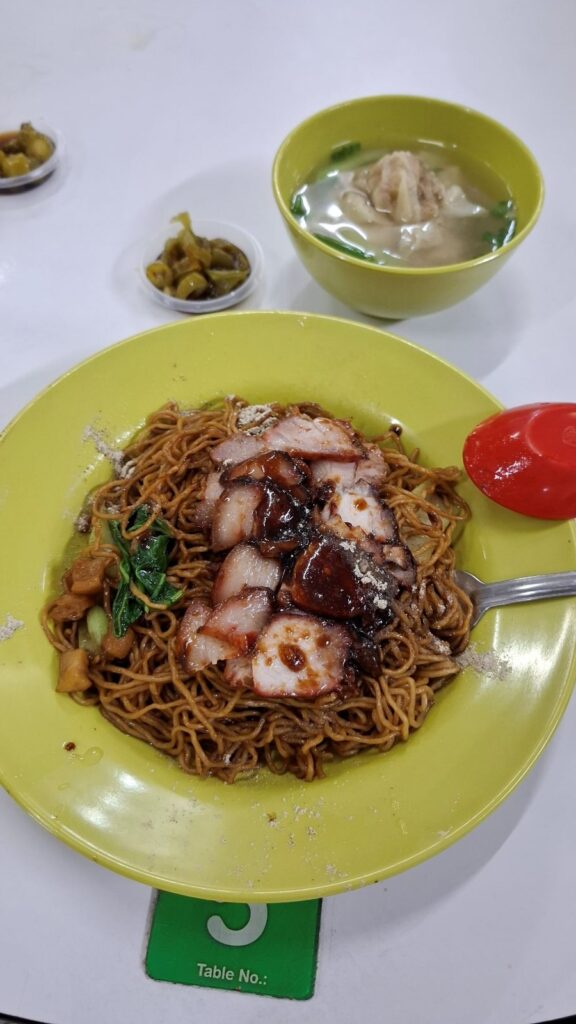
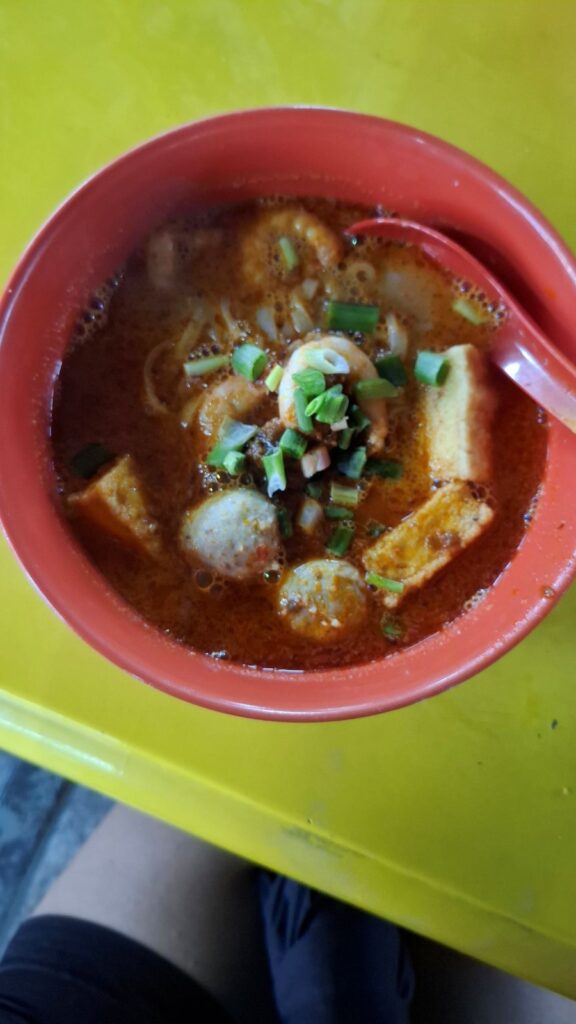
POPULAR DISHES TO TRY IN IPOH
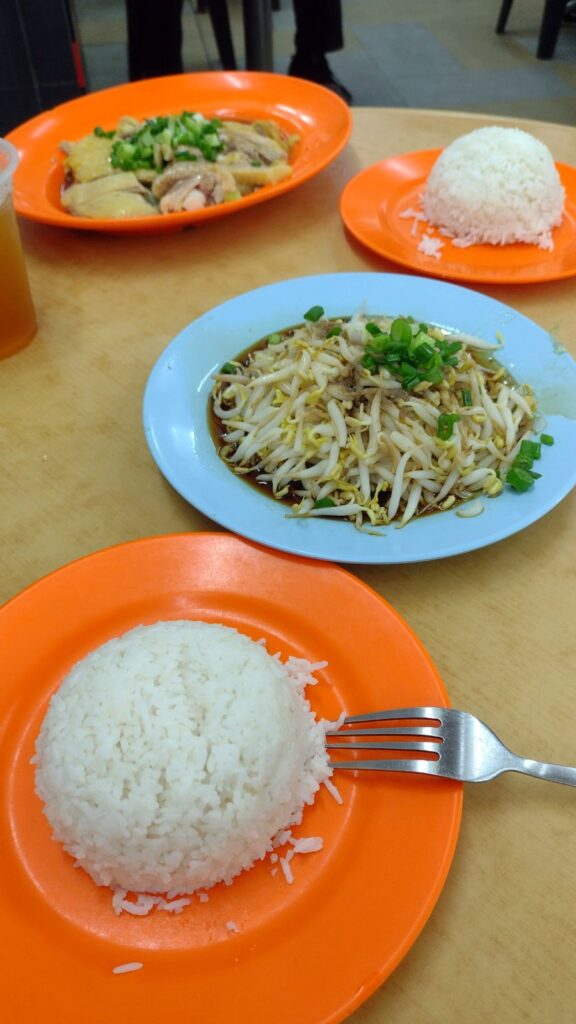
Nga Choy Kai (Bean Sprout Chicken) | Steamed chicken in a light sauce served with crunchy bean sprouts
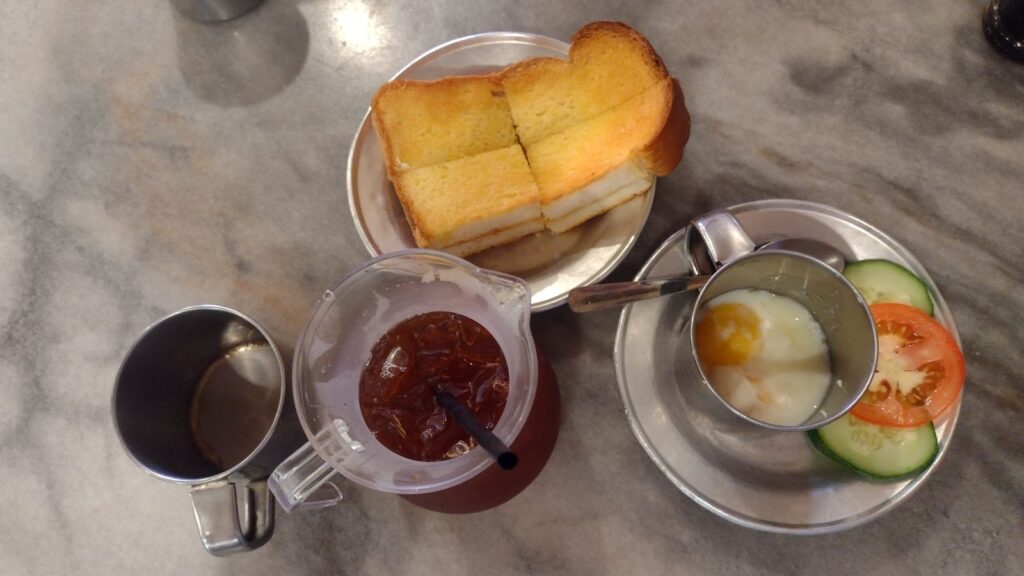
Kaya Toast | Toast with butter and kaya served alongside a soft-boiled egg
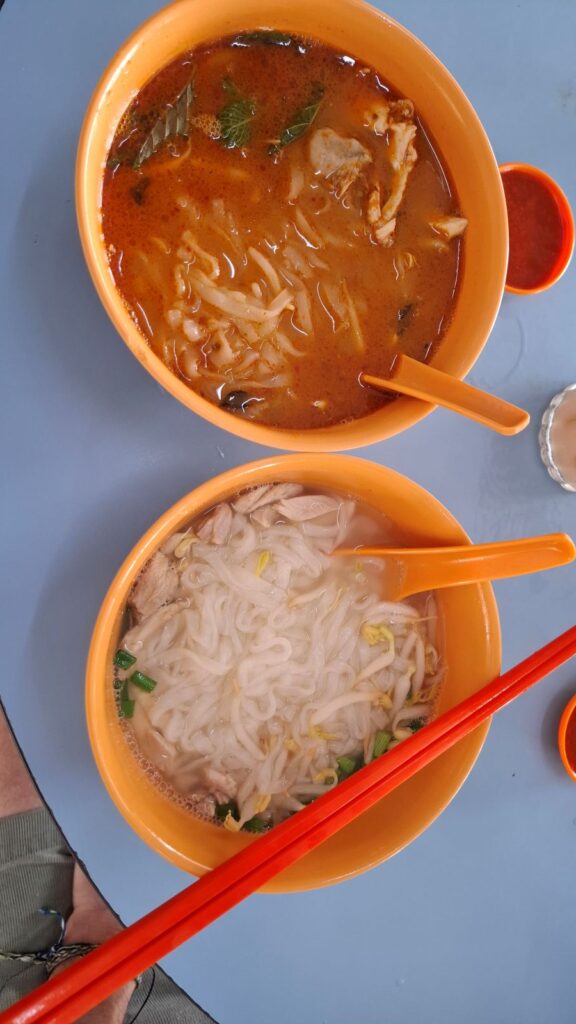
Ipoh Hor Fun | Flat rice noodle in a chicken and prawn broth topped with shredded chicken and fresh herbs
Tau Foo Fah | Warm soybean pudding with sugar syrup
Chee Cheong Fun | Steamed rice noodle rolls often served in a sweet soy sauce and topped with chili
Salt-baked Chicken | Hakka-style dish of chicken marinated in herbs and spices, wrapped, then encased in salt
Curry Mee | Noodles cooked in a spicy coconut milk curry broth with variations of local toppings
Here are some restaurants worth trying on your trip:
Aun Kheng Lim Salted Chicken | The go-to salt-baked chicken restaurant in Ipoh. The chickens are lean and flavored excellently.
Ipoh Chuan Fatt Curry Mee Shop | Curry mee is their specialty, and they offer it in a dried version as well. It’s not the creamiest, but solid overall. It’s absolutely worth trying their delicious fried chicken, though.
Funny Mountain Soya Beancurd | Famous tau foo fah shop with long queues and nice, silky smooth beancurd pudding.
Nasi Ganja Yong Suan | Delicious nasi kandar that seems to always be packed to the brim with people. The name nasi ganja comes from how addictive the locals consider this dish to be.
Restoran Moon De Moon | Popular restaurant to try chee cheong fun or hor fun. Both are delicious, as is the dry curry mee.
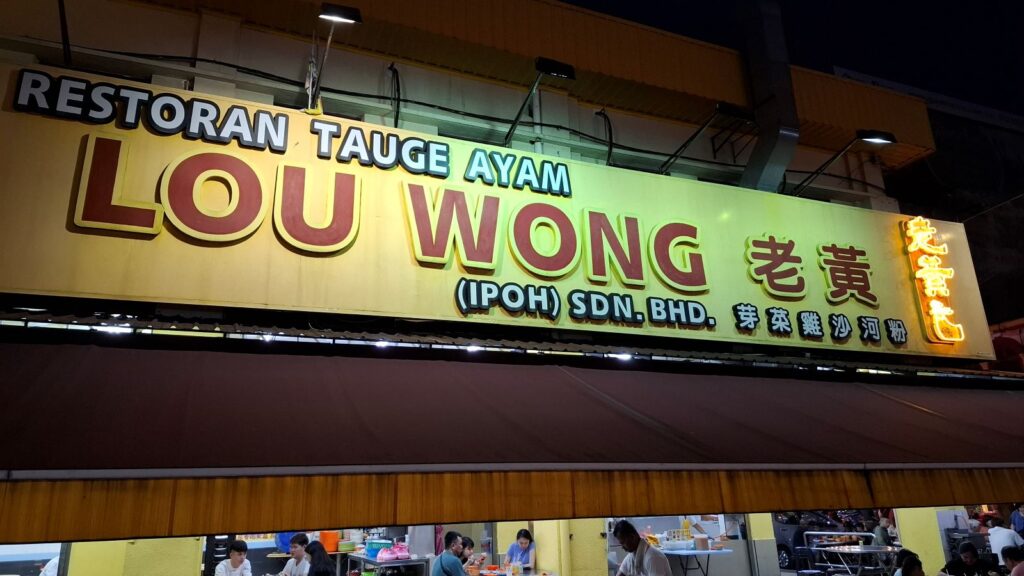
Restoran Tauge Ayam Lou Wong | A beloved bean sprout chicken restaurant that serves up tasty chicken and rice. It’s always crowded here, but the turnover is usually pretty quick. I suggest getting the popular iced plum drink with your meal.
I’ve heard it can be a bit hit or miss recently, so some alternatives are Cowan Street Ayam Tauge & Koitiau Restaurant or Sam Ma Chicken Rice Restaurant.
WALK THROUGH THE NIGHT MARKET
Before I begin about Ipoh’s night market, I should mention that there are actually a dozen or so markets throughout the city.
And that doesn’t even consider the weekend-only ones.
However, the specific night market I’m talking about is called Gerbang Malam Ipoh, and it sits in the heart of the city center. A smaller market, only a few blocks long, the vendors mostly sell clothing, accessories, and perfumes.
Although you can sometimes find toys and electronics here as well.
The one thing you aren’t likely to see is street food. But that’s mostly because the pop-up stalls are set up just in front of a few of Ipoh’s most visited restaurants, the most notable being Restoran Tauge Ayam Lou Wong.
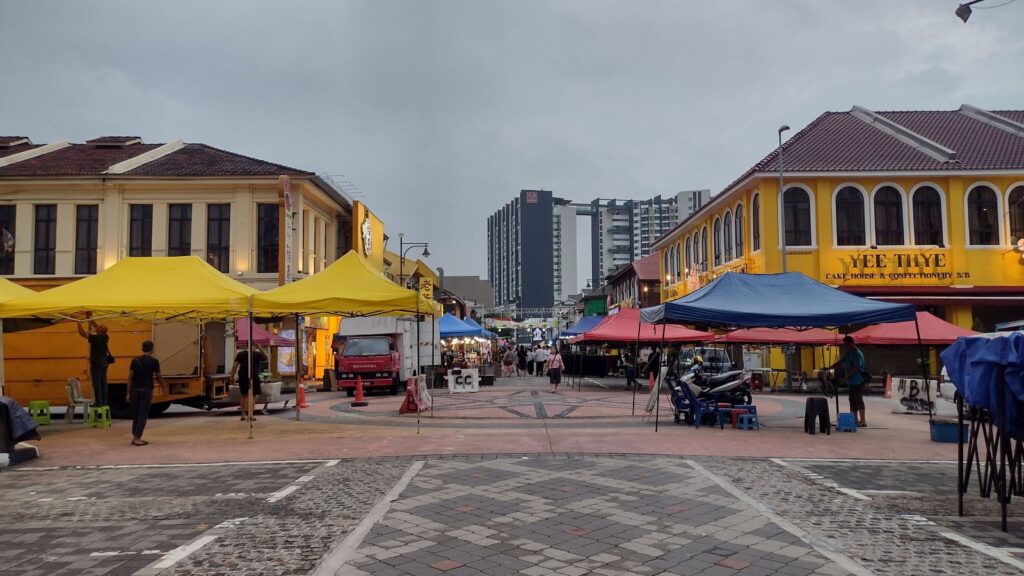
Gerbang Malam Ipoh is specifically a night market, with stalls only starting to set up right before sunset.
Its official start time is around 6 pm, but on my few visits, it seemed to get busier about an hour after that. Overall, I found the vendors to be nonintrusive and easy-going, which made the walk-through a pleasant experience.
Time | Every day starting from 6 pm to 12 am.
OTHER MARKETS TO VISIT
Ipoh Night Market | A street food market that is in the same vein as the Melaka market I mentioned in my ‘Melaka Food Guide’ article. They have clothes as well, areas for kids to play, and oftentimes music.
Ipoh Central Market | A large wet and dry market, with just about every typical Malaysian ingredient.
Memory Lane | A Sunday morning flea market with all kinds of neat items. It’s down the street from the Ipoh Central Market.
GO THRIFT STORE SHOPPING
The first time I visited Ipoh, I was surprised to see a booming thrift store scene.
It’s not often you find much outside of markets in Southeast Asia, at least not within the city limits. But it’s different in Malaysia and even more so in Perak. If you’re looking for some vintage attire or just need to grab a few shirt replacements, then this is a good city to do so.
Most stores are within a 10-minute walk of each other, which is a bonus.
My favorite thrift shops and vintage clothing stores in Ipoh:
Family Bundle @ Taman Jubilee | This is a chain thrift store that has stores in all the major cities in the region. They have a lot of budget finds here, including a great selection of winter-ish clothing. It’s right next to the Akira Toriyama Mural.
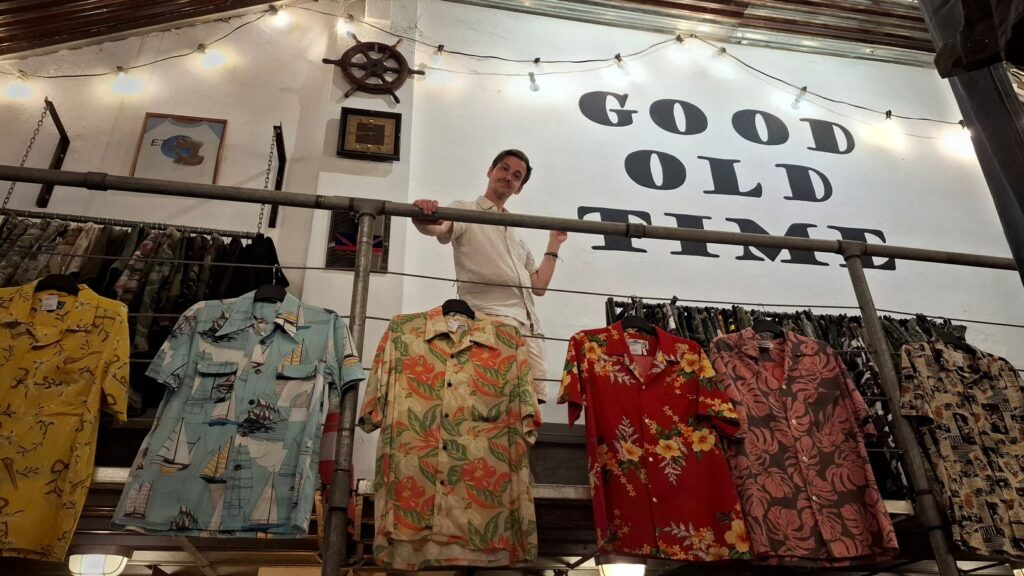
MF Mart Ipoh | I’ve seen multiple of these stores in Malaysia too, but this one is really cool. They have multiple floors, with great deals and tons of denim on the second floor. The third floor has a nice little coffee shop called D Cafe, and a selection of higher-end retro clothes. There are tons of Hawaiian shirts, shoes, and jeans at the top level too. It’s around the corner from the family bundle.
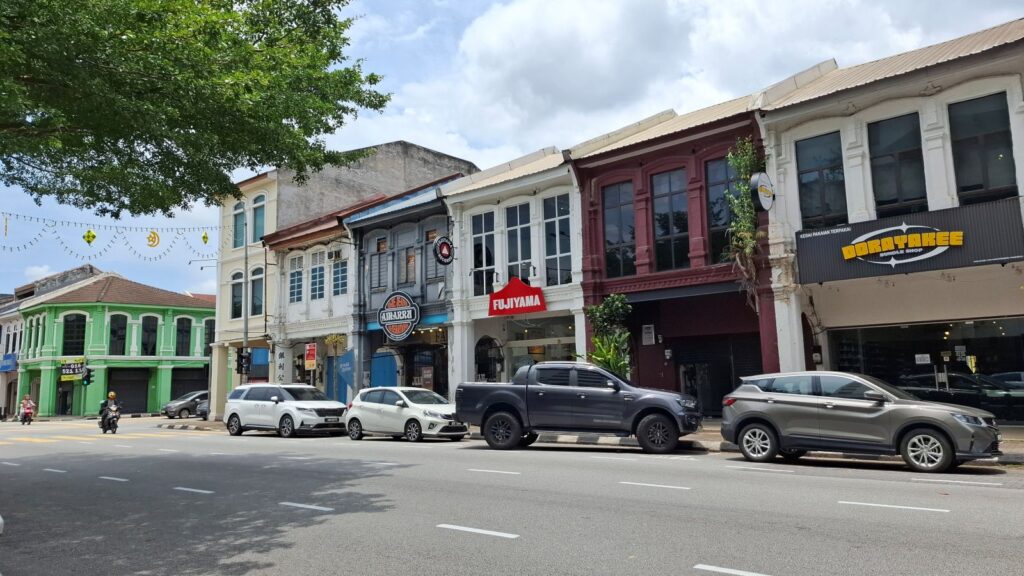
Street Thrash Store & Company | A neat rock-themed type of vintage store with cassettes, CDs, and clothes. I said company because across the street are three different thrift shops: Fujiyamah Ipoh, Empatkakak, and 42 Outlet.
Concubine Lane Area | Two stores, Evrythng Soul and The PWW Shop, have second-hand clothing. There’s also a ton of cool little shops in this area selling handicrafts and whatnot.
Jalan Sultan Ikander Street | Bandoru Bundle Ipoh and Karkatu Store are on this street and have nice selections to dive into.
DAY TRIP AROUND PERAK
Ipoh is a great base to explore Perak, with several nearby cities and towns that are worth a day trip.
TAIPING
Taiping, also known as the “Rain Town,” is easily one of the best day trips you can take from Ipoh. Despite its propensity to dump buckets of rain without warning, the city is full of character. But more importantly, it has tasty food, one of the most beautiful gardens in the country, and wonderful historical buildings, one of which has been transformed into a regional museum.
Here are a few suggestions for a full day in Taiping:
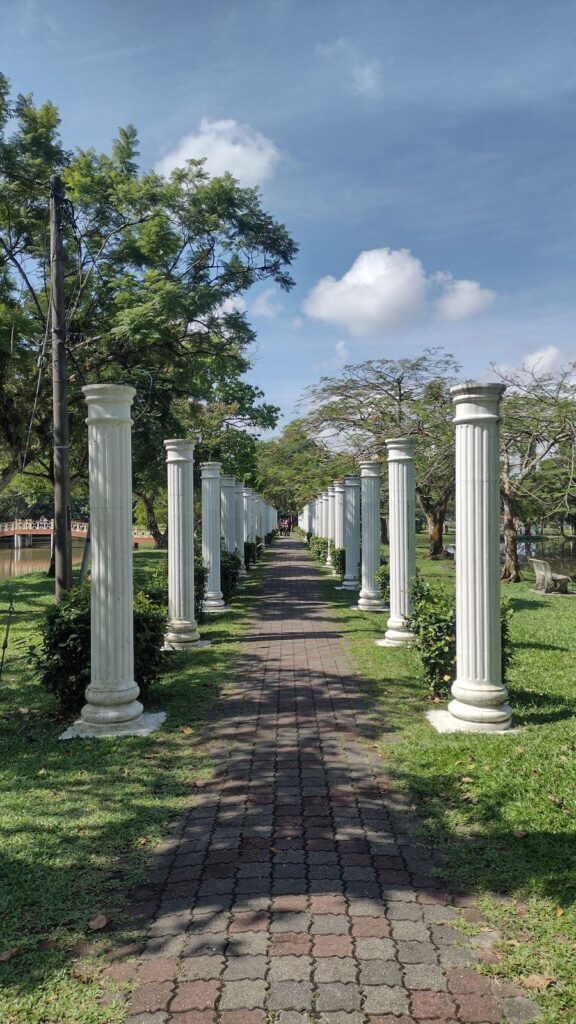
- Relax in the Taiping Lake Gardens and see some wild animals.
- Cool down at the Burmese Pool, a natural rock swimming hole.
- Pop into the Perak Museum for a bit of history.
- Wander the streets and admire the beautiful heritage buildings.
- Explore the food scene at Larut Matang Hawker Centre.
- Get a coffee buzz and a tour at the Antong Coffee Factory.
Getting There | Take a train from Ipoh Railway Station to Taiping Railway Station. A one-way ticket should cost around RM 7 each way, and trains leave every hour or so, starting early in the morning and ending in the evening. The ride takes around 45 minutes each way.
For a more detailed look at Taiping, make sure to check out my ‘Taiping Guide.’
PAPAN HERITAGE VILLAGE
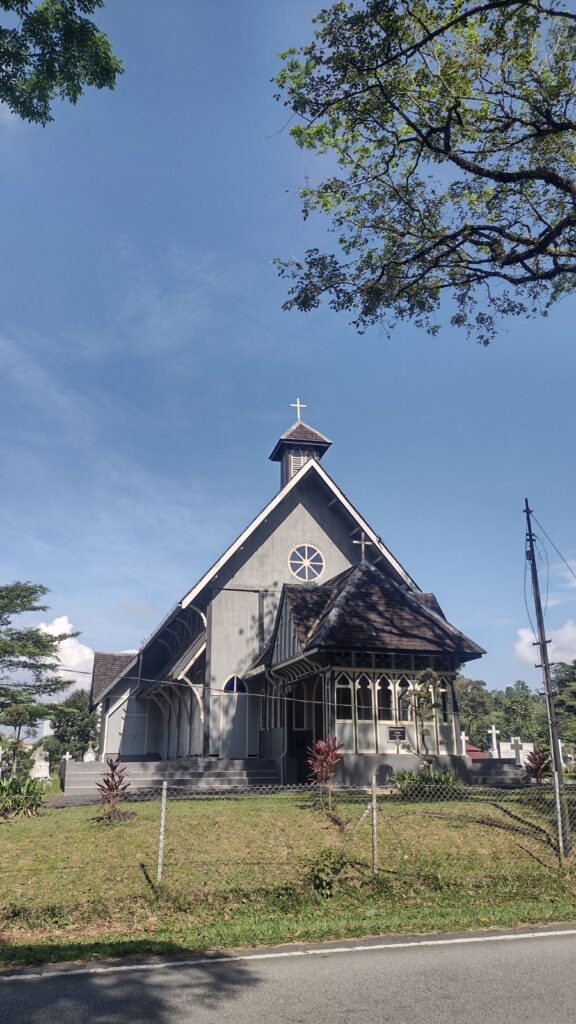
Just south of Ipoh, in the town of Pusing, are the remains of the historic Papan Heritage Village.
Once a booming colonial-era mining town, it has since become a sort of “ghost town” that is used solely for tourism. There is a wonderful heritage trail to follow that heads to more than a dozen sights, including a small museum, heritage gallery, dilapidated former residences, and a row of shops overgrown by trees and years of neglect.
Towards the entrance to the town, you’ll also find a tranquil, well-maintained memorial park.
Getting There | Buses leaving from Terminal Kidd near the train station get you within a few minutes’ walk of the village. The A36, PTransit37, and PTransit39 buses all go here. Just ask the driver to stop at either Papan Heritage Village or the Bandar Baru Puspa stop. Travel time is about 45 minutes each way. Taxi and Grab are also an option.
More To See | Papan Heritage Village sits at the doorstep of the Papan Recreational Forest Reserve. It’s a nice eco park that’s a bit of a nature escape for hikers and bikers.
KUALA KANGSAR
If I had to describe Kuala Kangsar in a single word, it would be “regal.”
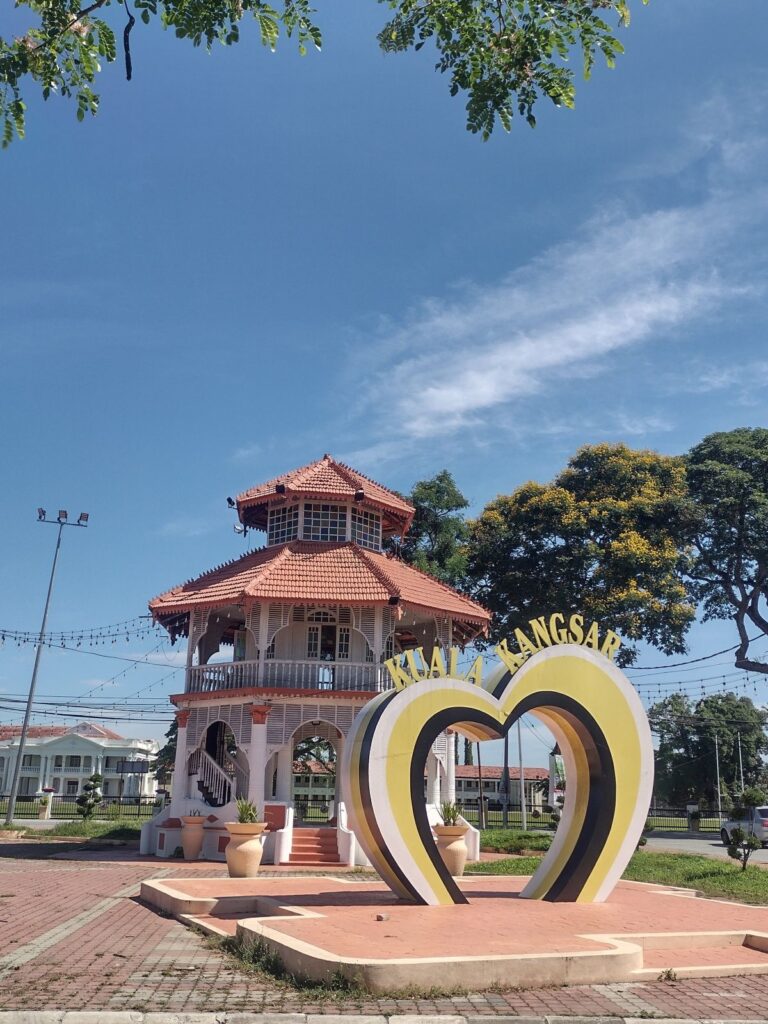
The riverside city is one of Malaysia’s ‘Royal Towns’ and is highlighted by its picturesque architecture that blends a bit of old-school Art Deco with new-wave Islamic.
And the best part? You can explore it in depth in a single day.
KUALA KANGSAR ATTRACTIONS
Ubudiah Royal Mosque
Royal Museum
Istana Iskandariah Palace
Malaysia’s first rubber tree
Galeri Sultan Azlan Shah
Ihsaniah Iskandariah Mosque
Pavilion Tower
Masjid Ridzwaniah Mosque
Victoria Bridge
There’s a typical cultural route in Kuala Kangsar that makes it easy to see everything in a single walking loop. It feels a bit like going back in time when you pass the historical houses and see the colonial-era colleges.
Getting There | Take a Komuter train from Ipoh Railway Station in the direction of Butterworth or an ETS train towards Padang Besar. The ride takes under 35 minutes each way. A bus heads here from Ipoh, too, but it isn’t significantly cheaper and takes an hour and a half.
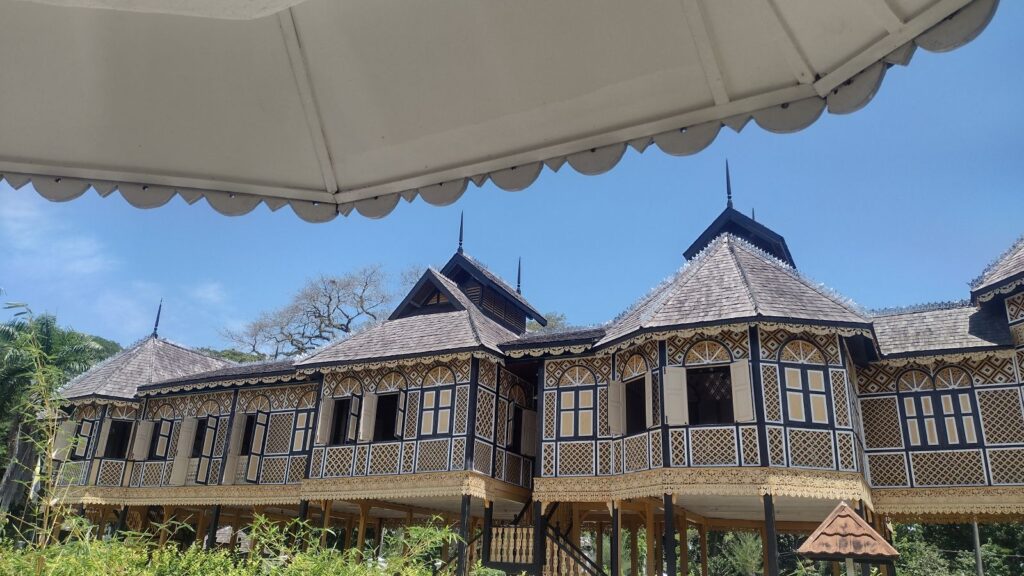
KELLIE’S CASTLE
The unfinished Scottish castle is one of the most iconic day trips from Ipoh.
Sitting next to the Raya River and once left abandoned for the jungle to take over, the former estate has blossomed into a tourist destination. And its history is as interesting as it is sad, which only adds to its allure.
Lovers of both urbexing and buildings will enjoy exploring the property and its Moorish, Indo-Saracenic, and Roman architecture styles. Film buffs might also enjoy the fact that it served as another filming location for the film Anna and the King.
Opening Times | 9 am – 6 pm every day
Entry Price | 10 RM for foreigners, 5 RM for Malaysians
Getting There | Public transport isn’t an option unless you’re willing to also do some serious walking. Trains and buses to Batu Gajah will get you as close as you can get. It’s about a 5 km walk from there along a mostly busy road. Taxis and Grab are prevalent and take about half an hour. If you’re driving, there’s an RM 5 fee.
Alternatively, you could join a tour that includes Kellie’s Castle in its itinerary, like this full-day private Ipoh tour, or this Ipoh Gua Tempurung, cave temples, Mirror Lake, and Castle Tour. These can get pricey, but they also include other stops and a guide.
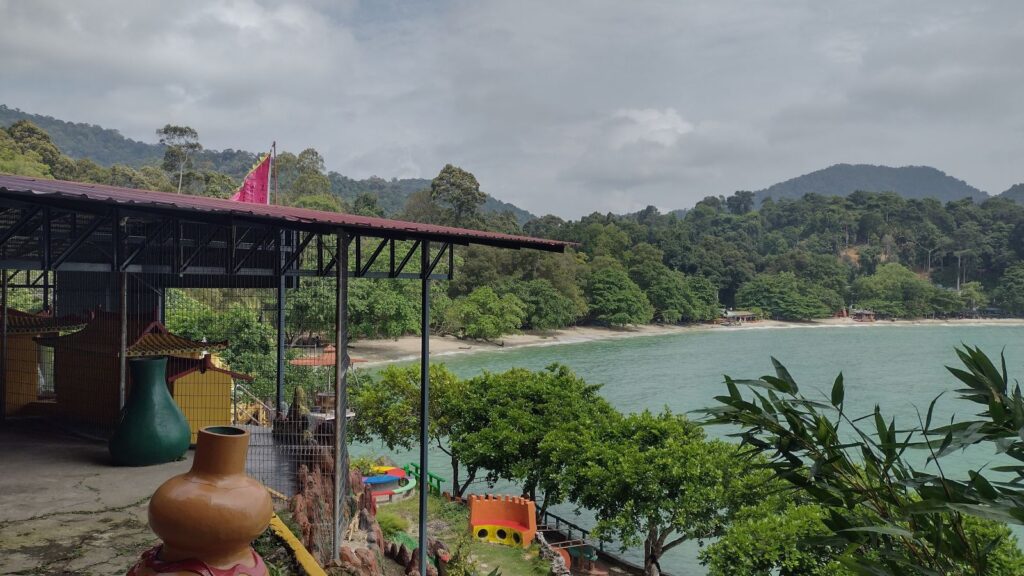
WEEKEND TRIP OPTIONS
A few more places for those of you who are spending an extended time in Ipoh. Both of these could technically be seen as day trips, but since spending time hiking or at the beach is the main highlight, I feel they are better suited for overnight stays.
Pangkor Island | A spectacular island with wild beaches, scenic temples, a beautiful floating mosque, and colonial history. This was, in my mind, the most underrated place I’ve been in Malaysia. It’s also one of those places that you could find yourself getting “stuck” for a couple of extra days. Check my ‘Pangkor Island Guide‘ for more information.
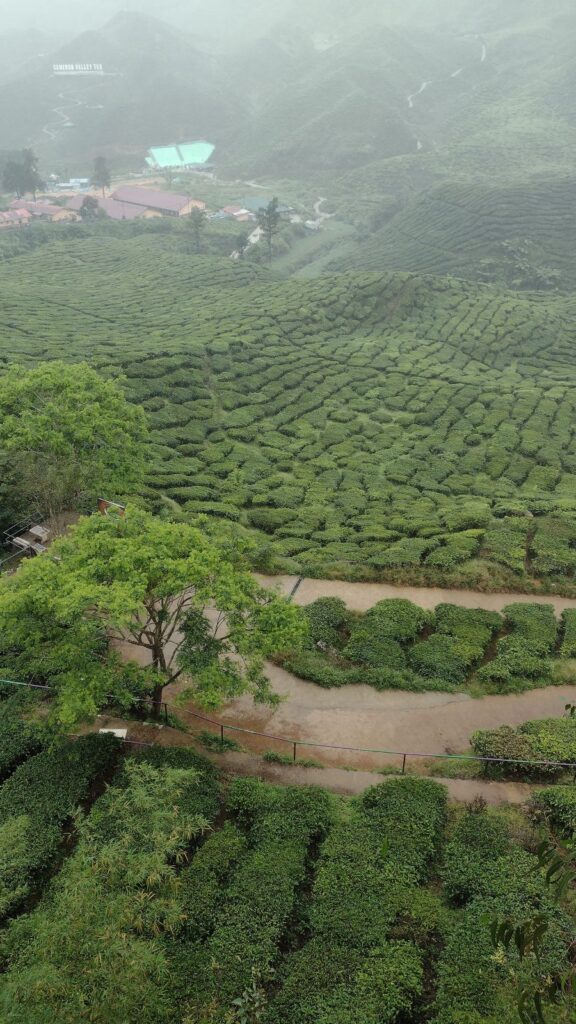
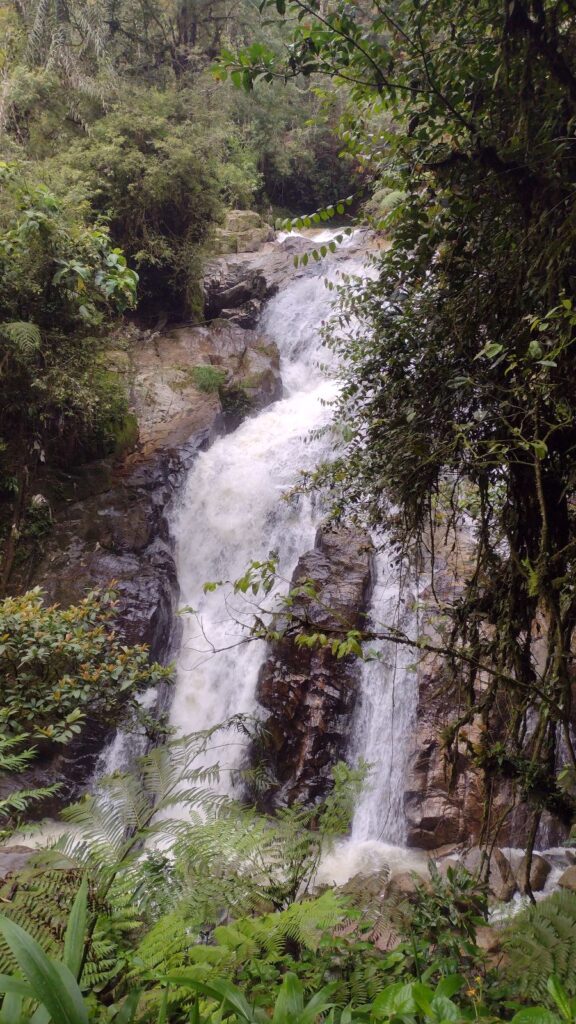
Cameron Highlands | Just on the eastern border of Perak, you’ll find this section of highlands known for its sprawling tea fields and lush strawberry farms. The small town of Tanah Rata is the main hub and is in proximity to epic hikes to Robinson Falls and the “Mossy Forest” cloud forest. The famous BOH Tea Centre is also in the Cameron Highlands, as is the Cameron Valley Tea House.
Day tours do run here from Ipoh and are a decent option if you’re on a tight schedule. Here are a few options:
Tour 1 | Day Tour from Ipoh with Lunch
Tour 2 | Cameron Highlands Private Day Tour from Ipoh
Tour 3 | Cameron Highlands Day Tour Tea Plantation with Lunch
GETTING AROUND IPOH
While you could easily keep yourself busy in Ipoh’s center, as a whole, the city is pretty spread out. Luckily, there’s a decent bus system to get you to most further-out sights. There’s also the train, but you’ll only really need that for day trips to spots like Kuala Kangsar and Taiping.
These are some of the main transport stations and stops to keep in mind while traveling in Ipoh:
Ipoh Railway Station (maps) | Ipoh’s train station is as beautiful as it is convenient. For those traveling to the surrounding towns I mentioned above, you’ll probably end up here. Trains also go north to the border of Thailand and south to Kuala Lumpur, and run past popular destinations like Butterworth for access to Penang and Alor Setar for access to Langkawi.
Medan Kidd Bus Terminal (maps) | This local bus station is about a ten-minute walk from the train station. It has routes that go all around Ipoh, including to the popular cave temples, surrounding neighborhoods, and Terminal Amanjaya. Most buses take cards, but to be safe, make sure to have small change on you.
Terminal Meru Raya/Terminal Amanjaya (maps) | Most of the long-distance buses leave from here. You can get to just about anywhere on mainland Malaysia, including Kuala Lumpur, Penang, Cameron Highlands, and Melaka. There’s a handful of restaurants and a few seats for waiting inside. There is almost always a small ticket fee for purchasing and printing boarding passes from the ticket booth.
WHERE TO STAY
Ipoh is pretty spread out, so picking a hotel for your travel needs could really make or break your experience. During my last trip, I stayed in a guesthouse behind the train station. This area has some good budget accommodations, but might take a bit of walking to get into the center. I didn’t mind this, but did have to shoo off a few dogs when walking home at night.
I’ve also stayed in the center, which I recommend for those who don’t have a vehicle or just want easy access to all the main sights. The bus system is decent, so if you stay a bit further out, make sure you’re near a stop.
Here are a few recommendations for Ipoh:
Dé Cafe & Rest House / The Brownstone Hostel & Space | Two gorgeous hostels with modern amenities. The Brownstone Hostel is near the D R Seenivasagam Recreational Park just on the outskirts of Old Town, and Dé Cafe & Rest House is in the heart of Old Town. If you’re looking to socialize, these are great spots. It’s worth checking both Booking.com and Hostelworld for deals.
Miner’s House Ipoh | A chilled-out guesthouse that’s well-located and quite beloved by travelers looking for a bargain. Check Hostelworld to see if there are any deals.
Stallionz by Mana Mana / Stallionz by MyKey | Spacious mid-range apartments with new facilities in a decent area of Ipoh. Stallionz has several different rentals, but these are the main two. They are all in the same location.
The Farmhouse | Cute rooms near Ipoh Parade that range from doubles to family suites. The design really captures the countryside aesthetic.
Regent Event & Leisure | Budget-friendly rooms with modern amenities. It’s located on the backside of the train station, so travel into the center can get tricky. But Grab isn’t very expensive, and there’s a bus stop nearby.
Hotel Ban Sheng Teik | Dorms and double rooms that feel like more of a boutique hotel than a budget-friendly hostel/guesthouse. It’s right in the center of Ipoh.
Ipoh Bali Hotel | A Luxury Hotel that is beautifully designed and, as the name suggests, is reminiscent of Balinese architecture. The rooms are very nice, and the included breakfast is tasty.
For more options, check here.