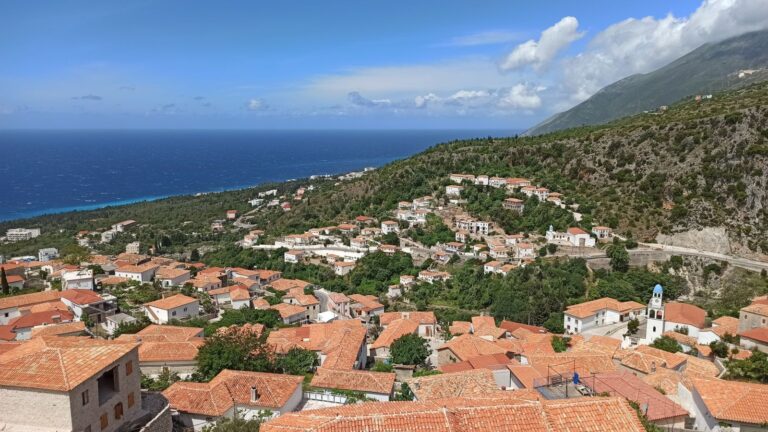

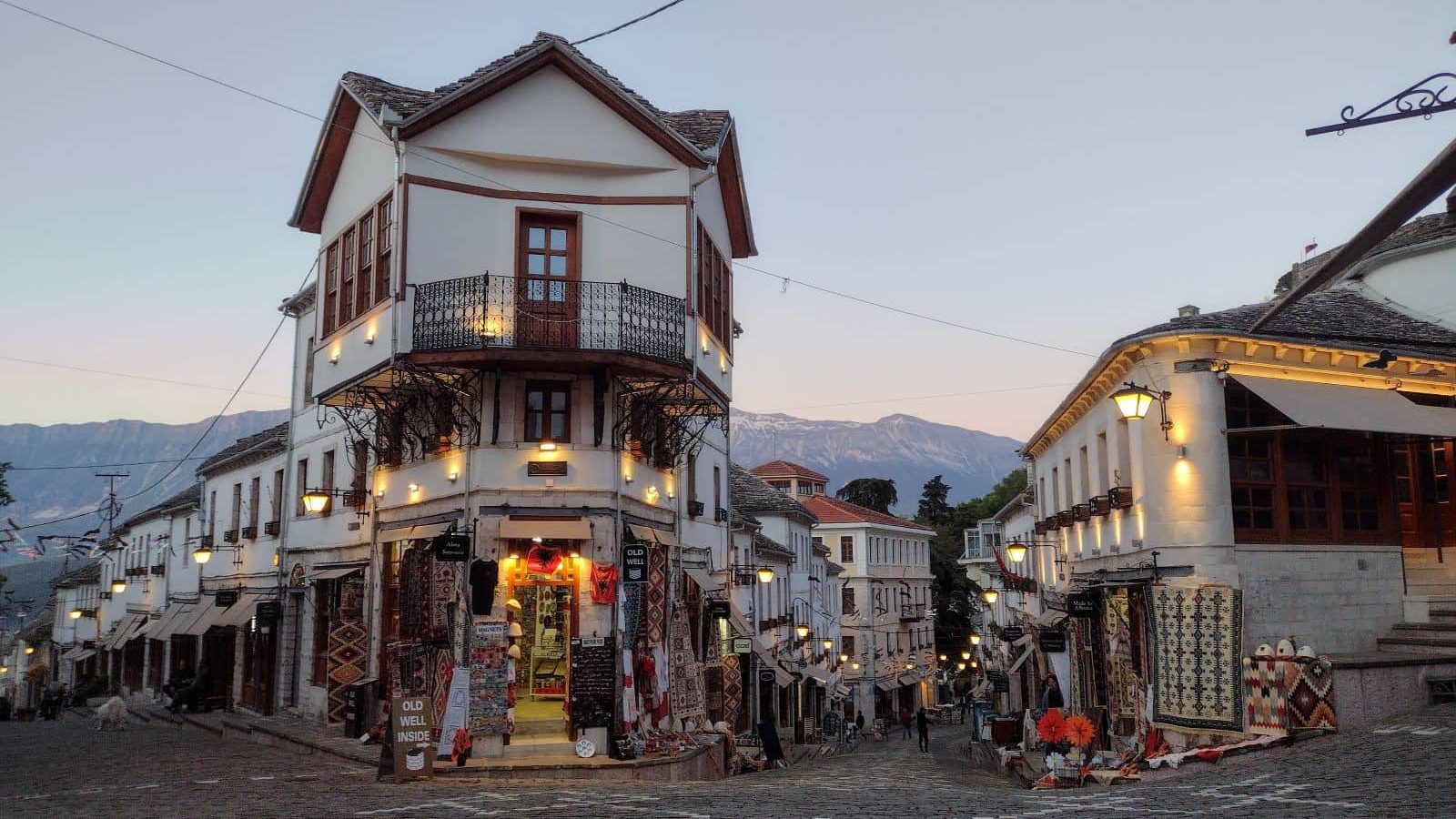
Known as the “Stone City,” Gjirokastër is an unbelievably enchanting municipality in the heavily Greek-influenced southern part of Albania.
With a dazzling old Bazaar, UNESCO-protected Old Town, and food that will make your taste buds tingle, it’s like a treasure chest for travelers. That’s without mentioning the pristine medieval castle with its secret underground bunker waiting to be explored.
It’s a place with immense history, and the birthplace of two of Albania’s most famous figures, Ismail Kadare and Enver Hoxha. With steep stone slab pavement and the slanted roofs of Ottoman-era homes, Gjirokastër is a place that has been revered by many.
It also happens to be one of my favorite destinations in Albania.
With that in mind, I decided to compile a list of the best things to do in Albania’s “City of Stone.” I also include a few tips on where to stay and what to eat.
Here’s my guide to Gjirokastër, Albania.

Learn The History of Gjirokaster Castle
Gjirokastër Castle is maybe the most beautiful castle in all of Albania. It looks like something straight out of Game of Thrones. Unlike the popular fantasy show, though, the fortress’s history is entirely based on reality.
From a medieval castle to a military shelter to a wartime prison, the Gjirokastër Castle has kept busy throughout the years. It seems to always serve a purpose within Gjirokastër, and nowadays that means tourism.
And I’m glad that’s where it’s settled. It’s home to multiple attractions that add to its ever-growing allure, all while staying well-maintained.
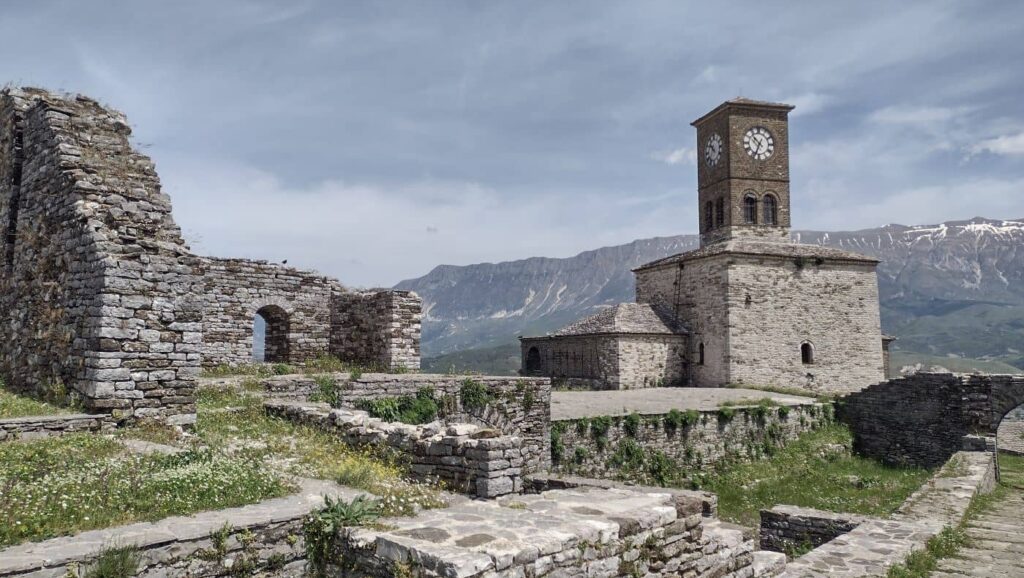
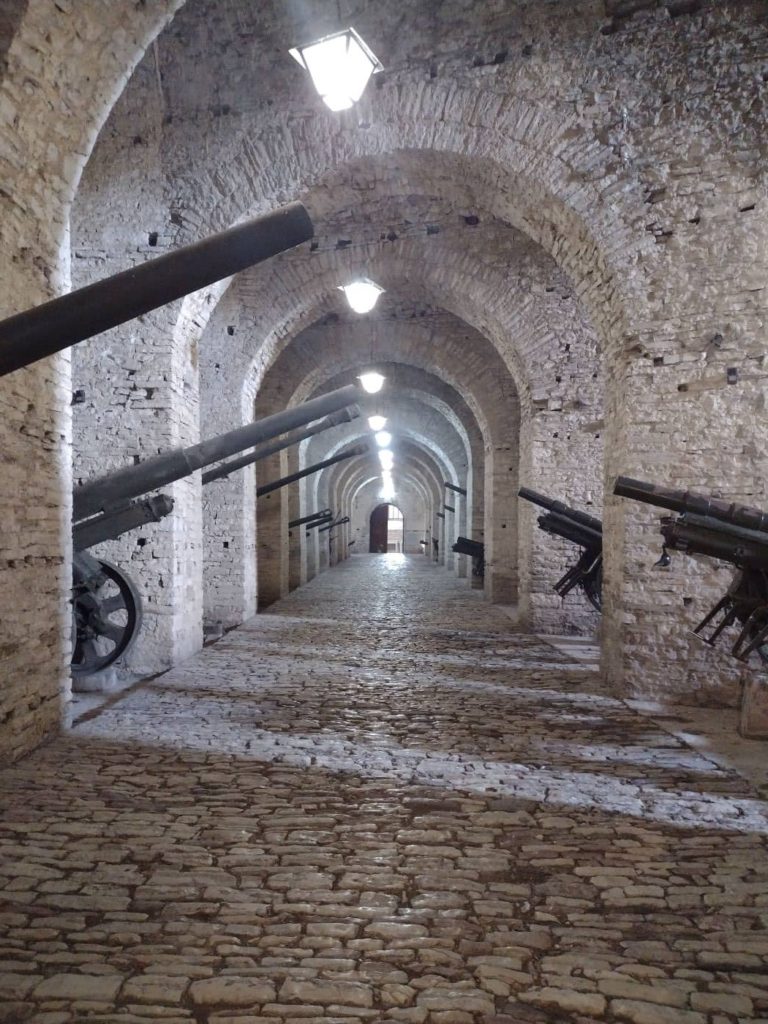
Inside the walls of Gjirokastër Castle, you’ll find the National Arms Museum, which is dedicated to showcasing Albanian arms from its historical independence in 1912 all the way up until the end of WWII. The interior also houses a small model of the original castle, plus a timeline of all the events that have happened.
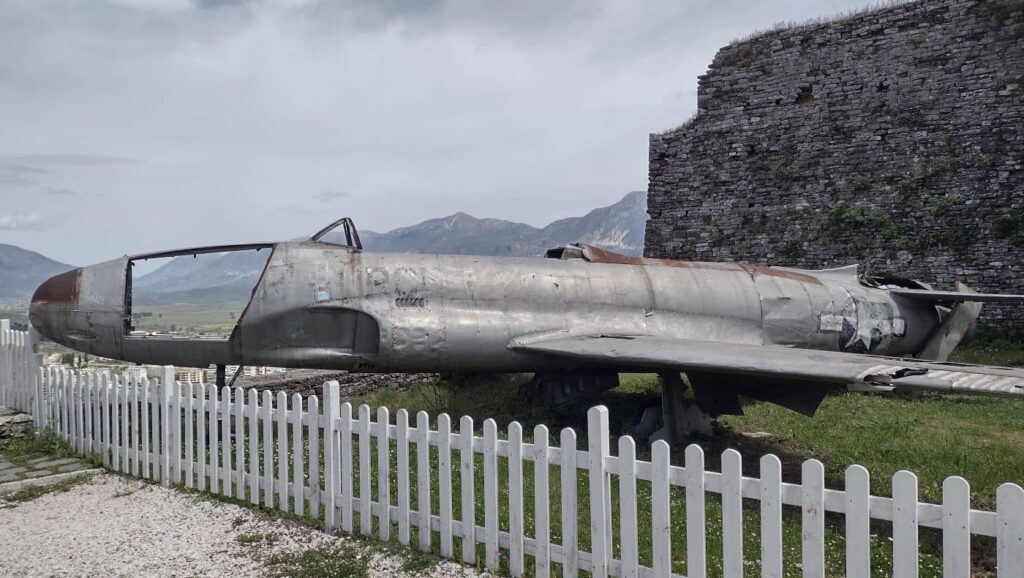
As you make your way up the stairs to the upper walls, you’ll see an abandoned US Air Force jet with a complicated history, wander past the dungeons, and find information dedicated to native species of bats.
In the courtyard, there’s a stage that’s used for cultural events, and next to it, the famous clock tower that can be seen from almost every inch of the town.
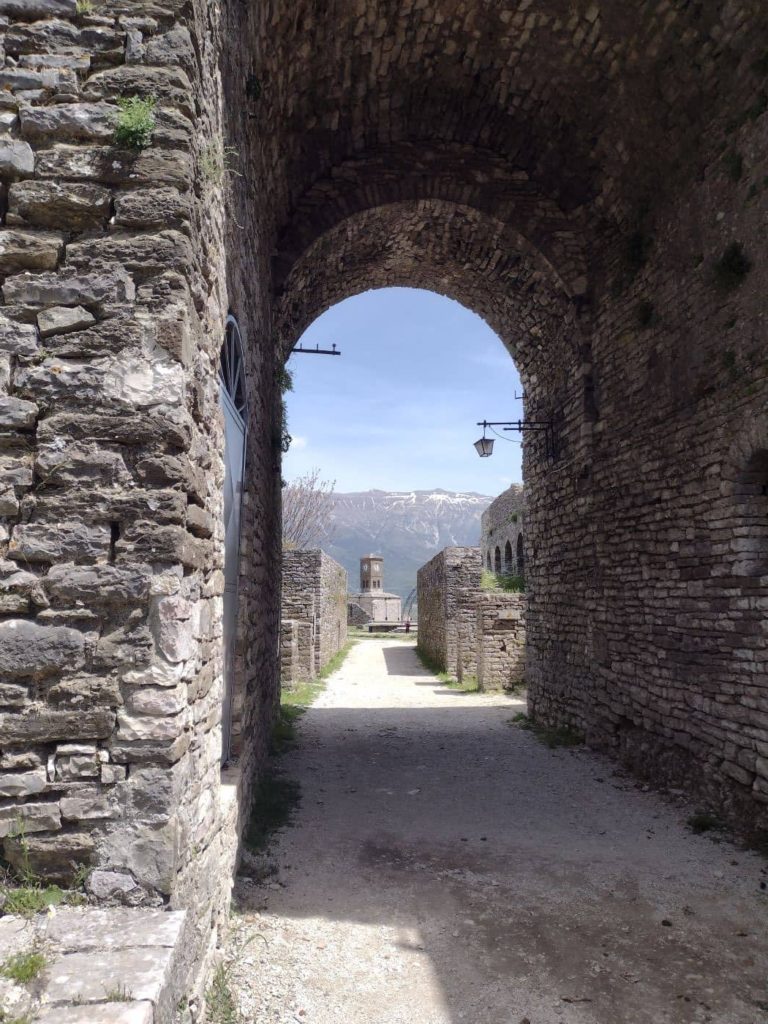
The views from this area are spectacular as well. There’s a bird’s-eye view of the bazaar, plus a nice vantage point of the snow-capped mountains in the distance.
Inside the castle is also a small, historical Gjirokaster Museum that displays armaments and gives information about Albanian independence. If you’re looking to learn the history of the “Stone City,” the Gjirokastër Castle is a must-visit.
Gjirokaster Castle Entry | 400 Lek
Gjirokaster Museum Entry | 200 Lek
Hours of Operation | Will depend on whether you’re there for the summer or winter season.
October 1 – April 30
Tue – Sat | 9:00 – 16:00
Sunday | 9:00 – 14:00
Monday | Closed
May 1 – September 30
Every day | 9:00 – 19:00
Visit Ali Pasha’s Bridge
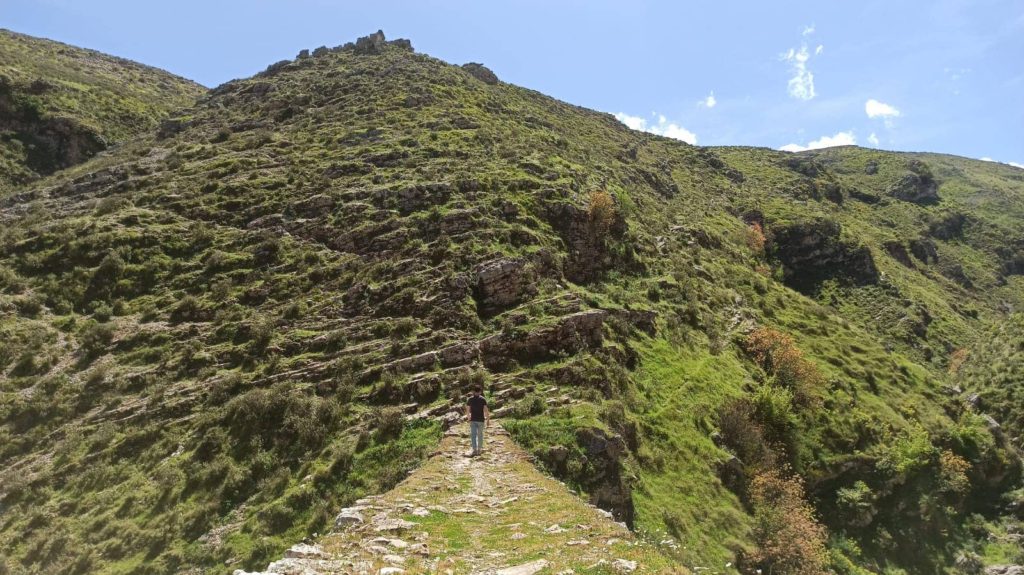
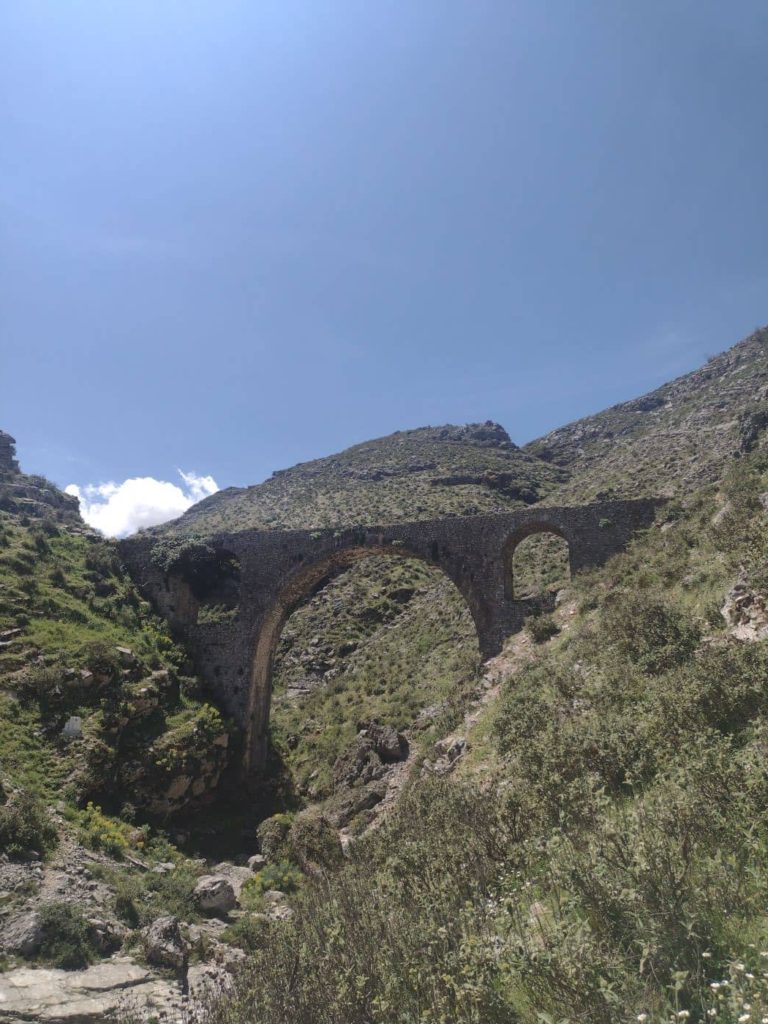
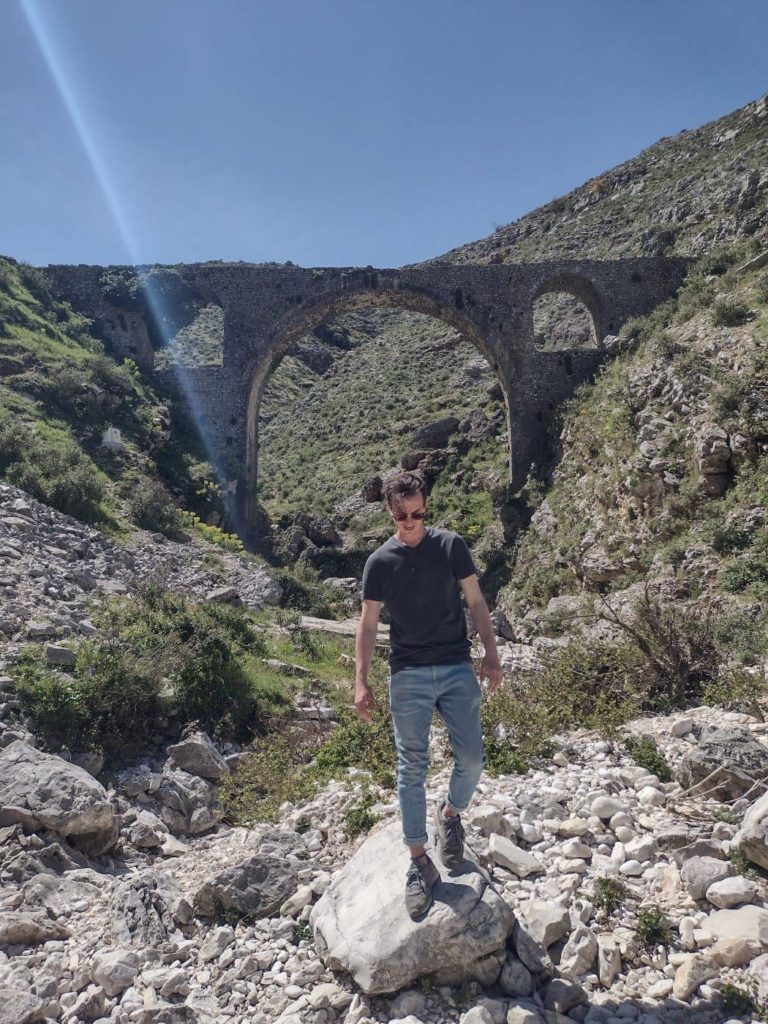
One of the coolest things in Gjirokastër, and my personal favorite, is the hike to Ali Pasha’s Bridge. Don’t be fooled by the bridge at the end of the name; the old structure is actually a piece of a larger aqueduct system.
Commissioned back in the early 19th century by Ali Pasha, the majority of the aqueducts no longer exist. However, this part of the Dunavat Quarter survived, and with it the name of its creator.
Now the aqueduct is used as a makeshift footpath for goats, a pretty glamorous spot to take a photo, and a bridge for the occasional hiker.
I’ve heard that if you come at sunset, and are lucky, you’ll see the silhouette of goats crossing the bridge.
Sounds amazing, right?
While I can’t claim to have seen this, I did cross paths with a herd of goats that were heading in the bridge’s direction. So the possibility is certainly there.
Either way, the 30-minute hike it takes to get to Ali Pasha’s Bridge from the city center is well worth it. If you’re looking for a more interactive experience, you can also look to join a walking tour that includes the bridge.
More About The Bridge | For a detailed look at hiking to the aqueduct, plus some tips on what to bring and when to go, have a look at my “Ali Pasha’s Bridge Guide.”
ALBANIA TRAVEL TIPS
If you’re wondering what it’s like to travel in Albania, have a look at my ‘Things to Know Before Visiting Albania Guide‘ for travel tips, advice, and resources.
Explore Gjirokaster's Surrounding Nature
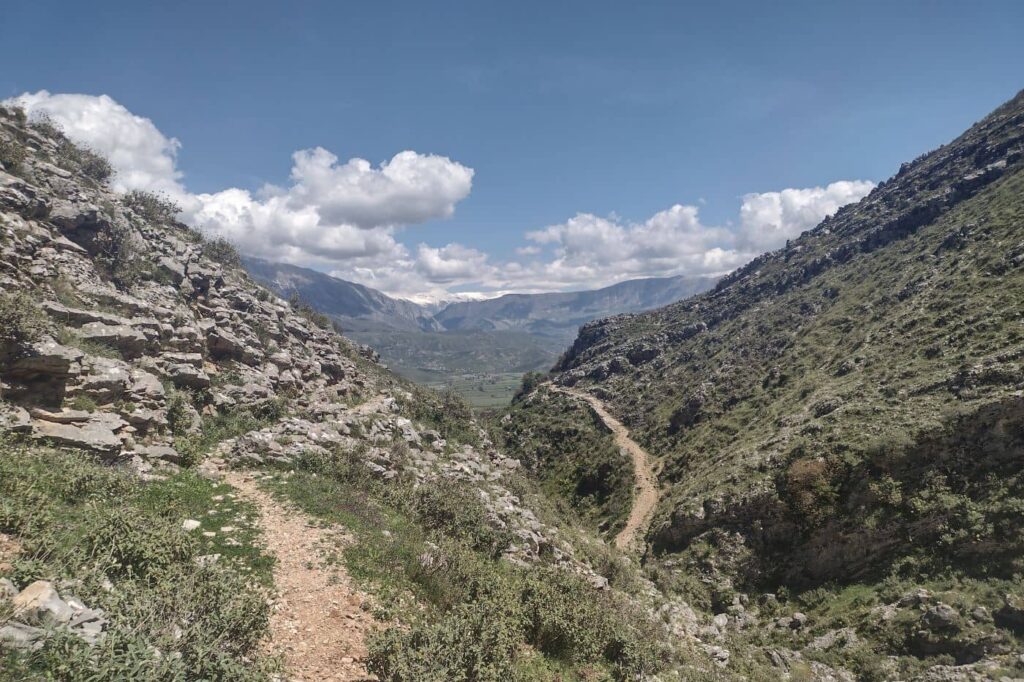
If the thought of hiking to Ali Pasha’s Bridge excites you, then the surrounding nature should as well. If you keep heading along the path that leads you to the bridge, you’ll find some beautiful hills with stunning views.
In fact, the majority of the region is full of amazing hills. When the snow melts away, there are plenty of hikes in the area that will appeal to the active types.
But sometimes you just want to relax, or stay clear of the spring and summer heat. If that’s the case, then there are some beautiful natural springs just a short drive away.
This part of Albania is overshadowed by the Albanian Alps, but it has its own unique attractions. I suggest exploring some of that beauty!
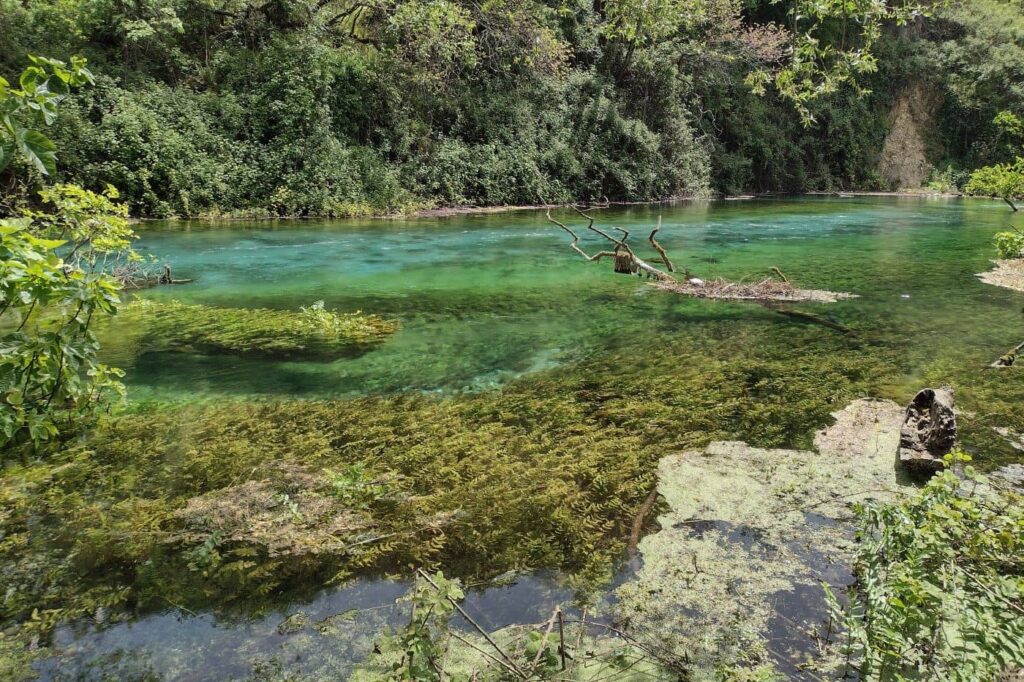
Take A Trip To The Blue Eye
If you ask anyone in Albania where to find a natural spring, the Blue Eye is the place they’ll point you to. It’s a popular tourist attraction with clear waters and magnificent scenery.
There are a few shaded restaurants around the area, and plenty of spots to pop your feet in. But watch out, there are a ton of tiny frogs hopping around. When the sun is scorching, it’s the perfect place to spend the day. And, it’s a pretty easy day trip from Gjirokastër.
Since it’s smack in the middle of Gjirokastër and Sarandë, it’s a common visit from either city. However, if you’re looking into booking tours to the Blue Eye in advance, it’s best to do so from Sarandë. There are tour operators in Gjirokastër, but you’ll have a hard time finding them online.
For those of you visiting Gjirokastër as a day trip, you can check out tours through GetYourGuide here and Viator here.
Getting There | The bus ride to the Blue Eye takes just under an hour and costs 200 Lek (they may charge the full Sarandë fare of 400 Lek now). Give yourself some extra time in case of bus trouble. The bus I was on broke down, so I had to wait along the side of the road for the next one. This is uncommon, though. Buses leave from the SH4 Highway near the roundabout.
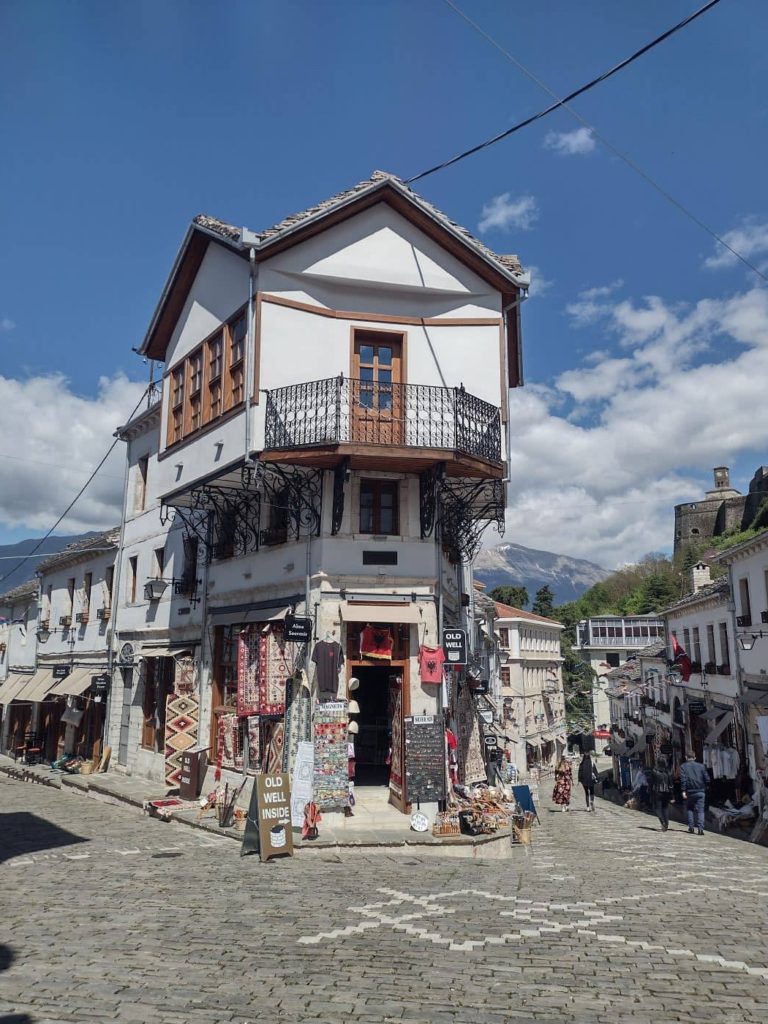
Take A Stroll Around The Old Bazaar
The old Bazaar is the heart and soul of Gjirokastër.
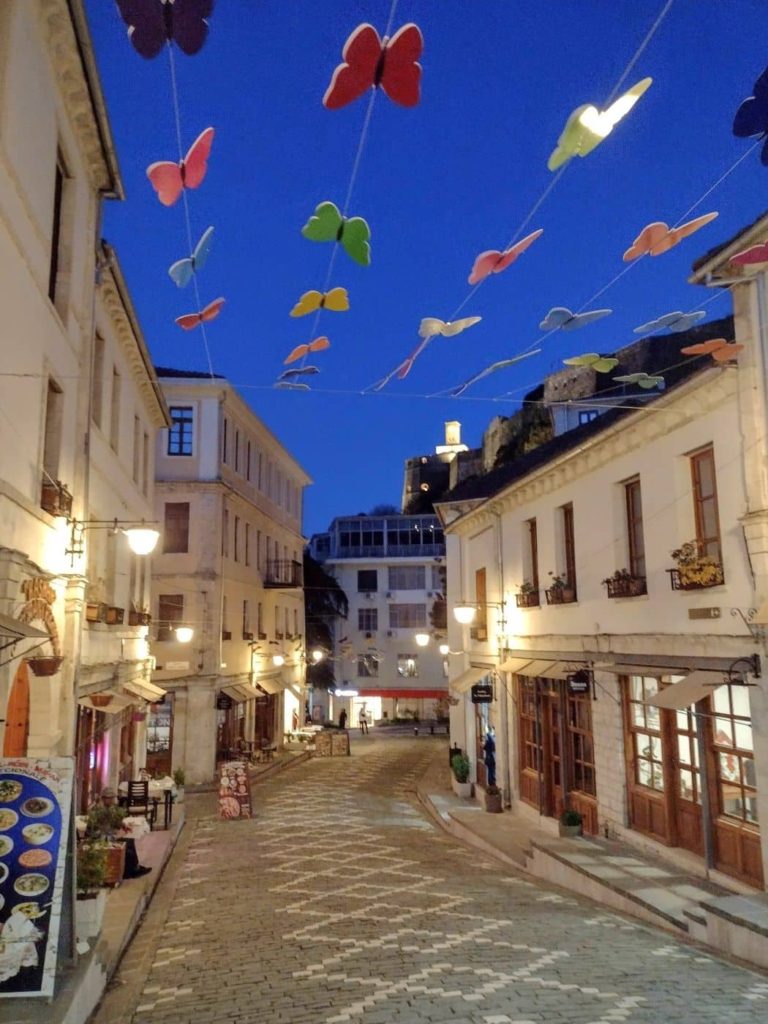
It’s also the busiest area during the peak months. However, roaming through the streets at dusk is an absolute treat, with the picture-perfect shops dotted with bright lights against the dimming sky.
The shopkeepers aren’t shy with their colorful decor, which only emphasizes the striking features that make the bazaar the center of tourism.
There’s quite a bit to do here throughout the day. Most of the restaurants reside amongst these streets, and there are dozens of unique handicraft shops.
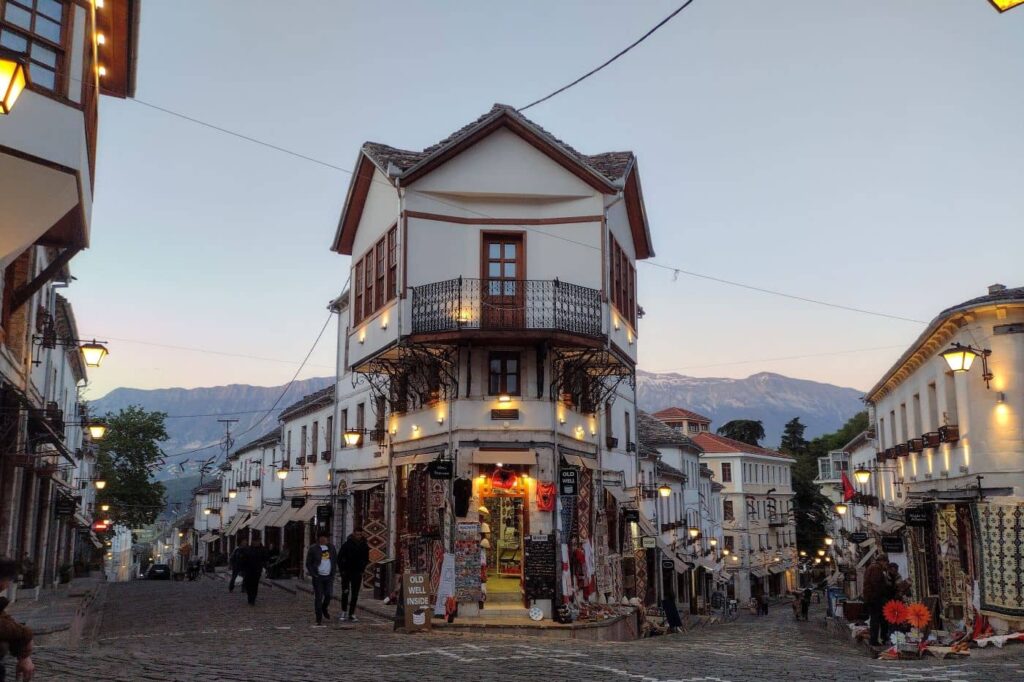
If you’re looking for some cool souvenirs, this will be the place to find them in Gjirokastër. There are marvellous antiques and old-school items from the country’s isolation period, plus classic Albanian textiles.
If shopping isn’t your thing, then dive into the local cuisine or wander around snapping pictures of the photogenic buildings.
When you’re done, embrace the lively atmosphere of the Gjirokastër Bazaar. You’re unlikely to regret it.
Try All The Traditional Foods
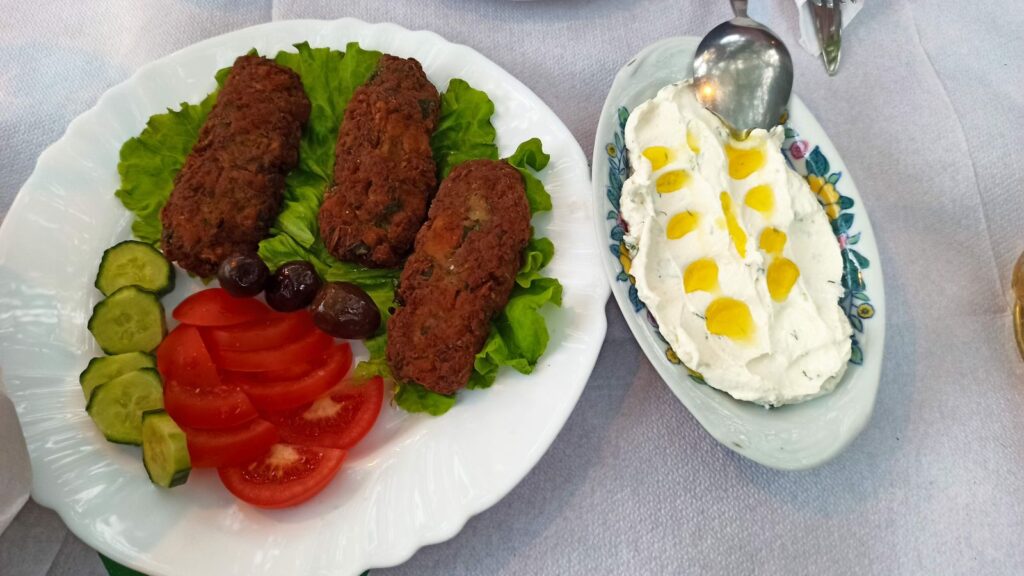
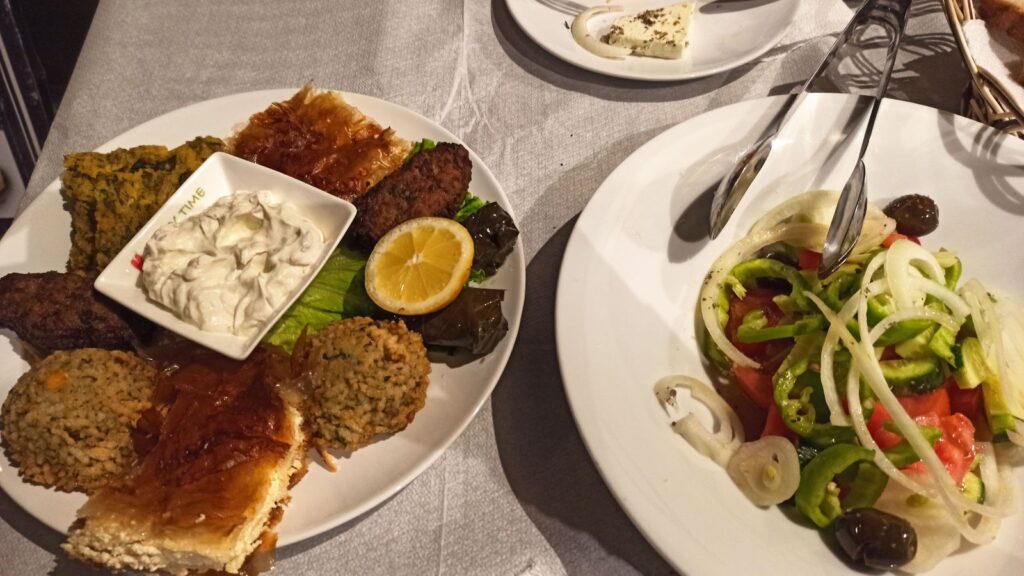
The food in Gjirokastër is…AMAZING! Honestly, I didn’t have a bad meal while in the Stone City.
Like its UNESCO brother Berat, Gjirokastër is all about the traditional Albanian food. Most restaurants do home-cooked food (and wine), and they do it really well. Some common things you’ll see on the menus are Qofte (meatballs), Qifqi (rice balls), stuffed pepper, and stuffed grape leaves.
The city is home to a large Greek minority as well, so if you’ve been to Greece, some of the foods might be recognizable. However, the cooks here won’t hesitate to tell you how their food is truly unique to Gjirokastër.
I feel it wouldn’t be fair to talk about all this food and not mention some of the places that stood out to me:
Taverna Tradicionale Sokolli (maps) | The tarator soup (cold cucumber soup) here was extremely refreshing, especially on hotter days. They have several other traditional Albanian meals, too.
Kujtim Restaurant (maps) | Well-priced, delicious, and home-cooked meals.
Rrapi Restaurant (maps) | Stands right next to Kujtim and has equally nice food. They had nice local wine, and the outdoor setting is wonderful.
Vojsava Restaurant (maps) | Beloved restaurant on the way to the castle. The moussaka is worth trying here if you’ve never had it.
Taverna Tradicionale KARDHASHI (maps) | Great local tavern with well-priced, delicious traditional food.
To be honest, you can’t go wrong with any restaurant in the old Bazaar. I suggest wandering around the cobbled streets and trying a different eatery for every meal.
Visit Skenduli House
There are tons of amazing homes in Gjirokastër, but three stand out the most.
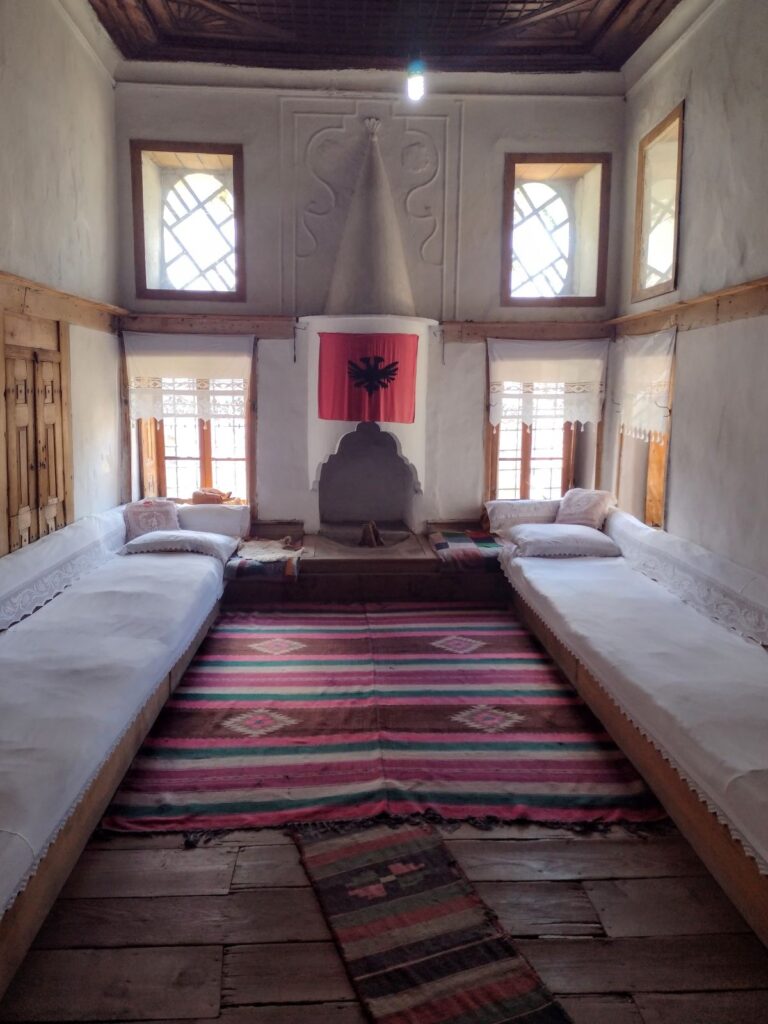
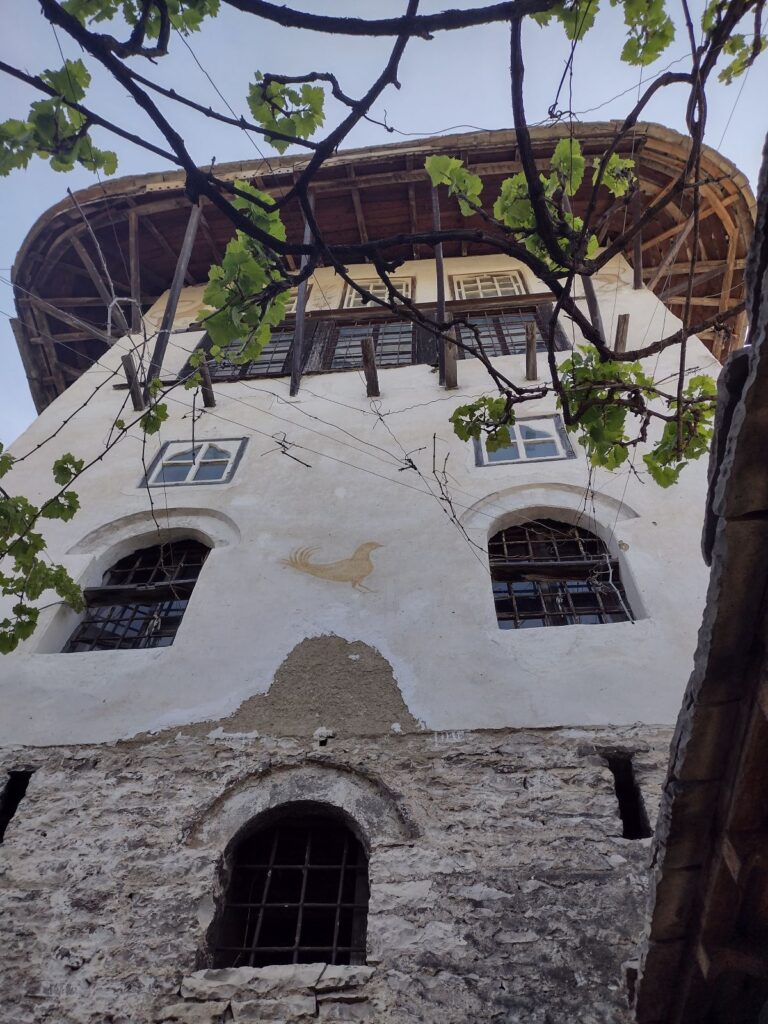
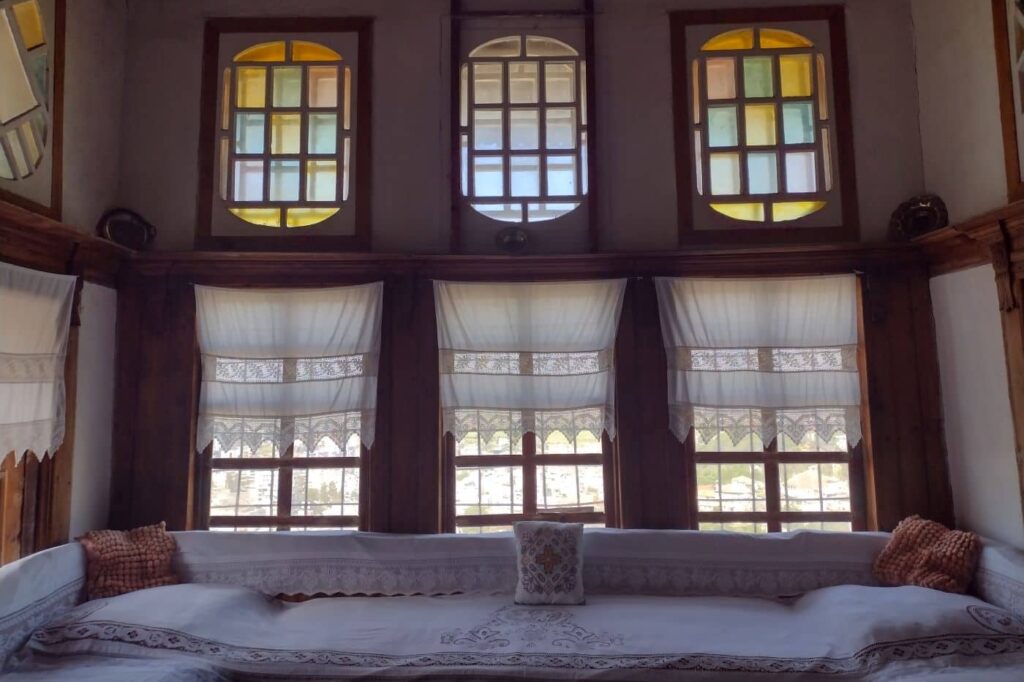
The first is Enver Hoxha’s home, which is now an ethnographic museum. The second is Zekate House, which stands on a hill overlooking the city. Lastly, there is Skenduli House, which I find the most charming.
The detailed woodwork and impressive size of the home will make you think it’s a small castle.
What makes it so special, though, is the guided tour from a member of the family that owns it. You’ll get an in-depth history lesson about the family’s origin and daily life during Ottoman rule.
Gjirokastër is known for its spectacular Ottoman-era houses, and Skenduli House was my favorite to visit.
Price | 300 Lek
For those looking to visit one of the other two houses I mentioned (plus another), here is a short overview of each:
Ethnographic Museum | The home where Enver Hoxha was born now doubles as a historical museum. It has been renovated in recent years, and there are several clothing pieces and artifacts that show how a traditional, wealthy family lived back in the day.
Price | 500 Lek
Zekate House | It stands nearly at the top of the hill in Gjirokastër, which also means you’ll have stunning sights. The house, like the others, is stunning. A bar/cafe is connected, so when you finish a tour of the house, you can grab a drink with panoramic views.
Price | 300 Lek
Ismail Kadare’s House | The former home of the renowned writer has been turned into a museum. It’s a renovated building, as it was previously burnt down. If you’re a fan of Kadare, it’s worth a visit.
Price | 500 Lek
Explore Beneath A Hill In The Cold War Tunnel
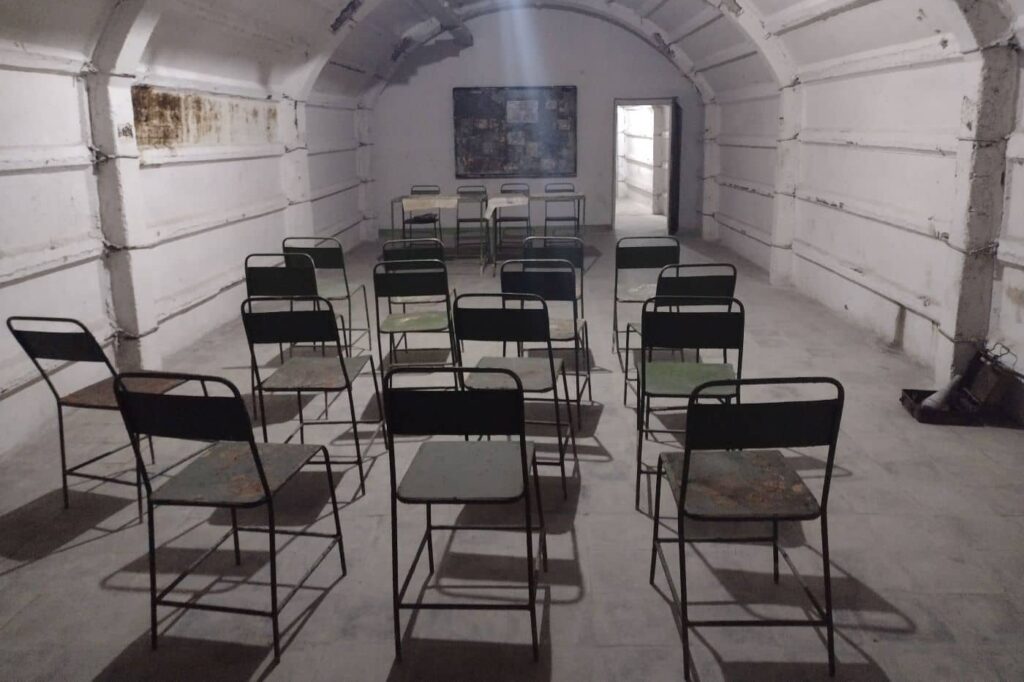
Underneath the castle and deep inside a hill, the Gjirokastër Cold War Tunnel stands the test of time. The bunker was built in the seventies and eighties, and shows a period of Albania’s history that grew from fear.
The coolest thing about this spooky tunnel is the items left inside.
They appear the way they were left when the Cold War ended. It’s one thing to see the staged exhibits of Bunk’Art in Tirana, and another to see an abandoned bunker with untouched items from the communist regime’s final days.
To see the Cold War Tunnel, you need to first visit the information center. One of the workers will give you a short tour of the hidden tunnel. It takes anywhere from 10 minutes to half an hour to get through, depending on how many pictures you want to take.
Price | 200 Lek
Sip On Some Coffee And Enjoy The Views
Some of my favorite times in Gjirokastër were when I sat back, relaxed, and sipped on an espresso. I highly suggest you do the same.
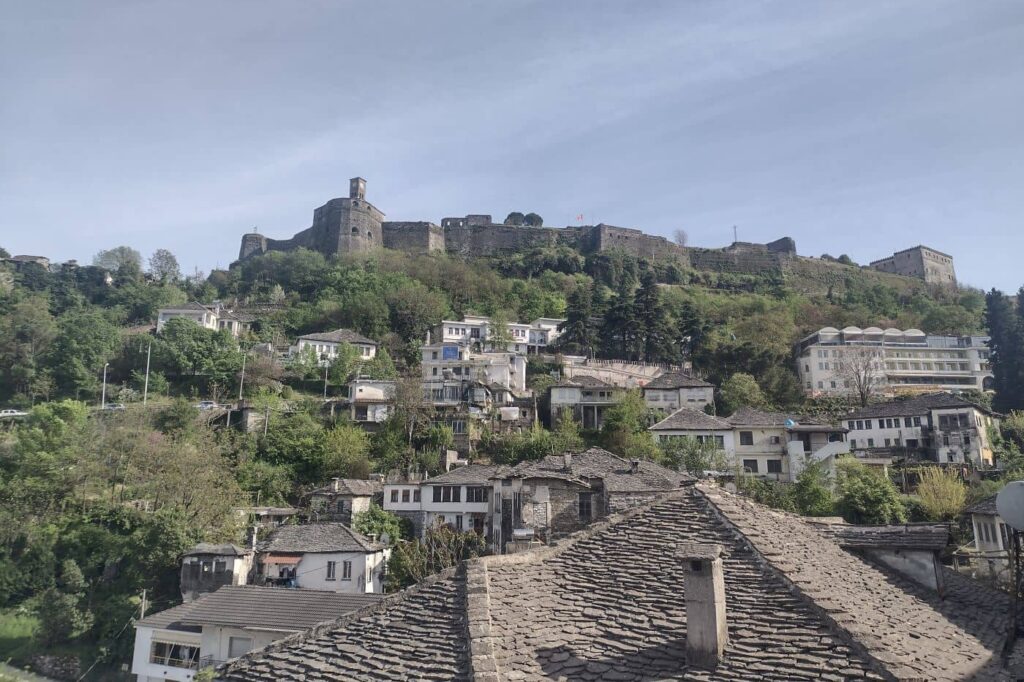
The imposing castle and old stone houses make for an idyllic scene. And the beautiful hills and lush grassy valley only add to the city’s charm.
Some places I recommend for a chill:
Hotel Kodra (maps) | The bar and restaurant at Hotel Kodra have (in my opinion) the most scenic views in Gjirokastër.
Cafes in the Bazaar | The cafes in the bazaar are perfect for people watching at night, with their bright lights and vibrant colors.
Friend’s Hostel (maps) | Has an amazing view of the castle and clock tower.
The Obelisk of Education (maps) | It’s not a cafe, but you can grab a to-go coffee and relax at the obelisk for some epic views.
Whether it’s a cold drink to beat the summer heat or a coffee to start the day, enjoying Gjirokastër from a cafe is worth the time. As I mentioned before, Gjirokastër was a highlight of my travels through Albania. I have fond memories and an even greater excitement to come back to the city.
GETTING AROUND GJIROKASTER
In the old town and bazaar, walking will be the only real way around Gjirokastër. But getting there is quite the trek, since everything is uphill.
If you’re arriving by bus, you can grab a taxi on the highway and take it to the outskirts of the bazaar to save about 25 minutes of steep incline walking.
When it comes to transport to and from Gjirokastër, all stops are down the hill near the roundabout. Here are a few of the places to know:
The Roundabout (maps) | This is the area you’ll be dropped off at and leave from. It’s next to the gas station, and a bit hectic, so asking around for help while you’re there will be your best friend. Buses in the direction of Sarandë, Tirana, Berat, and other bigger cities leave from here.
Buses to Permet (maps) | These leave from a little further up from the gas station. They leave at 7:30, 10:00, and 13:00 daily and come back at 9:00, 12:00, and 15:00. Permet is usually just a day trip, so plan your trip back accordingly. Prices are 400 Lek. I’m not sure if they go year-round.
For a more in-depth look at transport in Albania, check out my ‘Albania Bus Guide‘ article.

WHERE TO STAY IN GJIROKASTER
Most accommodations in the city are within immediate walking distance of the bazaar. You’ll also find that many of them are inside the gorgeous stone homes that dot the streets of Gjirokastër.
Here are a few recommendations:
Friends’ Guesthouse & Hostel | A budget-friendly hostel with private rooms. I spent a week here in a private room and really enjoyed my stay. The views from the balcony are spectacular, and all the staff were wonderful.
Stone City Hostel | Another great hostel option, and probably the most beloved one in Gjirokastër.
Grandpa’s Home | Another budget-friendly homestay near the bazaar. A friendly bed & breakfast with a nice owner.
Alsara Guesthouse and The Stone Sky Hotel | Mid-range options that punch above their weight. Alsara Guesthouse has a nice rooftop bar and cozy rooms. The Stone Sky Hotel is a bit of a trek up to the bazaar, but has an onsite restaurant and breathtaking views of the valley.
Hotel Gjirokaster and Hotel Kodra | Two nice hotel options with beautiful rooms. Hotel Kodra’s restaurant is a nice place to dine or grab a coffee with a view.
For more options, check here.