
This Albanian food guide was a collaboration with my partner, Sarka. She’s from the Czech Republic and has a similar post in Czech over at the sharkadventurin blog.
Albania often misses out on lists when talking about worldwide foodie destinations and best dishes around the globe.
And, honestly, that’s a pity!
It takes a little pinch here and there from popular cuisines like Italian, Greek, Turkish, and Balkan, and adds in a whole bunch of Albanian techniques and creations. In the end, you get some spectacular recipes that’ll leave your taste buds tingling.
Add on the reasonable restaurant prices throughout the country, and you have a wonderful culinary adventure worth traveling for.
Before we move on to the must-trys in Albanian cuisine and the best dishes to know, we’ll start with a little introduction to Albanian hospitality. We’ll also cover the ingredients used, or as we like to call them, the bread and butter of Albanian cuisine. Because, truthfully, names like dhallë and fërgesë may require some explanation.
We’re also happy to share some of the best restaurants we came across during our travels.
For all other things Albania, you can check out articles like my ‘Albania Travel Tips’ or my ‘Albania Travel Guide’ that will help you navigate your way through the country.
Albanian Hospitality
If you’re going to Albania with no prior knowledge of the country, then you’ll be pleasantly surprised by the level of generosity throughout. We received happy greetings and genuine smiles around every corner during our adventures in Albania. The country has had a shaky reputation for decades due to the struggles that followed the fall of communism, but today, you can expect nothing but a truly warm welcome.
Hospitality has been deeply rooted in the Albanian identity since ancient times. The duties of a host were even regulated at one point by the traditional customary code of conduct called “kanun“. However, this is still taken seriously, especially for the older generations. It’s still a matter of honor for them to treat guests with the utmost respect and offer everything they have.
We first traveled to Albania in the spring of 2021 as some of the first visitors after the global lockdowns, and were spoiled at every turn. We often got a complimentary dessert or salad at a restaurant, and many innkeepers treated us to Turkish coffee and homemade rakia.
I’m sure the locals’ enthusiasm will understandably grow colder with the surge in tourism Albania is likely to see. However, you can still experience some of the sweetest encounters in quieter areas and during the low season.
Ingredients of Albanian Cuisine
Traditional Albanian gastronomy is characterized not only by its diversity but also by the quality of its ingredients.
The Mediterranean climate is ideal for growing a variety of fruit and vegetables. Thanks to an abundance of sunshine and the absence of chemicals that smaller farmers can’t afford, these taste sensational. This is most noticeable in smaller towns; restaurants buy seasonal crops directly from local suppliers simply because they have no other choice.
You can try goat meat (mish dhie), lamb meat (mish qengji), and fresh cheeses, all for excellent prices. Plus, free-range farming takes on a new meaning here, with goats and sheep roaming just about anywhere they want, including along busy streets and throughout castle ruins.
Seafood and fish are an essential part of the menu, too. This isn’t exclusive to popular places along the Albanian Riviera. It includes the renowned blue mussels of Lake Butrint, where seawater mixes with freshwater, carp (krapi) from the largest lake in Southern Europe, Lake Skadar, and the legendary Ohrid trout (korani) on the North Macedonian border.
Shqipëria, as the country is called in Albanian, is one of the largest exporters of Mediterranean spices and herbs. In addition to the usual oregano, basil, rosemary, thyme, and bay leaf, meals can also call for sage, mint, saffron, and lavender. This often leads to typical Albanian dishes boasting an amazing aroma. Spiciness, on the other hand, isn’t very present in Albanian food. So, you won’t really have to worry about it when ordering a meal in a restaurant.
Albanian Food
That’s enough prepping; let’s get down to the top Albanian foods!
Just a quick assurance: you don’t need to worry about food poisoning in Albania any more than you would at home.
Breakfast In Albania
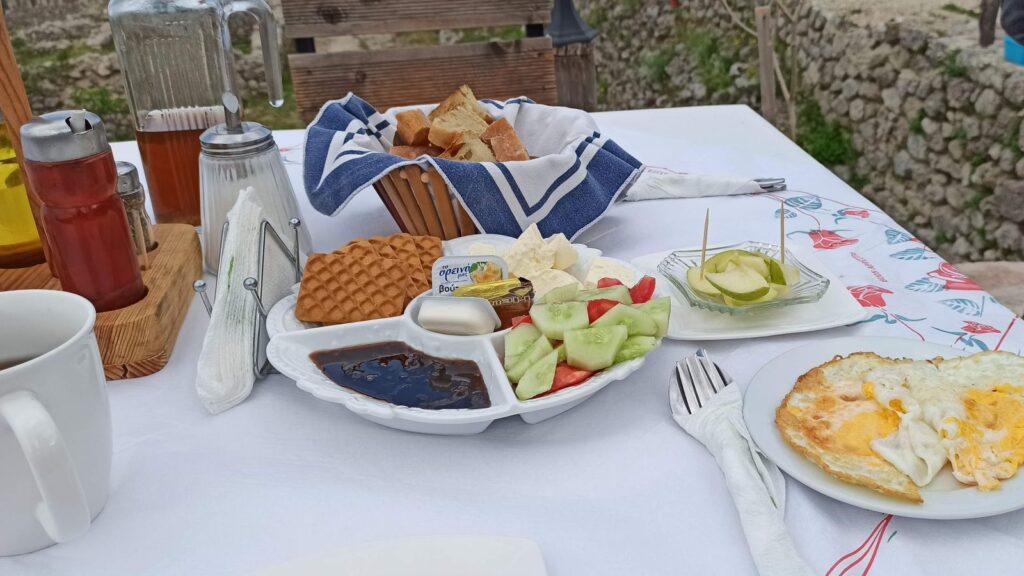
If your accommodation includes breakfast, you’ve got a lot to look forward to. Most family-run guesthouses serve fluffy white bread, fresh vegetables, fruit, at least one type of cheese, olives, eggs, and jam. Homemade fig or cherry jams are a favorite.
Bread (bukë) is eaten with almost every meal of the day.
Just like in the Czech Republic, “bukë, kripë e zërto”, meaning “bread, salt, and heart” (as in kindness, not the organ), is a traditional offering to new guests. This means you can expect bread and salt on the table and friendliness from the cooks.
Corn is plentiful in the north, so a typical loaf of white bread might be traded in for corn bread.
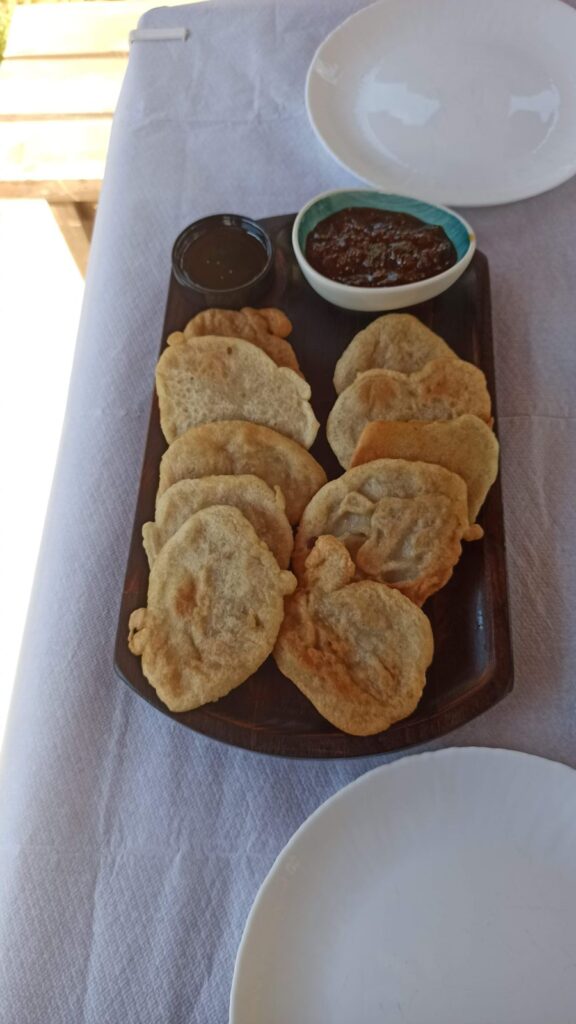
Another breakfast alternative is petulla, a fried dough that has the shape of small balls or patties.
They can be eaten with feta for a savory dish, but more often than not, are served with powdered sugar, honey, or jam.
Trahana, which is an ancient ingredient that can be found everywhere from Southern Europe and the Middle East to Central Asia, is also present in Albania.
It’s a blend of flour and fermented goat/sheep milk and is dried, rolled up, and used as a soup thickener or to make porridge. It used to serve as a nutrition boost for the poor and remains a crucial part of hearty morning dishes in more rural areas.
Fast Food \ Street Food in Albania
Handheld food is a big part of modern Albanian cuisine and usually includes some beloved staples from Greece and the Balkans.
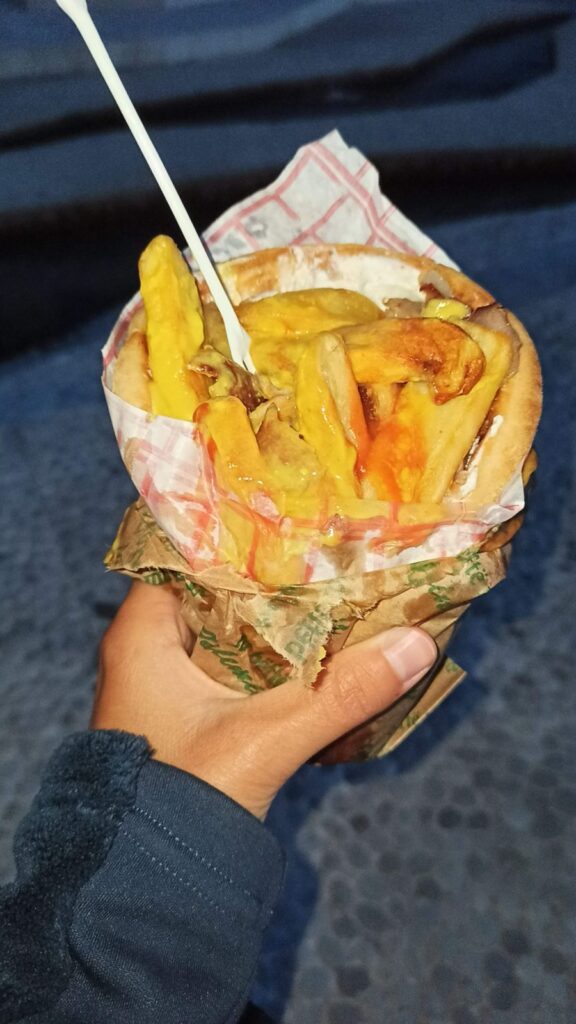
Sufllaqe/Gyro
Western fast-food chains didn’t reach Albania until fairly recently. This is in part due to political reasons, but also, no one really cares for them. Only a few Burger King restaurants and a new Popeyes are trying to compete with the king of Albanian street food — sufllaqe!
While sufllaqe sounds familiar to Greek souvlaki, it more closely resembles another Greek classic – gyro.
While souvlaki refers specifically to meat on a skewer, this is meat layered on a vertical rotisserie, grilled to crispy, juicy perfection, and then thinly sliced into a blanket of warm pita. It’s hard not to romanticize it after a hunger-stricken late evening stroll!
Typical meat choices include chicken, pork, and sometimes sausage (suxhuk). Toppings are usually some combination of fries and a selection of veggies and sauces, such as lettuce, tomato, tzatziki, and a mustard-mayo-ketchup mix.
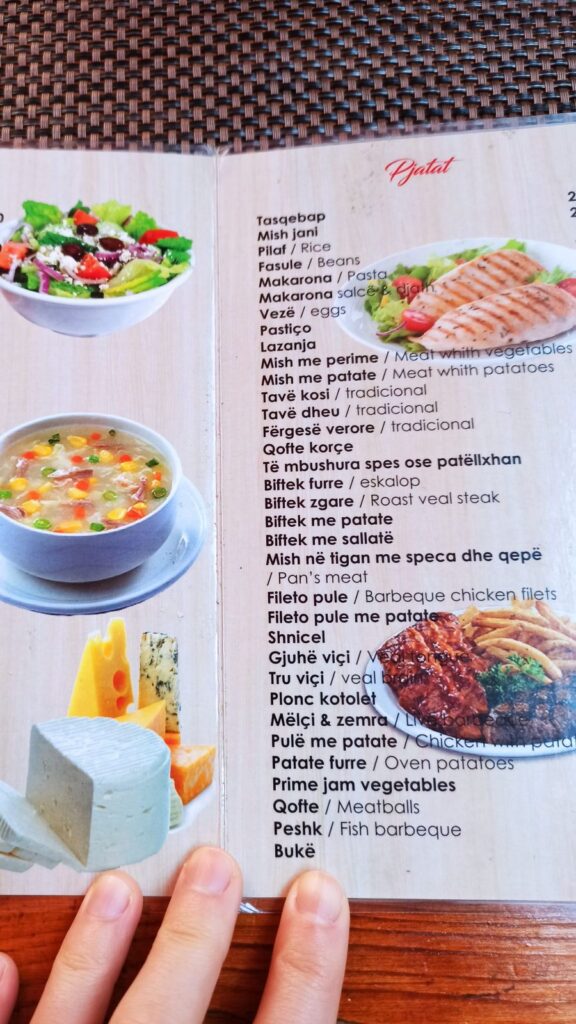
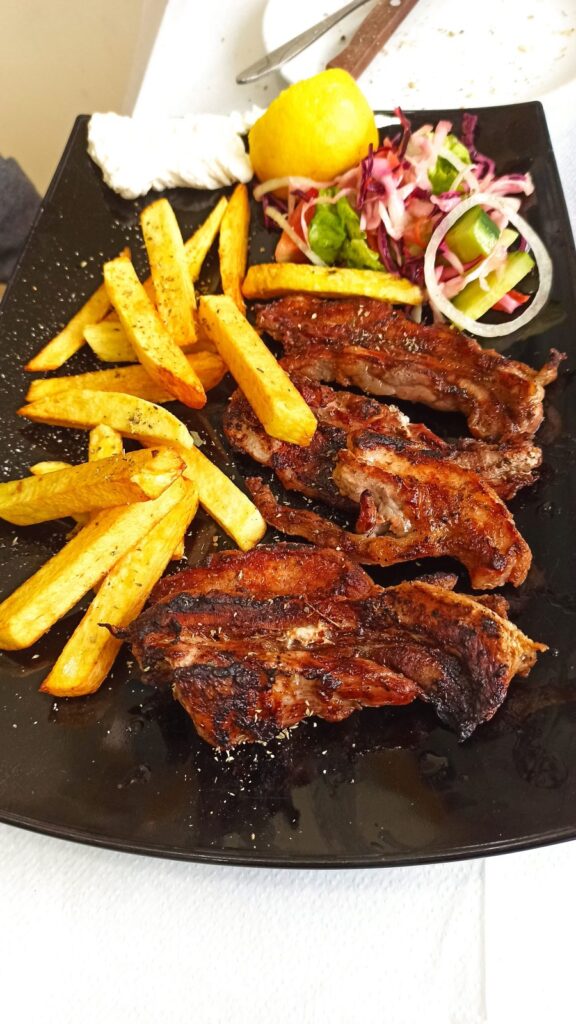
The same places usually have other things on the menu, too. Hamburgers, toasties, hot dogs, salads, and a whole range of grilled meats (zgara) are common. The same goes for skewers (shish kebab), chicken (pulë), qofte, pork chops (bërxollë gici), and other quick bites.
Byrek
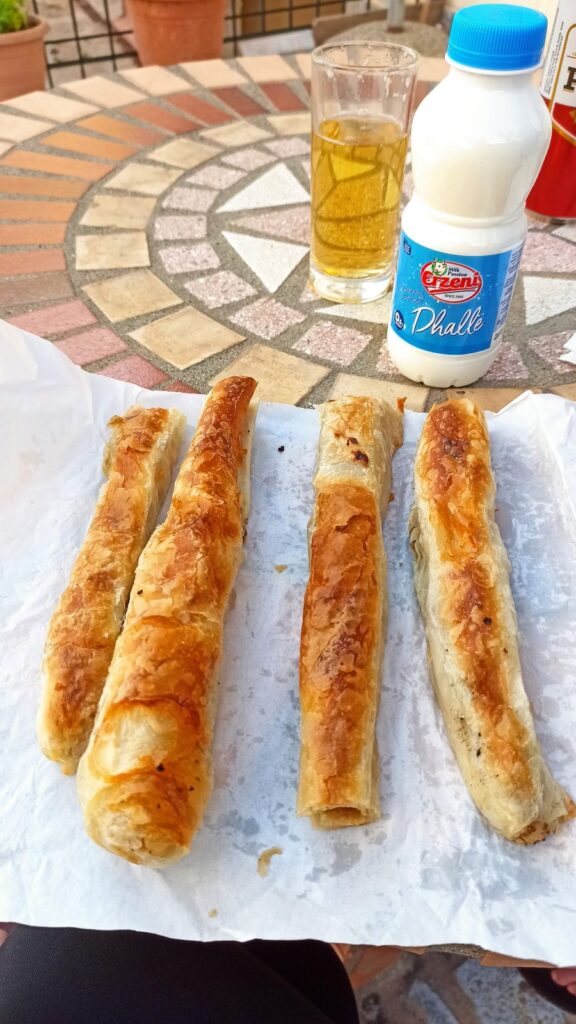
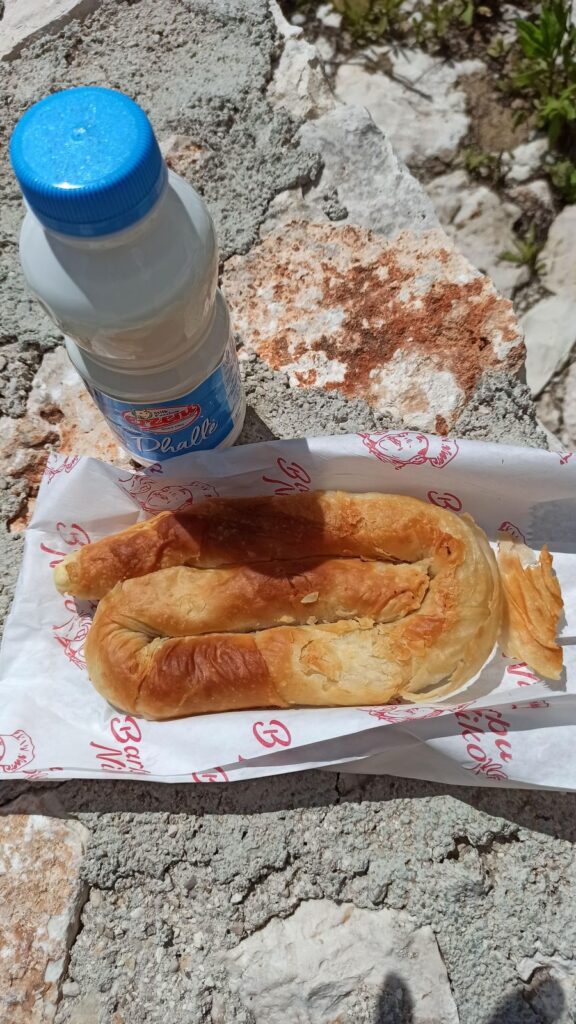
If you visited the Balkans before, you’re probably familiar with some version of byrek, also spelled burek. It’s best as a quick lunch on the go and the perfect snack to take on a day trip or for a beach day.
The crunchy, flaky phyllo pastry has spread far and wide from the Ottoman Empire. It comes in various shapes and sizes, with a wide range of fillings, and is different at almost every bakery. In Albania, popular stuffing options are soft fresh cheese, spinach with egg, minced meat with onion, leeks, potatoes, and seasonal pumpkin. A regional variant from Korçë is called lakror and is more pie-shaped.
Byrek is best enjoyed with a cup of cold dhallë, a salty yogurt-based drink similar to buttermilk or Turkish ayran. It somehow neutralizes the greasiness of a byrek, is wonderfully refreshing in the summer, and takes the meal to a whole new level.
Every bakery, or byrektore, sells dhallë, and it’s entirely up to you whether you sip it or dip your byrek in it.
Salads in Albania
Don’t be surprised when you see almost a dozen salads on every Albanian restaurant menu.
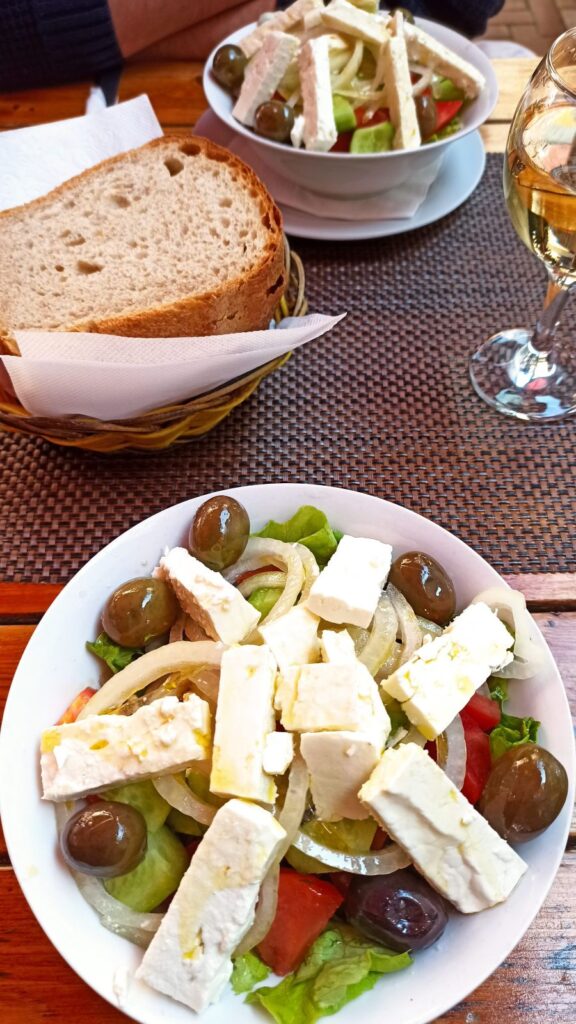
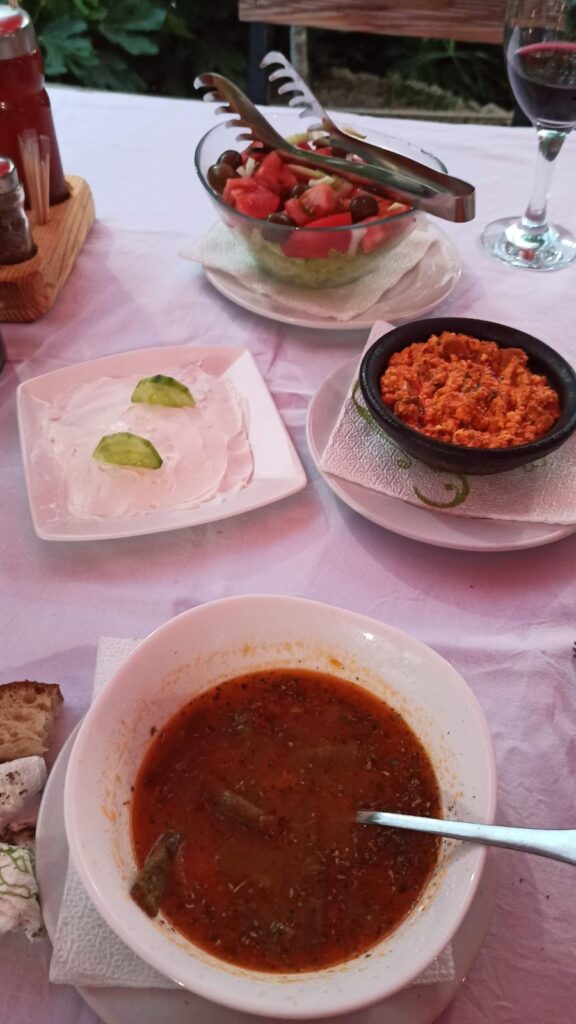
Greek salad (Sallatë Greke) | You can’t go a day without some fresh vegetables in Albania! Salad accompanies every meat dish and sometimes ends up on your table without even ordering it. Customarily, it comes with a good chunk of feta, high-quality olive oil, tomatoes, cucumber, and onion. Here and there, some greens are added, sometimes even bell pepper.
Village salad (Sallatë Fshati) | The cheaper village salad is not that different; it’s just a combination of whatever veggies are available at the moment. Sometimes it’s just an ingredient or two; other times it looks much different.
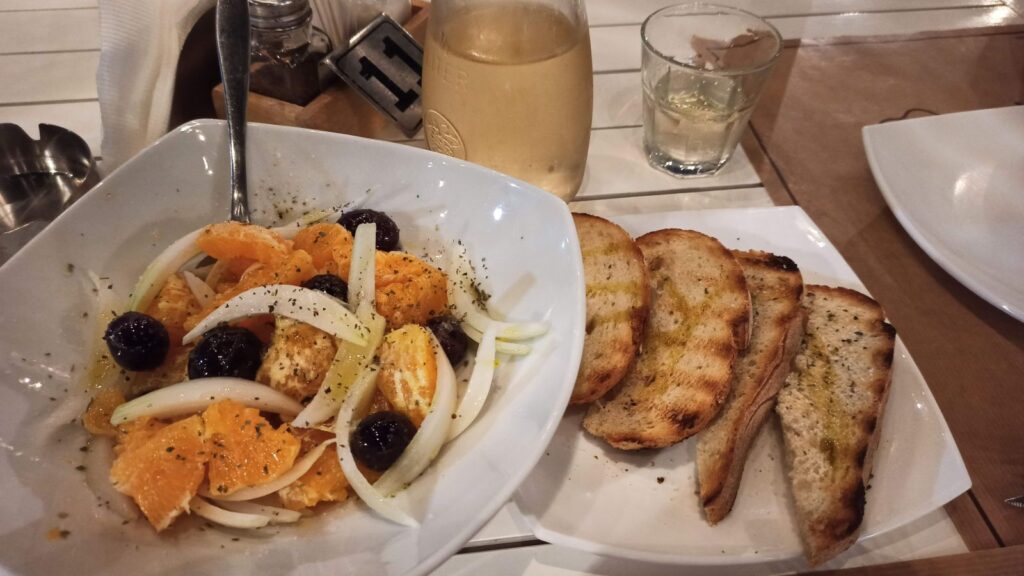
Himarë Salad (Sallatë Himarë) | A specialty of the coastal town of Himarë, which we fell in love with, and continue making at home. I honestly think this is the most refreshing snack on a hot summer day in the Albanian Riviera. All you need are: oranges, good olives, mild onion, salt, pepper, and olive oil. In one restaurant, they even put in some shredded white cabbage. Of course, this is a seasonal dish, but during the warmer months it will be on most restaurants’ menus in Himarë.
Soups in Albania
Chicken, Fish, and Vegetable Soup (Supë Pulë, Peshku, me Perime) | Soup of the day is a common promotion, and it is always one of these three. Instead of a clear broth, expect a slightly thicker consistency achieved by blending in potatoes. These soups are served with a slice of lemon for added tanginess.
Paçe Koke | A very traditional Albanian dish, especially in the mountains. Maybe a little challenging for some tourists, because it is a broth made from a sheep’s or goat’s head, including eyes, tongue, brain, etc. It’s served with rice (pilaf) and a drop of wine vinegar. Since the highlanders need to warm up and stock up on calories right in the morning, they usually eat it for breakfast.
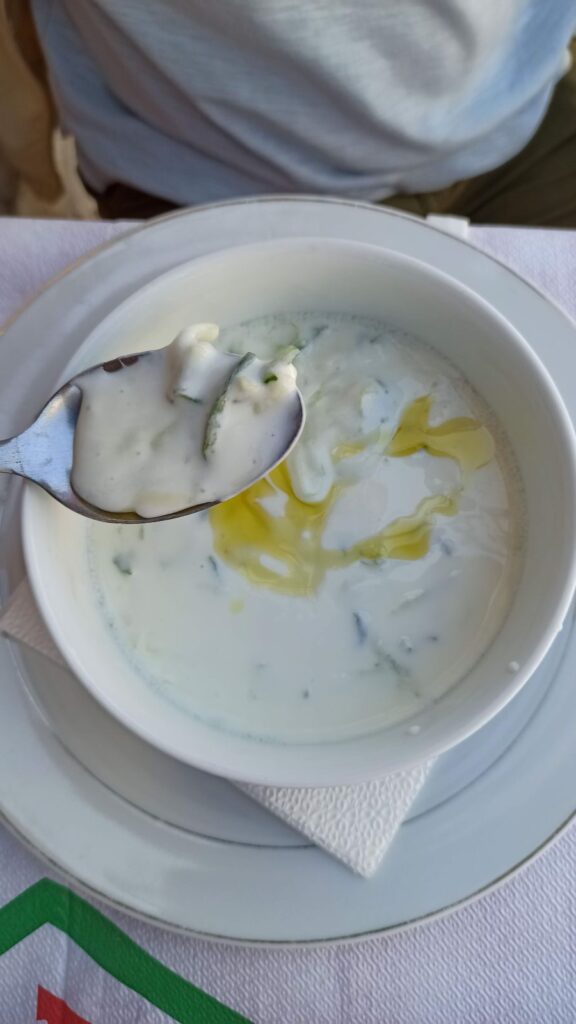
Tarator | A cold summer soup, tarator resembles a thinned-out tzatziki. It’s made of yogurt, cucumbers, garlic, dill, olive oil, walnuts, and water. It’s very refreshing, and often sought after during the hot months throughout the Balkans and the Middle East. We noticed it’s easiest to find tarator in the eateries around Gjirokastër.
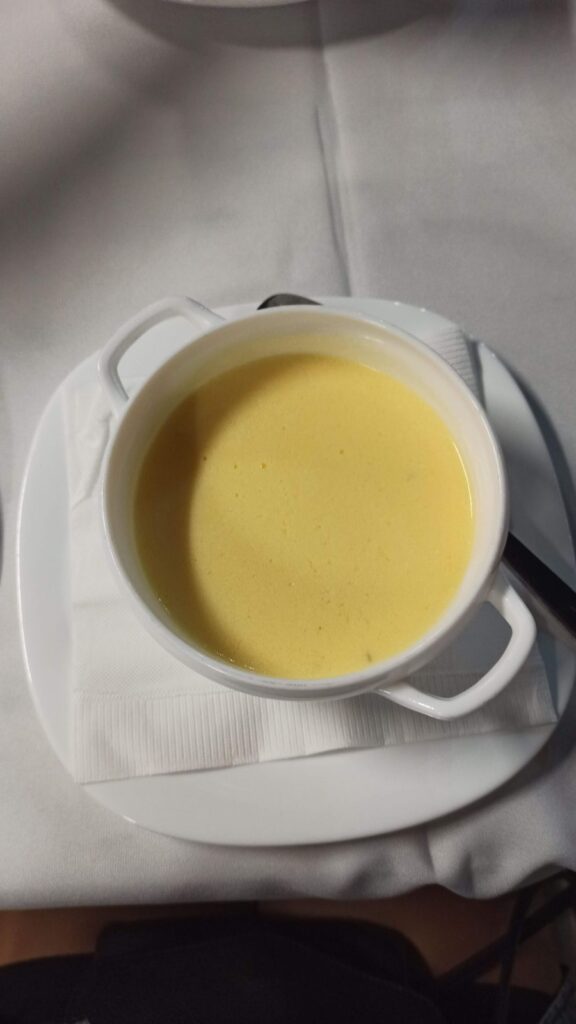
Egg and Lemon Soup (Supë Pulë me Vëze e Limon) | A medieval recipe from the Sephardic-Jewish diaspora. It was most notably adopted by Greece (avgolemono) as well as other Balkan and Middle Eastern countries. In northern Albania, it’s called supa od jaja i limona due to the Serbian linguistic influence. The combination may sound unusual, but its creaminess just touches your soul.
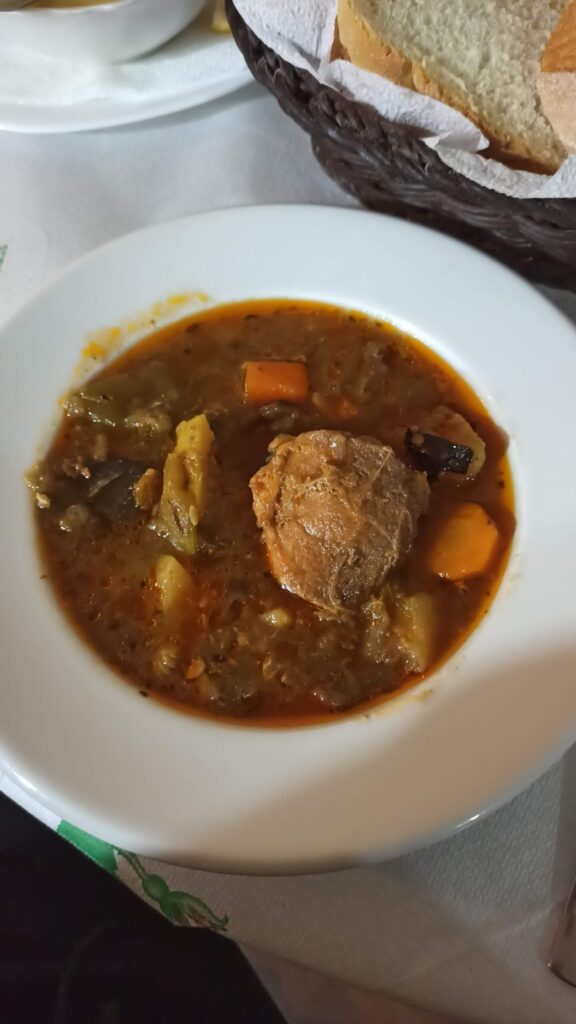
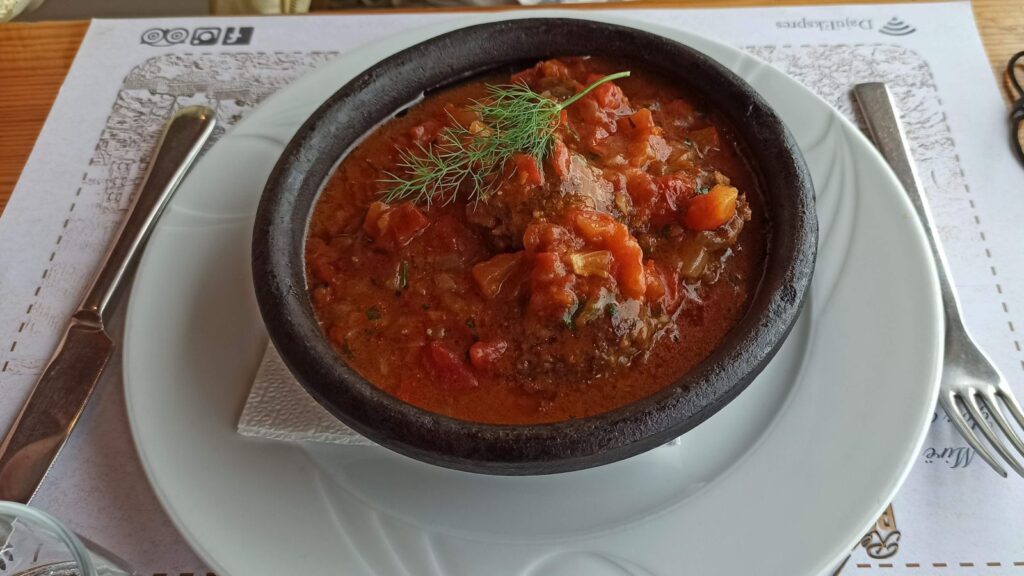
Tasqebap | Beef stew lovers will be delighted to know that Albania also has its own variation. Each chef and family puts their own twist on tasqebap, called goulash in some parts of the country. It rarely tastes the same because of this. But you can almost always expect it to be delicious.
Jahni me Mish | Another robust meat stew. Usually beef (viçi), occasionally chicken (pulë). The difference between tashqebap and jani/jahni me mish is small. Mostly, it’s in the herbs and spices. Jahni me mish may also include some thickening.
Jahni me Fasule | A white bean soup with a meat broth base, tomato puree, and red pepper. A true comfort food in colder weather.
Main Courses in Albanian Restaurants
Tavë Kosi | Tavë Kosi claims the title of “ National dish of Albania”. Lamb with rice covered in a mixture of yogurt and eggs is baked in a clay dish called “tavë”. Many other traditional dishes rely on the use of tavë, too. For example, Tirana’s tavë dheu (liver with fërgesë) and tavë qofte (meatballs with tomato sauce) from Korçë.
Qifqi | Fried rice balls flavored with mint. They go well with dhallë and ajvar.
Shapkat | Shapkat is corn pie with spinach, feta, and dill. It’s most delicious with a side of salcë kosi.
Flia | If you visit the north of the country, you’ll get the chance to taste this dish of Albanian-Kosovar origin. It might be spelled as flia, flija, or fli on menus. Layers of pancakes are alternated with a blend of cheese and yogurt in a very time-consuming process. The resulting pie is served with a creamy kaymak dip and pickles, or as a sweet dish with honey, jam, and yogurt. The word flia means “sacrifice,” and March 17th is a day dedicated to making and sharing a large flia with the whole family.
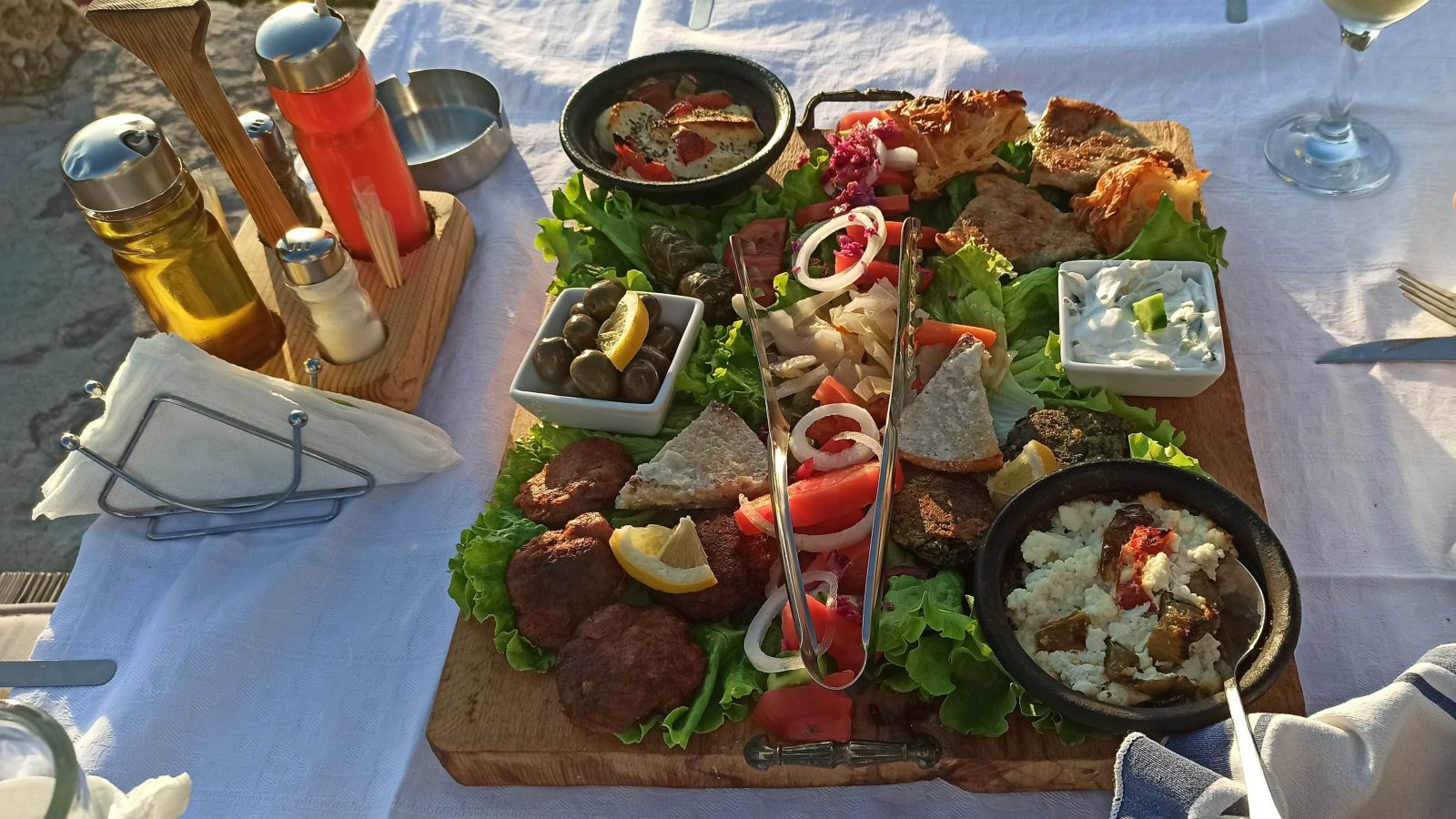
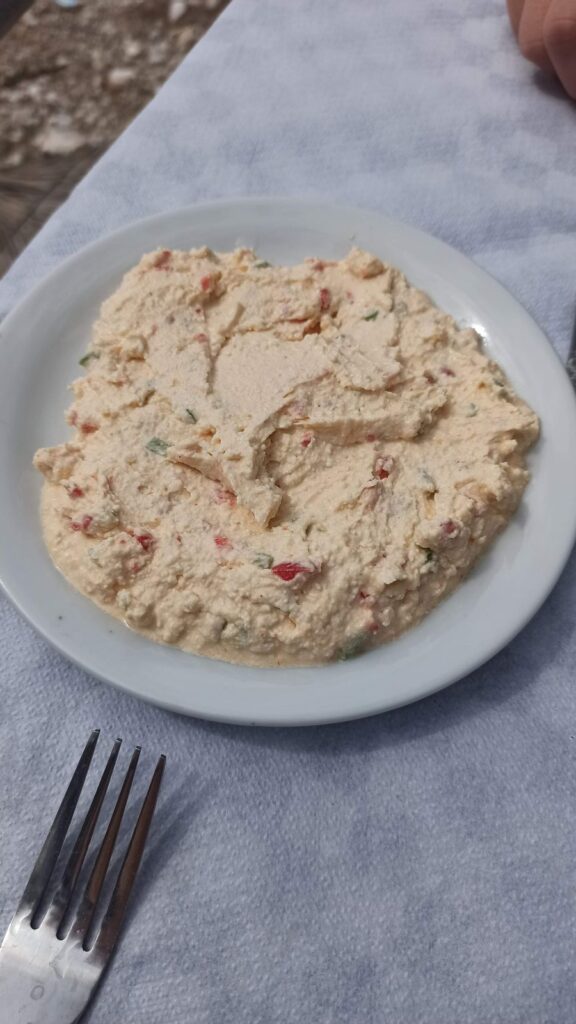
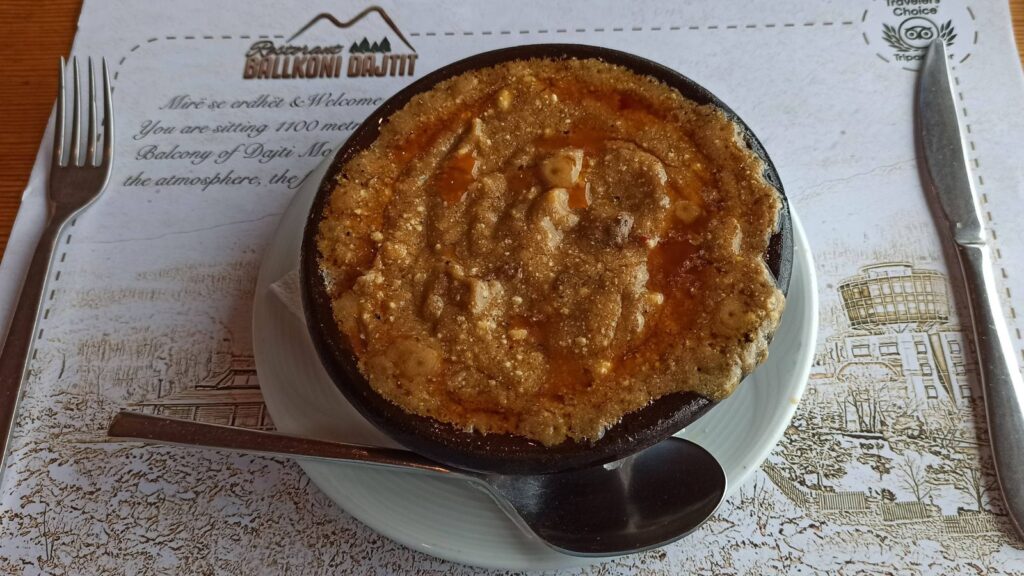
Fërgesë | The best Albanian vegetarian dish! A creamy dip or a kind of stew made with tomatoes, roasted bell peppers, onions, and a soft white cheese resembling cottage cheese. Again, the recipe is versatile. The addition of roux, chilli, and other spices is also common. Fërgesë is served with or without bread, as an appetizer or a main course, hot or cold. You can also buy it pre-made in jars.
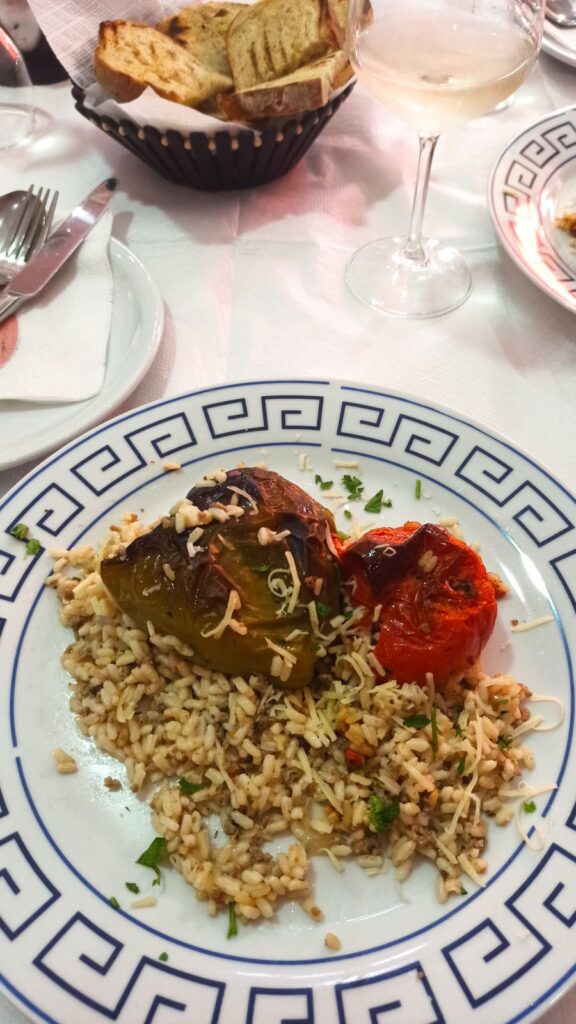
Patëllxhan/Speca/Domate të Mbushur (Stuffed eggplant/pepper/tomato) | An assortment of stuffed vegetables should be on every Albanian menu. They are filled with minced meat, seasoned rice with butter (pilaf), or fresh gjizë cheese. A bell pepper with cheese is specifically called speca me gjizë.
Salcë Kosi | Salcë kosi is a universal dip made by straining a thick yogurt through a cloth. It’s seasoned to one’s taste either with garlic, dill, or just salt. It’s a great condiment for qofte, grilled meats, vegetables, or bread.
Pastiçe | One of Albania’s comfort foods. It’s pasta with cheese and egg baked in a clay pot. In Himarë, we had pastiçe topped with tomato sauce, béchamel, and dill, which was wonderful!
Djath në Furrfë/Fërën | Albanians are no exception within the region. Like many other Balkan countries, they have a love for fresh cheese (djath i bardhë) similar to feta. You can order it as an appetizer with olive oil and spices (they also offer hard cheese called kashkaval), but we preferred the baked with olive oil, tomato, and paprika version.
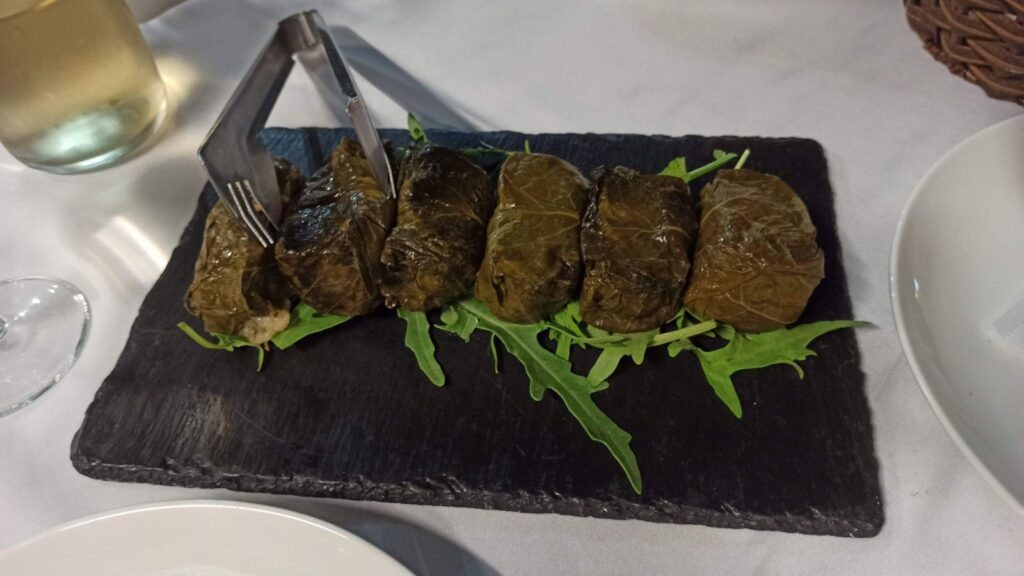
Sarma and Japrak | While the Turkish term “sarma” encompasses any leaves stuffed with rice and/or meat, in Albania, it indicates cabbage or collard leaves in particular. Japrak, also spelled laprak, on the other hand, refers specifically to vine leaves.
All of these local delicacies are included on tasting menus advertised by many restaurants in the wonderful UNESCO city of Gjirokastër.
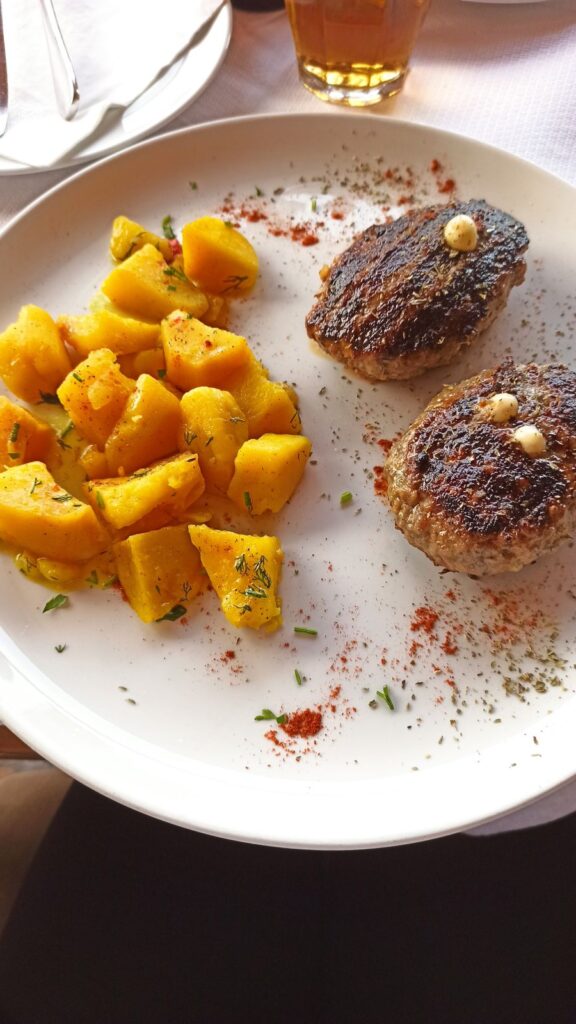
Qofte | “Qofte” simply means meatballs, and Albanians came up with a lot of things to do with them. I mentioned qofte in the fast food section, where you’d get them with salad or bread/pita. We also tried qofte me salcë domatesh (in tomato sauce) with rice, qofte me kaçkaval or me djath (with cheese inside), and supë me qofte (a clear broth with meatballs). The secret ingredients that epitomize heavenly perfection are apparently dried mint and fresh parsley.
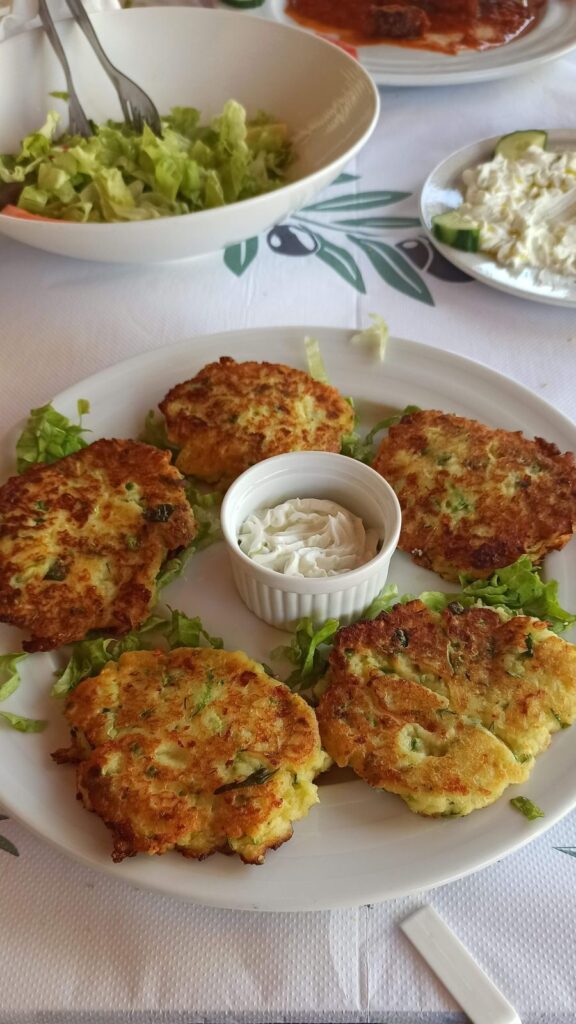
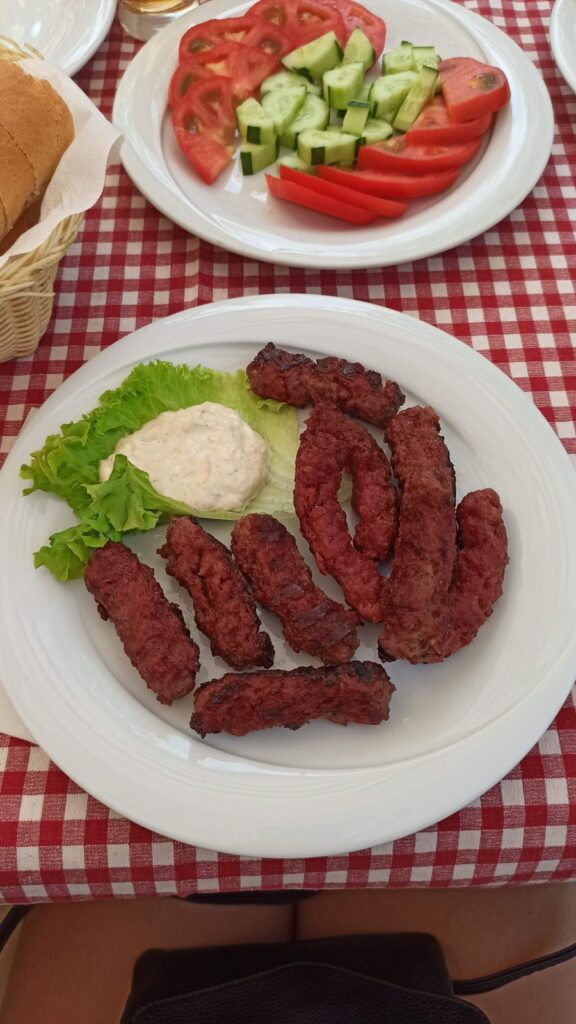
There’s also a vegetarian option called qofte me kunguj prepared with zucchini. Other meat patties important in all of the Balkan cuisines are pljeskavica and ćevapi.
Moussaka | More often associated with the Middle East, but also loved across the Balkan Peninsula. Since the south has a large Greek minority, they cook the typical Greek moussaka with layers of eggplant, tomatoes, minced meat, and béchamel. However, the general Albanian version consists of potatoes, minced beef and/or pork, and a mixture of milk and eggs. The cultural significance of the dish is emphasized in an old-school joke that “a man would not marry a woman who doesn’t know how to prepare a good moussaka.”
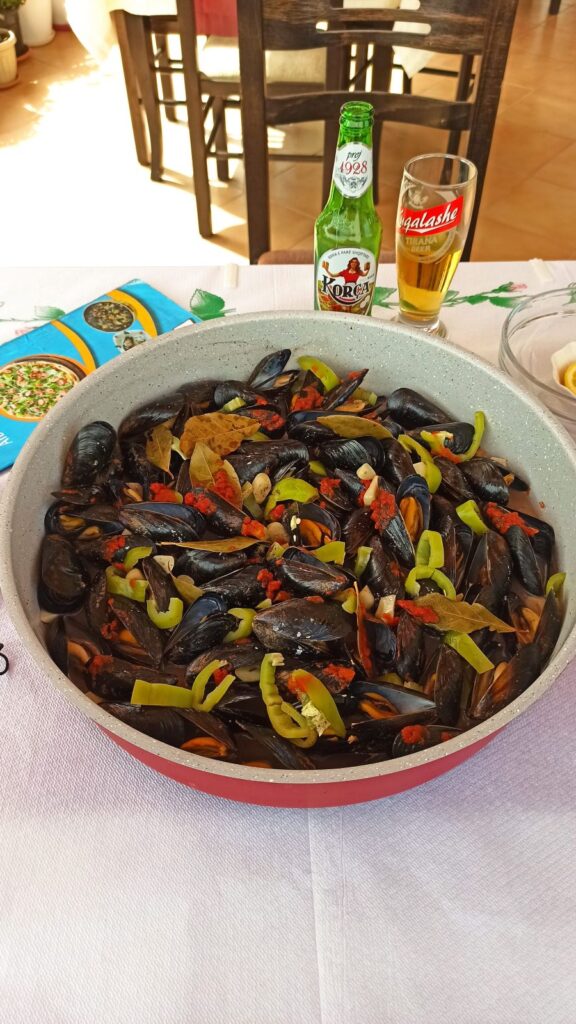
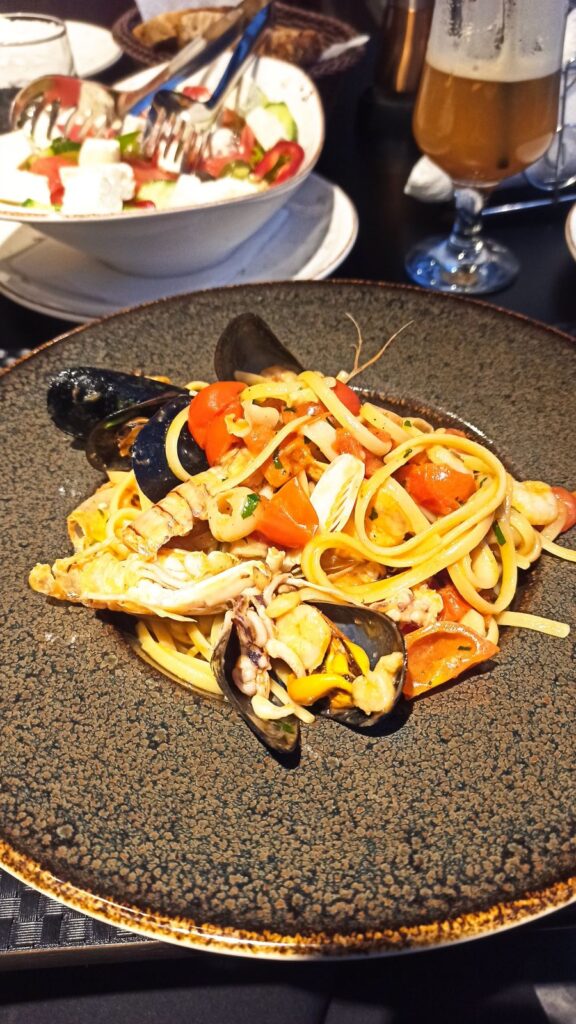
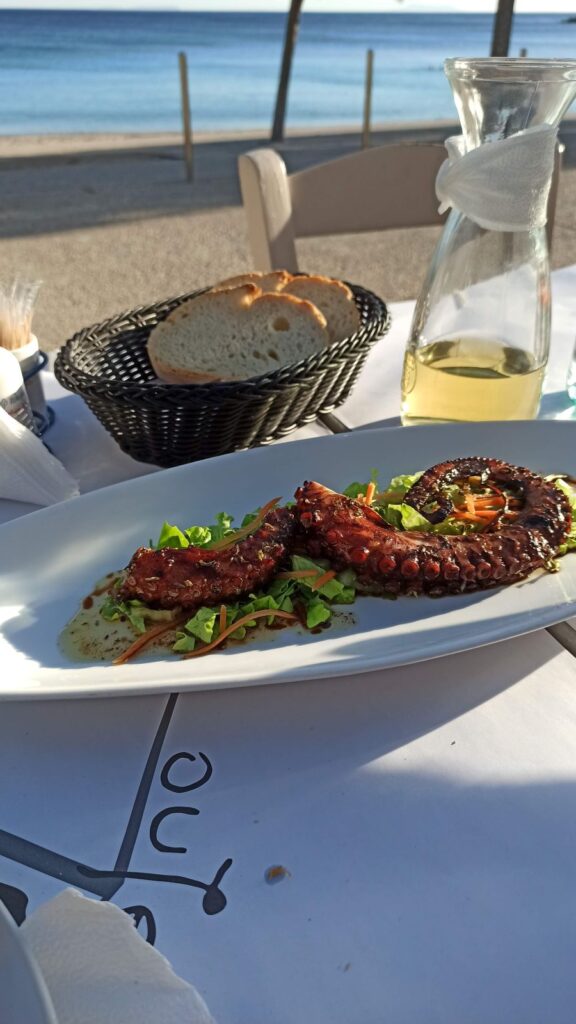
Seafood (Fruta Deti) | Seafood and fish are an important part of the diet on the coast of Albania, so you have a fantastic opportunity to enjoy fresh calamari (kallamar), shrimp (karkalec), and mussels (midhjet). As I already mentioned, the mussels from Lake Butrint are exceptional, and you shouldn’t miss out on them while visiting Ksamil. There’s even a blue mussel festival every year.
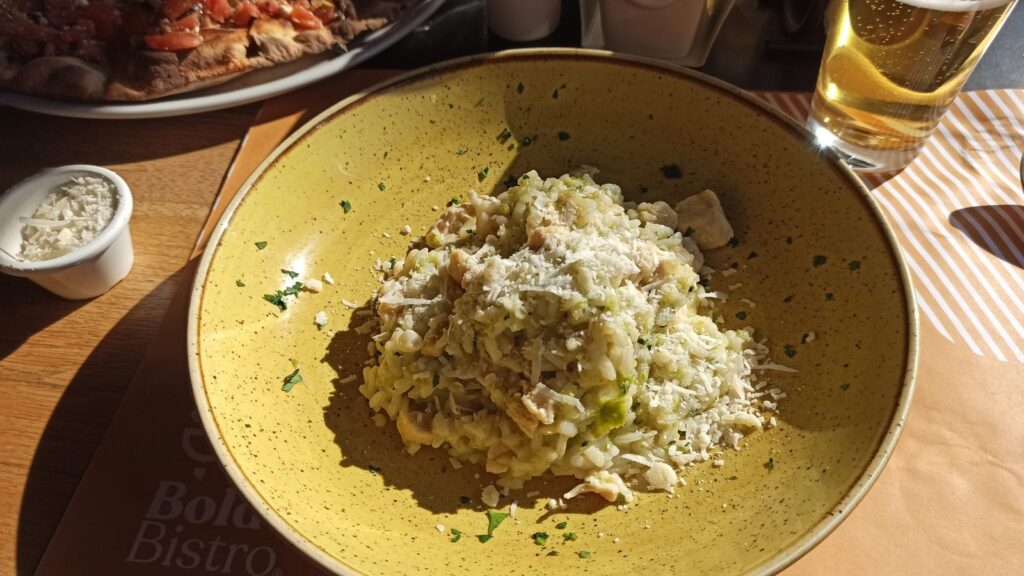
While you can get an inexpensive plate of grilled or deep-fried seafood by itself, our favourite was seafood pasta or “macarona me fruta deti”. I dream about it to this day! Seafood risotto is also a must-try.
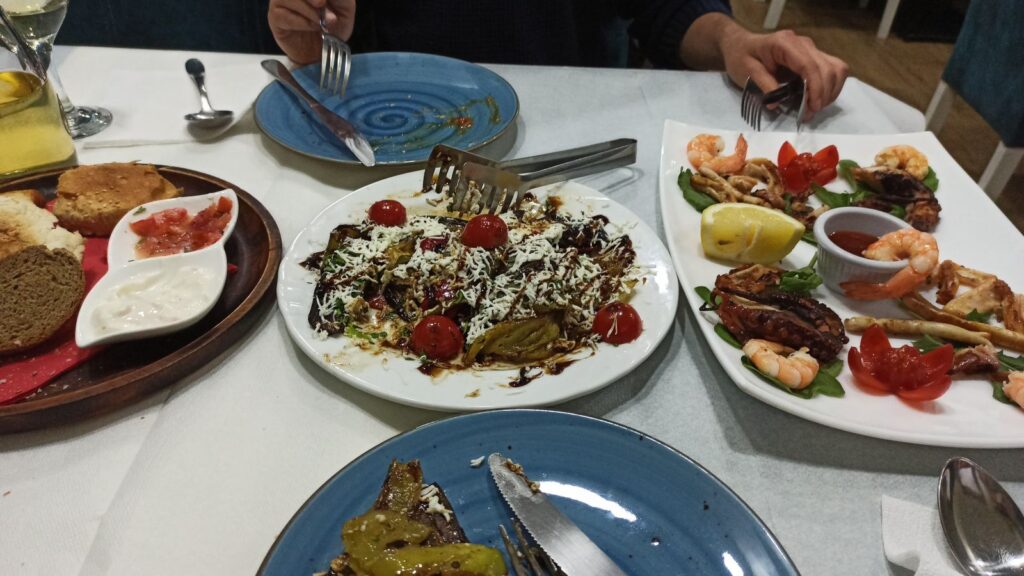
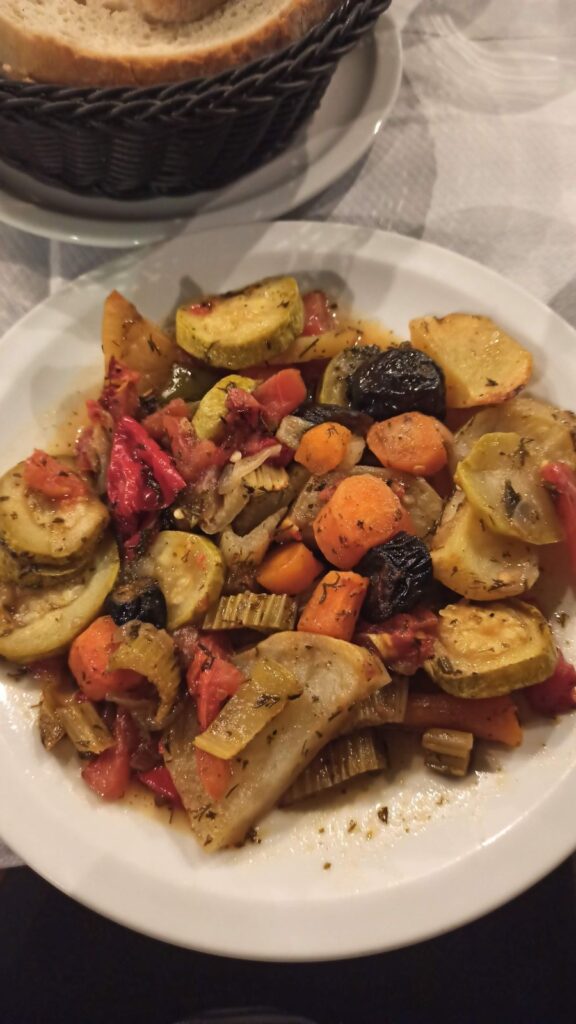
Grilled vegetables (Perime ne Zgare) | Unfortunately, there are very few vegan alternatives in Albania since most meatless foods contain dairy. The good news is that almost every restaurant prepares phenomenal seasonal grilled vegetables drizzled with olive oil, balsamic vinegar, and lemon.
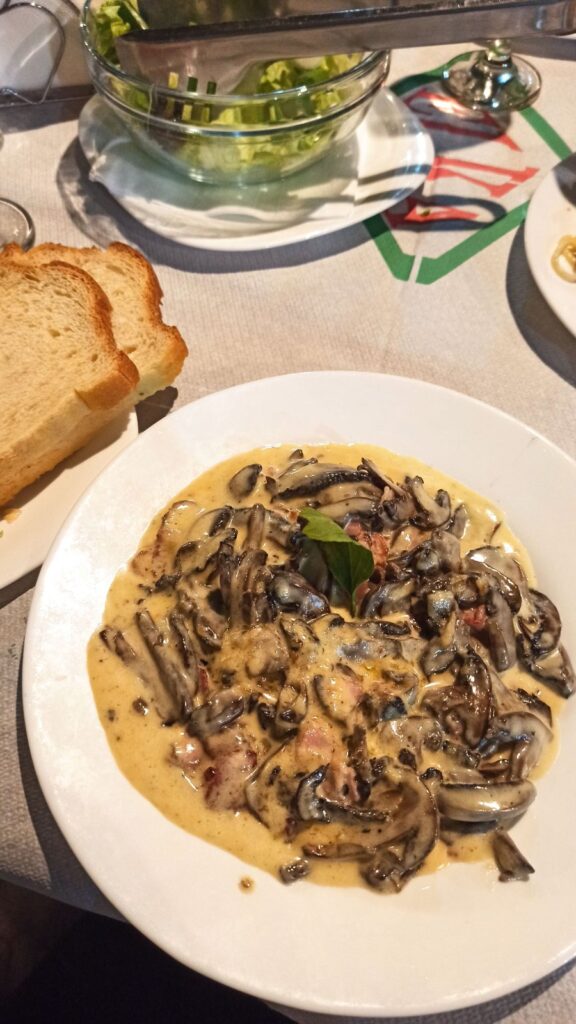
Chicken fillet with creamy mushroom sauce (Fileto pulë me pana dhe kërpudha) | Chicken fillet with creamy mushroom sauce doesn’t fall into the “traditional” category, but it is immensely popular in Albania. It usually comes with a side of delicious buttery rice. Some places even offer the mushroom sauce only with bread.
Desserts in Albania
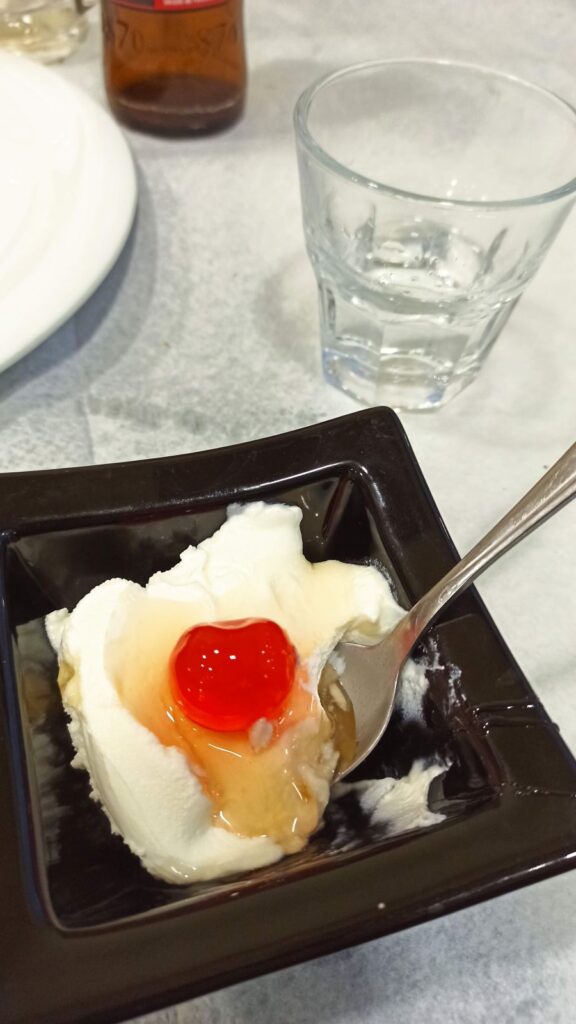
For some reason, there aren’t many traditional Albanian desserts on restaurant menus.
Maybe because there’s always a gelateria (ice cream shop) or pastiçeri (pastry shop) nearby. The ones that regularly do appear are baklava, trileçe cake inspired by Latin American tres leches, and Italian panna cotta. So if you do see a more interesting selection, don’t think twice.
Here are a few more traditional Albanian desserts:
Shëndetlie | A honey and walnut cake soaked in sugar syrup overnight. It’s moist, flavorful, and, predictably, extremely sweet.
Bakllava | You probably know Turkish baklava, a phyllo dough pastry with a dose of syrup and nuts? In Turkey, they utilize several kinds of nuts, like pistachios and almonds, but in Albania, it’s typically only locally grown walnuts.
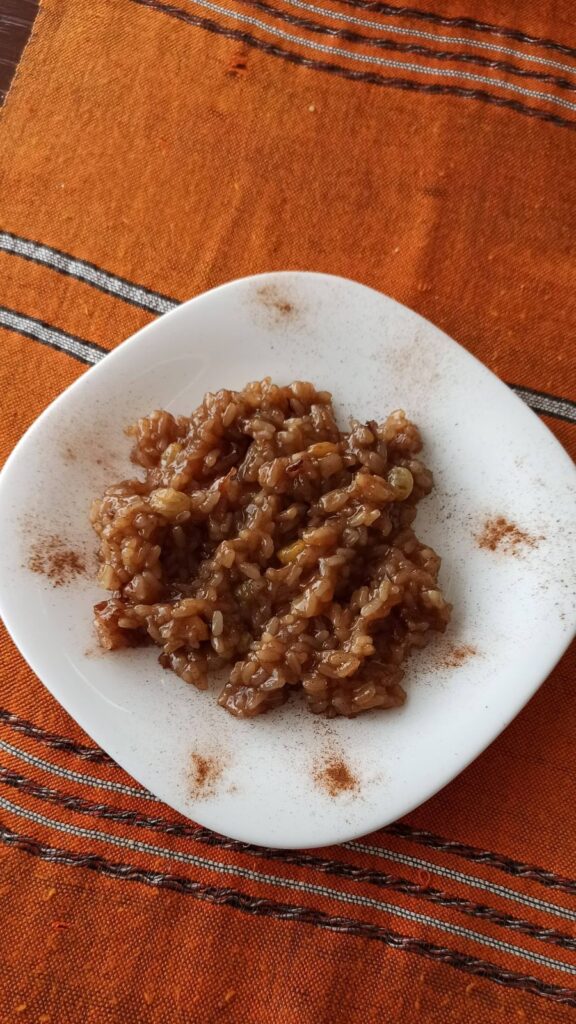
Kabuni | A yummy rice pudding with cinnamon and raisins. The best opportunity to try it is in the charming castle town of Krujë.
Ashure | One of the oldest desserts in the world, originally from the Middle East. Legend has it that Noah celebrated landing on Mount Ararat with a porridge made from leftover food supplies. There’s no universal recipe, but it’s essentially some kind of grains with dried fruit, nuts or seeds, a sweetener such as molasses, and warming spices.
COOKING CLASSES & FOOD TOURS
If you want to try to make some of the aforementioned meals, traditional cooking classes are a great way to do that. Tirana and Berat are the two cities where this is most common. Here are some options you can arrange in advance.
Berat Class | Savor Albanian Cuisine Cooking Class with Mama Nina in Berat Castle
Tirana Class 1 | Cooking Classes and Traditional Food Tasting in Tirana. Check the same tour here on GetYourGuide for price comparisons.
Tirana Class 2 | Traditional Albanian Cooking Class Unlimited Wine & Raki. Check the same tour here on Viator for price comparisons.
Tirana Tour | Local food experience & walking tour
Drinks in Albanian Cuisine
Albanian Beer (Birra)
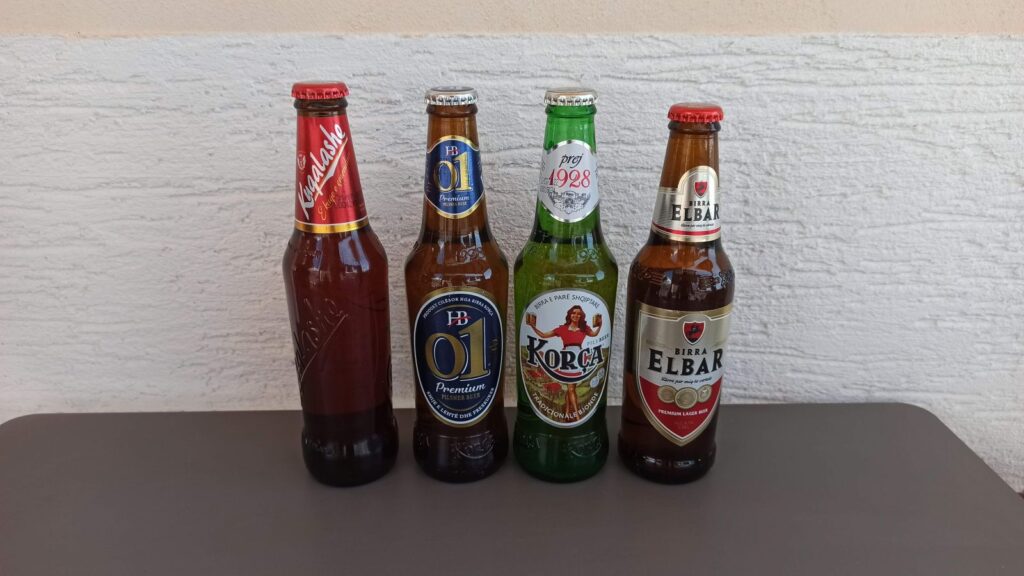
A cold beer is seen as a must on a hot Albanian summer day! Fortunately, there are several local options, of which I’ll name only the three most famous ones.
Birra Korça | The oldest brewery in the country, founded in 1928, ranks third in production volume. They make several types of beer, and their Pilsner-style “Tradicionale Bjonde” has become our Albanian favorite. As far as I know, the brewery in Korçë can only be visited with a pre-booked third-party tour. However, if you’re more into spontaneous stuff, they also operate a beer garden on the premises, and it is easily accessible from the city center.
Birra Tirana | Birra Tirana boasts the highest production and sales. The company also brews an amber ale, Kuqalashe. Give it a try if you’re a fan of amber ales. Their brewery in Tirana is currently not open to visitors, but something I’m sure something is brewing (pun intended). Check the Birra Tirana website for more information.
Birra Stela |The third of the large brewhouses is Birra Stela, also from Tirana. They put out a solid lager, and my partner, as a proud Czech, has mentioned their Cek Pilsener line, featuring a picture of the Czech Republic’s iconic Karlštejn Castle. Their non-alcoholic beer is notably halal-certified, which is pretty neat considering there aren’t actually that many practicing Muslims in the country. Instead of offering a tour of the factory, Stela built an entire resort with a beer garden near the capital.
Albanian Wine
Although winemaking in Albania dates back to the Bronze Age and there are several native grape varieties, the tradition was struck by disaster after disaster in the last century and was almost wiped out.
Fortunately, it has made a comeback in recent years, and small winemakers now focus on quality and embrace the local specialties. Among those are white and red shesh (Northern and Central Albania), kallmet (Northwest), a rare red vlosh (Vlorë region), and white pulës from Berat.
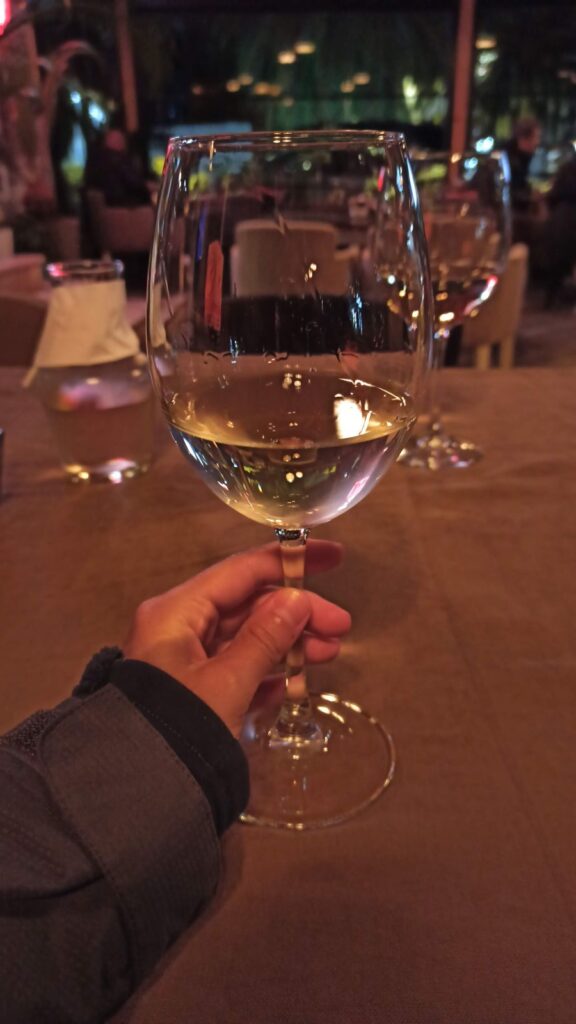
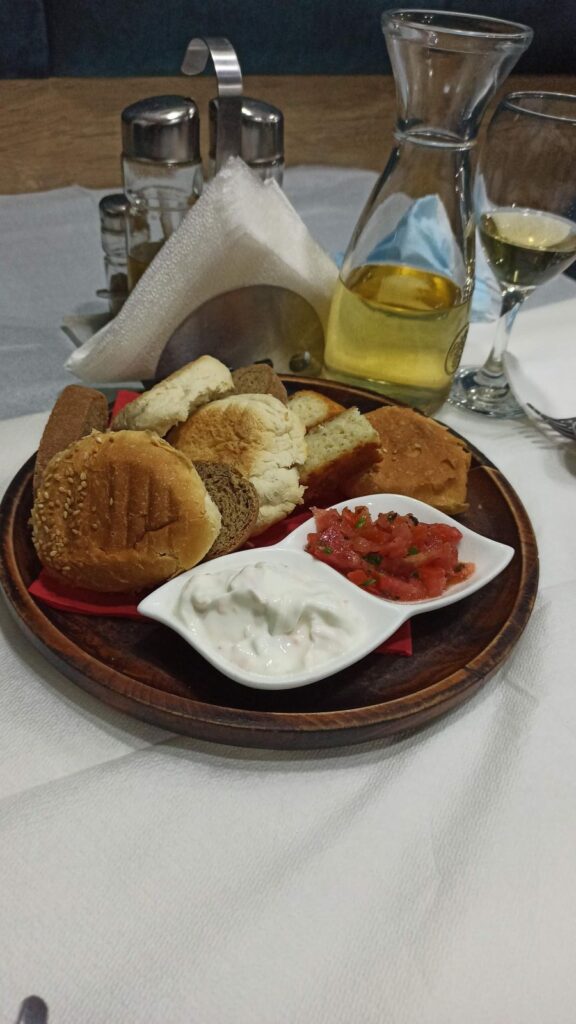
Most restaurants also have a more affordable mystery house wine. Verë e kuqe (red wine) and verë e bardhë (white wine) go by the glass for about 200 lek (2.5 USD), or a liter carafe for around 800-1000 lek (10-12 USD). We were never disappointed by it; the red wine is especially great.
WINE TOURS IN ALBANIA
Tours to vineyards in central Albania have been getting popular in recent years. If you want to escape the city for a day and visit one of them, here are a few popular options you can book ahead of time.
Durrës | Countryside Vineyard Experience with Wine & Food Pairing. Check the same tour here on GetYourGuide for price comparisons.
Sarandë | Wine Tasting Tour with Blue Eye and Lekursi Castle Sunset
Berat | Guided Winery Tour with Transfers and Tastings. Check the same tour here on Viator for price comparisons.
Spirits in Albania
The fruit brandy “raki” is definitely the principal hard alcohol of the whole Balkans. Out of the many flavors, grape raki is the most widespread in Albania, and locals love to honor guests with it. This can be at any hour of the day. It’s considered a cure for everything from a broken heart to digestive problems.
Grapes are also used for a distillate that was famously exported to many socialist countries: Skënderbeu brandy.
Non-Alcoholic Beverages
Turkish Coffee (Kafe Turke)
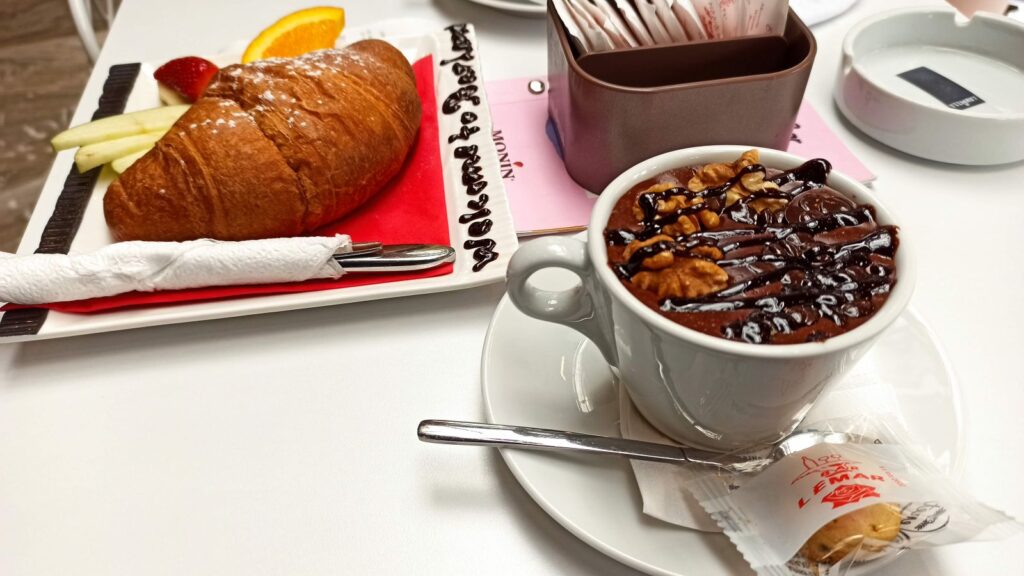
It shocked me before coming to Albania to find out that it’s one of the countries with the highest number of coffee shops per capita. Cafe culture is an important part of people’s lives, and you’ll rarely see someone walking with a takeaway cup in their hand or downing a “cup of joe” in a hurry.
Having a coffee is synonymous with slowing down and socializing.
Espresso is the drink of the younger generations. People tend to gather in Western-style cafes, whereas the traditional art of brewing a Turkish coffee in a cezve on a gas stove prevails in people’s homes. You may also notice rougher-looking establishments where older men sip on Turkish coffee while watching sports, chatting, and playing cards. An accompanying shot of raki is almost a requirement.
Çaj Mali
Çaj mali (ironwort, mountain tea, shepherd’s tea) is an aromatic herb with a unique, sweet taste and almost miraculous effects on immunity and metabolism. Albanians would say that the mountain tea is the secret to longevity. Whether true or not, it’s unquestionably a tasty caffeine-free alternative.
Bozë
A fermented beverage made from various grains, bozë falls under the non-alcoholic category by a hair’s breadth since it contains slightly more alcohol than kombucha (around 1%). One of the oldest Turkic drinks, bozë has a sweet and slightly sour taste to it. It can be enjoyed both hot and cold, depending on the season.
Recommended Albanian Restaurants
Have you gotten excited about all these must-try Albanian foods? We don’t have recommendations for every tourist spot in Albania, but we can share the ones that really stood out for us. They’re mostly budget-friendly, except for a few that were worth it for the view or some other special reason.
Tirana
Oda – Traditional Albanian Restaurant | Mainly lamb-based and vegetarian dishes.
Ballkoni Dajtit | It sits at the top station of the Dajti Express cable car and features traditional dishes from regions around the country.
Mulliri Vjeter | The oldest Albanian chain of cafes. It’s also in Vlorë and Durrës.
Berat
Homemade Food Lili | Literally homemade in the backyard of a nice couple. There’s limited capacity, so it’s best to come if you don’t mind waiting a few minutes.
Restaurant WilDor | Amazing qofte të gjyshes (grandmother’s meatballs).
Shkodër
Beck’s | According to the locals we met, this is the best fast food in town.
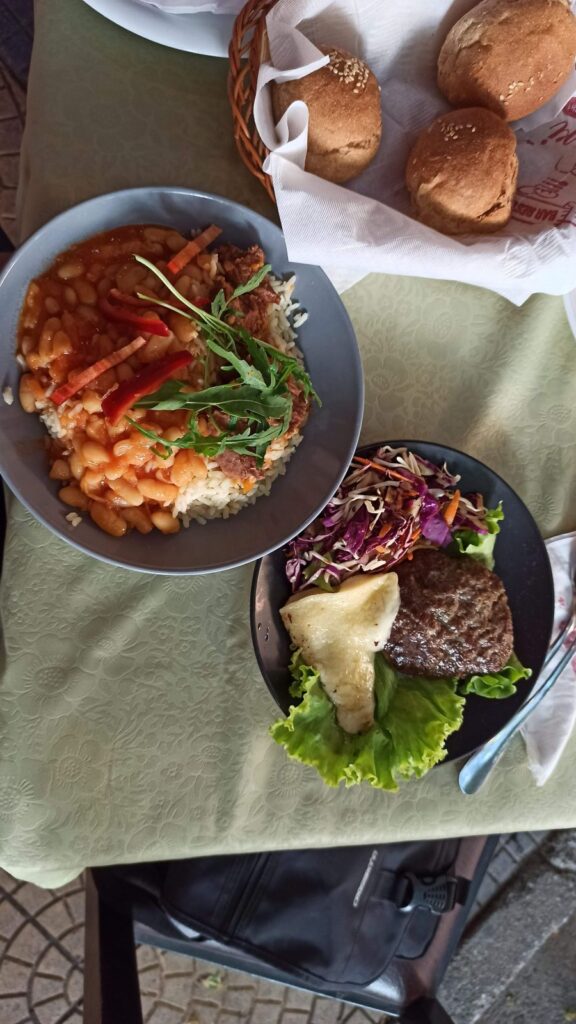
Restaurant PURI | Tasty grilled dishes with huge portions. We recommend the beloved “Father’s Rice.”
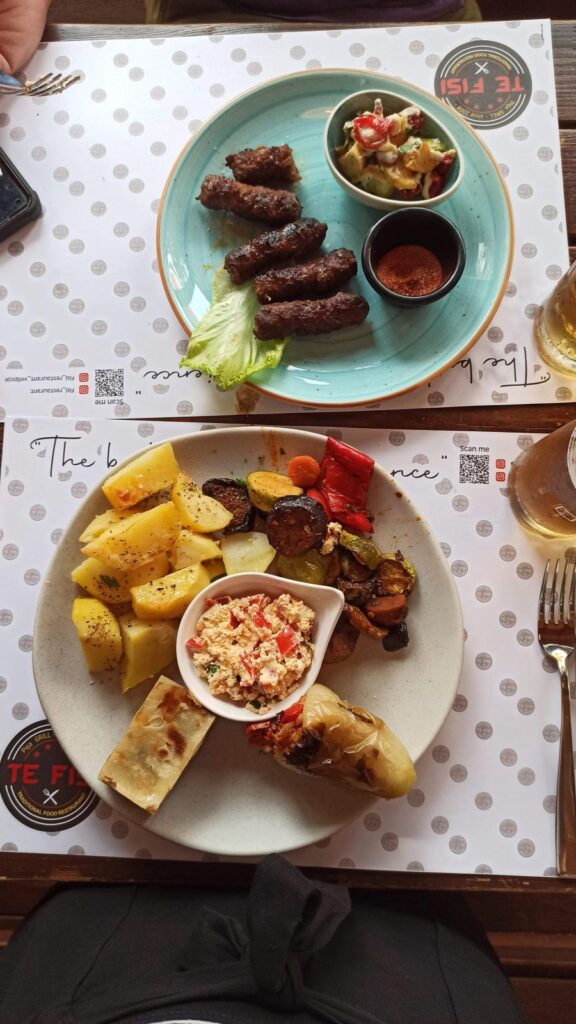
Fisi Restaurant Traditional Food | A nice Northern Albanian tasting menu with plenty of vegetarian options.
Gjirokastër
Hotel Bar Restaurant KODRA | A fantastic view with nice food.
Mapo Restaurant | A tasting menu of local specialties.
Vojsava Restaurant | Basic, well-executed food. We recommend ordering some extra dishes to share between people.
Vlorë
Taverna Te LILO | The best seafood pasta I had in Albania.
Dhërmi
Drymades Village Restaurant | A cheap pub for locals with classic Albanian dishes.
Himarë
To Steki sti Gonia | Mostly Greek food, but with the best Himarë salad in Albania.
Lefteri’s Tavern | Traditional dishes and fresh, tasty seafood.
Taverna Stolis | Greek meals with a breathtakingly beautiful sunset view.
Sarandë
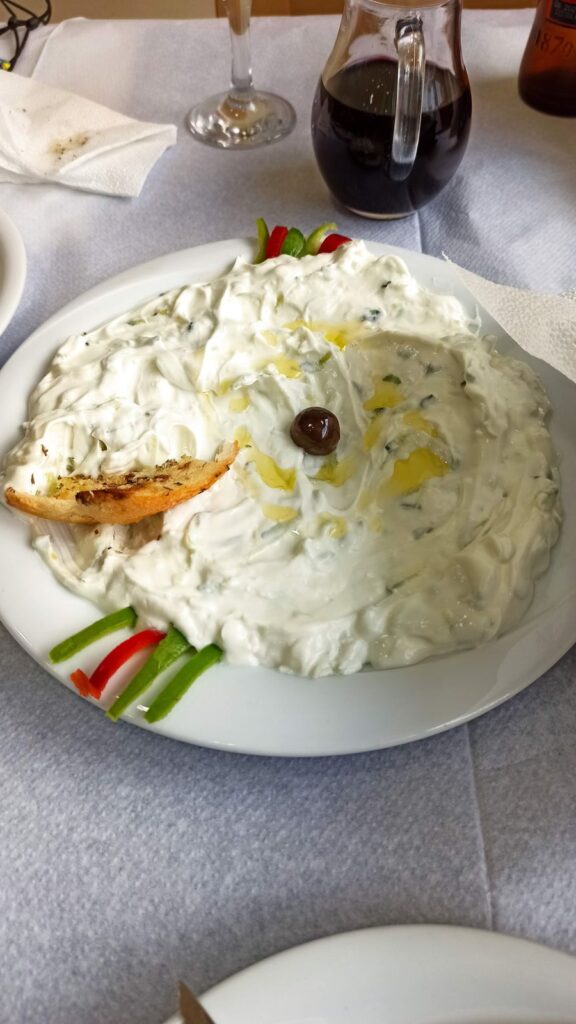
Taverna Labëria | An excellent grill with the best tzatziki we had. The owner was friendly, and it’s open year-round, which isn’t common in Sarandë.
Haxhi | Fresh seafood with a sea view and a cool interior design.
Restaurant Te Bequa | An affordable local eatery with most traditional dishes.
Taverna Fish Filipi | Crowded restaurant that’s famous for seafood dishes.
I hope this Albania food guide sparked at least a little bit of your interest.
We were completely lost in all the foreign names for the first few days, so this will hopefully make your life a little easier. If you’re planning to explore the beauties of Albania in the near future, I wish you a “bon appétit.”
Oh, and to add two useful phrases. You can say “faleminderit” to thank someone for a meal and “Gëzuar!” to toast to one’s health!
MORE ALBANIA GUIDES:
- A Guide to Shkodër, Albania | 11 Wonderful Things to Do
- A Guide to Berat, Albania | 9 Amazing Things to Do in the City of a Thousand Windows
- Albania’s Stone City | The Best Things to Do in Gjirokaster
- 9 of the Best Things to Do in Dhermi, Albania
- 12 Amazing Things to Do in Himarë | The Albanian Riviera’s Coolest Town