
This Montenegro guide was written and edited with my partner, Sarka. If you’re from the Czech Republic or are familiar with the language, have a look at her post on the Sharkadventurin blog.
An often-forgotten destination in the Balkans, Montenegro is ideal for nature, history, and beach lovers alike.
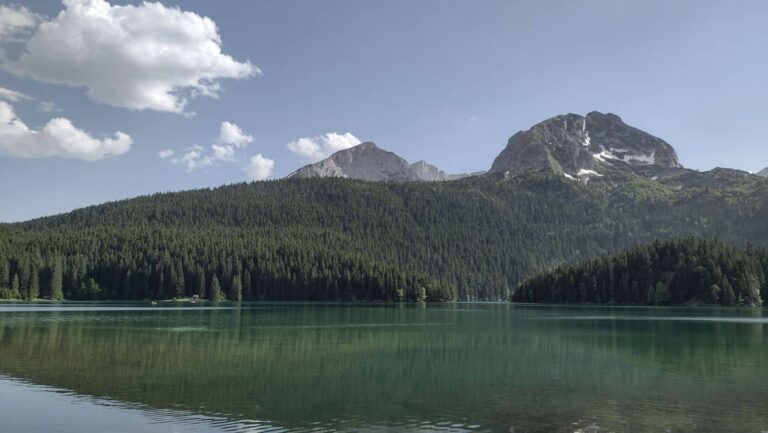
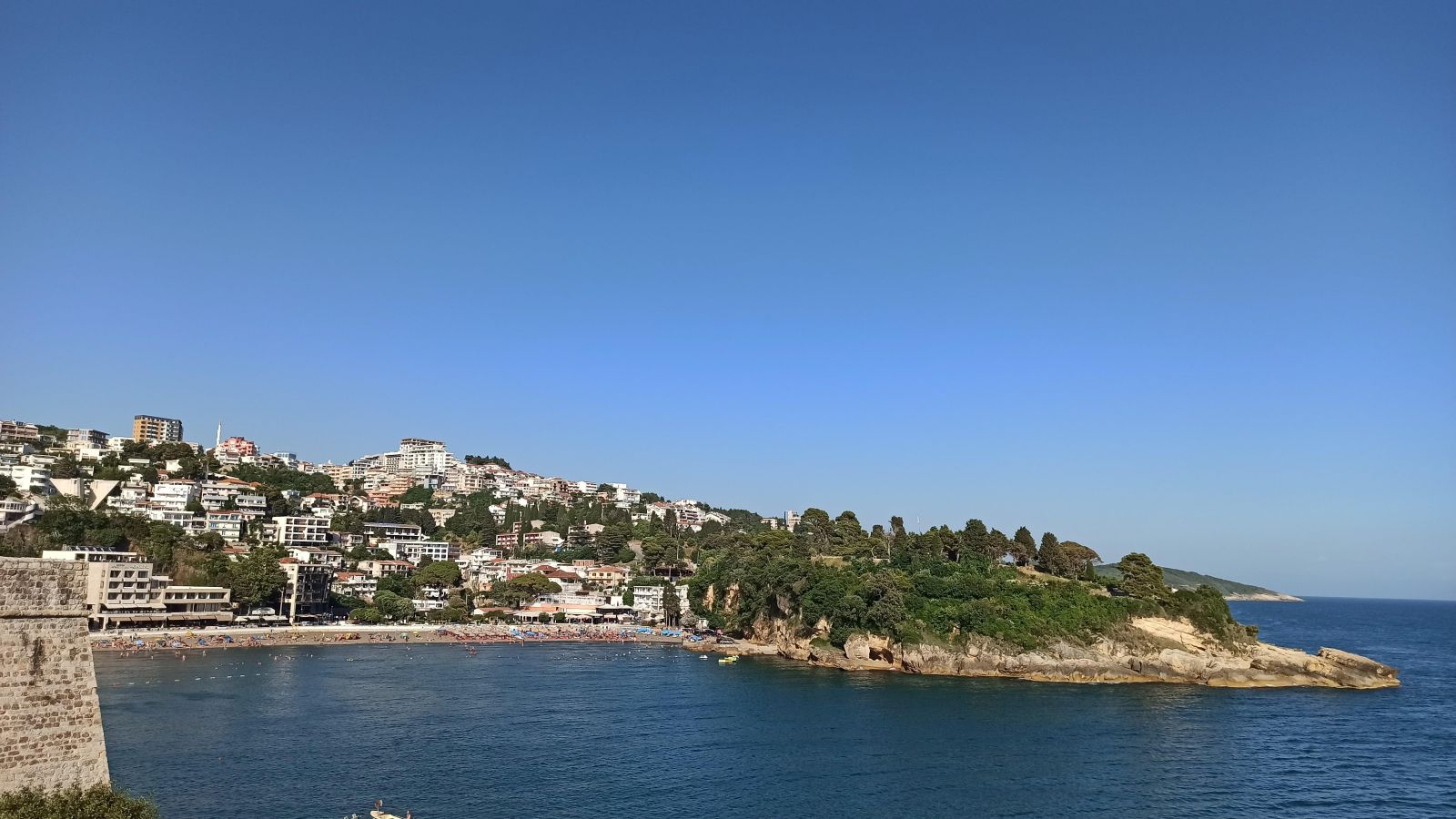
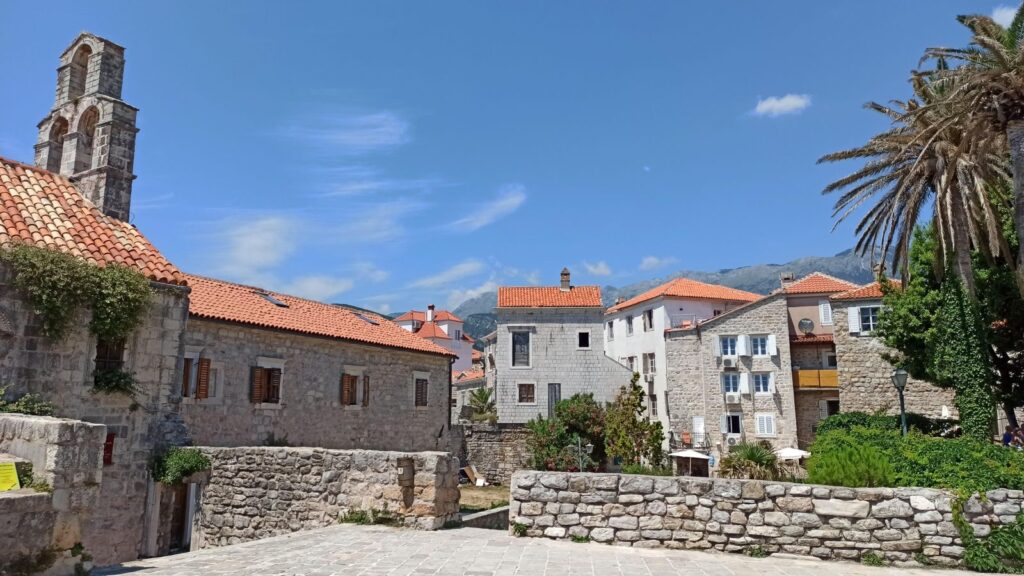
Its compact size (slightly smaller than Connecticut) allows travelers to hop from place to place with ease, or complete a road trip across the country, even on a tight schedule. You can expect romantic old towns, mountains with breathtaking views, picturesque lakes, and the wild, craggy beaches the Adriatic Sea is known for.
With a population of just over 600,000, Montenegro has a sort of friendly, small-town feel. Popular tourist hotspots like Budva and Kotor still get crowded in the summer months, but there’s always a place to escape to on a day trip.
We spent a few weeks exploring Albania, Montenegro, and North Macedonia during a recent trip. The Bay of Kotor and Durmitor National Park were absolutely enchanting, so I think we can both wholeheartedly recommend this tiny Balkan country to everyone.
Based on our experience on this trip, we put together a first-timers’ guide to Montenegro, full of practical Montenegro travel tips and tricks.
The Best Time to Visit Montenegro
The peak season in Montenegro overlaps with the European summer holidays in July and August. Temperatures on the coast hover around 30°C (86°F) and are about 10 to 15 degrees lower in the mountains.
That’s when resorts and historical coastal towns get the busiest. It also happens to be a great time to experience the country’s national parks, and maybe just stop by a beach or two to rejuvenate after some epic hikes.
The colder months are a different story. Rainfall from October through the end of April is so persistent that Montenegro is consistently ranked among the countries with the highest precipitation in Europe.
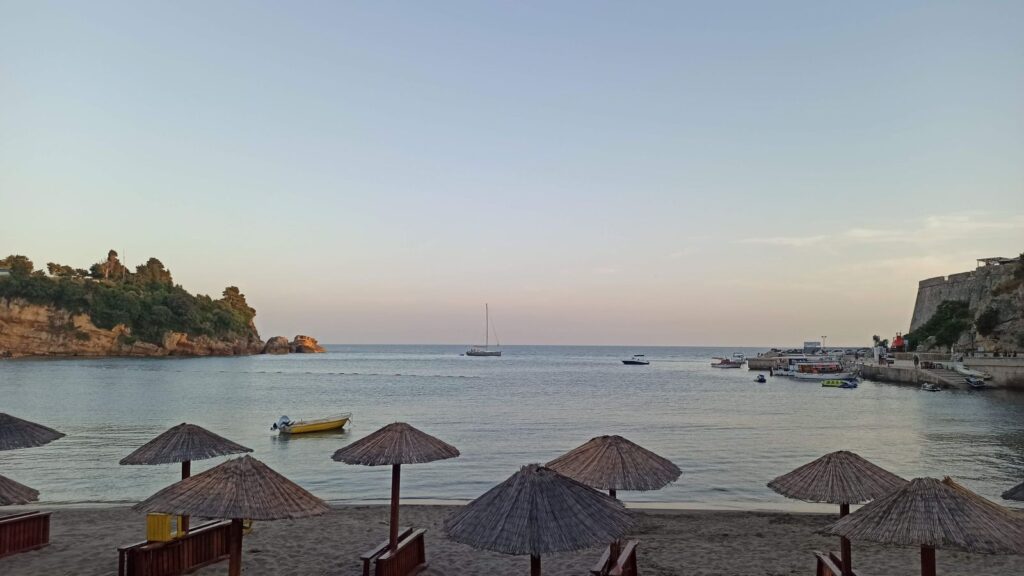
Only hardcore cold water swimmers choose to go for a dip in May, as the water temperature rarely exceeds 20°C (68°F). So, if you’d like to enjoy a seaside holiday with fewer crowds, visit either in the shoulder seasons of June or September. This also works for exploring the natural wonders and historical monuments.
Montenegro Travel Tip | The country has started to attract more winter lovers in recent years. There are great conditions for skiing and winter sports in January and February, with popular, modern ski resorts including Savin Kuk in Durmitor, and Kolašin 1450/ Kolašin 1600 in Bjelasica attracting more out-of-country crowds.
Montenegro Travel Entry Requirements
Montenegro is not a member of the Schengen area, so the visit doesn’t count towards a 90-day visa-free entry into the Schengen zone.
The vast majority of foreign nationals, including those from the US, UK, EU, Australia, Canada, and New Zealand, can stay in Montenegro for up to 90 days in any 180-day period (counted from the day of entry) without a visa. You just need a passport valid for at least 3 months after your planned departure and at least two empty pages for the entry/exit stamps.
Additionally, citizens of almost all European countries have the option to stay for up to 30 days without a visa or a passport. If this is you, then you’ll only need a national identity card. While the official requirement states that the document simply needs to reliably prove one’s identity and nationality, the decision to let you in is still up to the border official. But it’s much more certain now with a modern, machine-readable ID.
Visa-free entry is only available if you travel as a tourist, visit family or friends, attend business meetings, cultural and sports events, or come for short-term study/training. Any other reason or a longer stay requires a visa obtained at a relevant embassy.
Remember | All visitors to Montenegro must register with a local tourist office or police within 24 hours of arrival and pay tourist taxes. This means you must be registered at each new municipality you stay in.
A hotel or official accommodation provider will automatically do this for you, but if you have a private host, for example, a friend or an Airbnb host, you have to make sure they help you with it, or that you do it yourself. The consequences of not registering are not worth skipping it.
Of course, rules can change unexpectedly, so make sure to check your government’s and Montenegro’s official travel website before booking your trip.
Safety In Montenegro
Montenegro is generally considered a safe country.
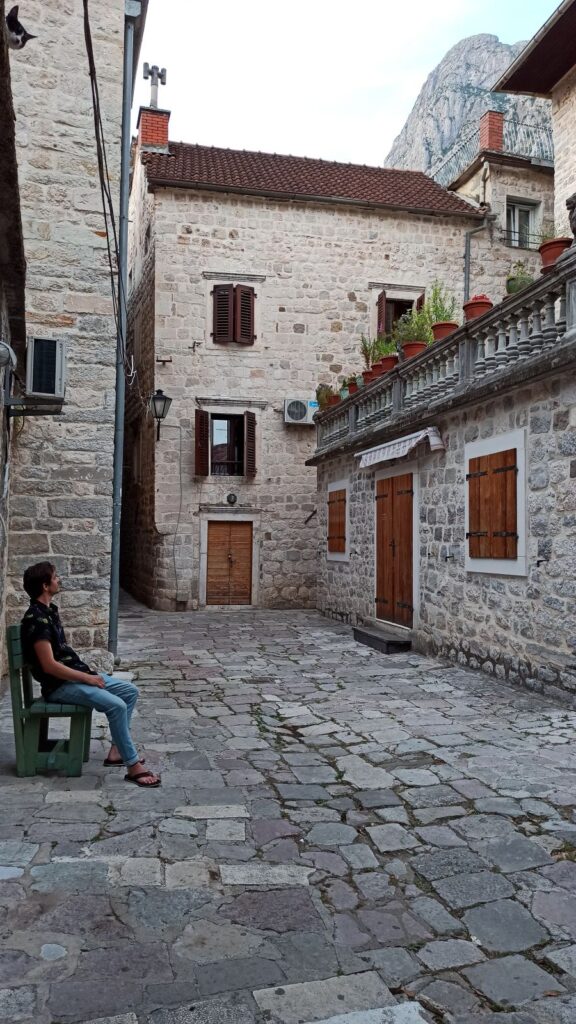
As in many places, be aware of your surroundings and watch for common tourist scams, such as overpriced taxis or tours. Pickpockets are rare but can happen during peak season in busy areas. This is pretty much confined to Kotor Old Town and Budva Beach.
A NOTE ON WILDLIFE
While hiking in the countryside, pay attention to where you’re stepping. Dry, rocky, and quiet spots are home to several species of venomous vipers.
They are normally skittish but can attack in self-defense if feeling threatened. Brown bears and lynx also call Montenegro home, but are rare and tend to avoid human contact.
The Montenegrin Language
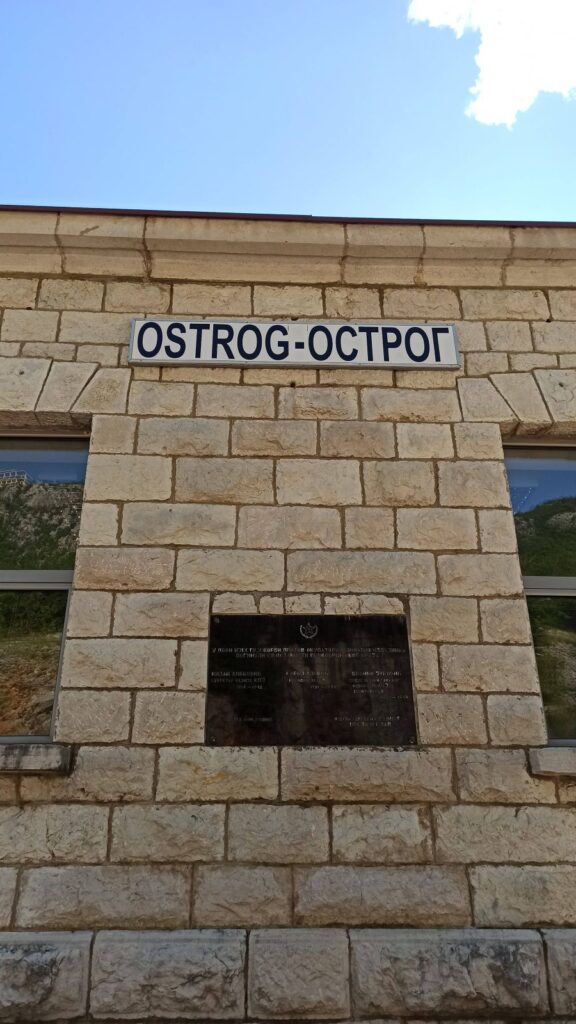
The official language, Montenegrin, is based on Serbo-Croatian and belongs to the Western South Slavic family. Both the Latin alphabet and the Serbian Cyrillic alphabet are used in writing. You will usually see both versions simultaneously on signs and menus. If you’re willing to learn a few new letters, a basic grasp of Cyrillic may be helpful in less-visited areas with a Serb majority.
Many people, especially workers in hospitality and the younger generation, speak English well. We never had a problem with the basics during our travels. Russian is also widespread in Budva.
Google Translate doesn’t have the Montenegrin language. Instead, you can make do with either Serbian or Croatian. We suggest downloading one or both of them offline on your phone, along with English for non native speakers. If you find wi-fi to connect to or have data, you can also use Google Lens translation.
It also helps to download at least one offline map. We usually don’t leave much to chance and have Maps.me, Mapy.com, and Google Maps between the two of us. Each has its advantages.
SOME HANDY MONTENEGRIN PHRASES
Zdravo (zdrah-voh) | Hello (a friendly / less formal greeting)
Dobro jutro (dob-ro yoo-tro) | Good morning (more formal than zdravo)
Dobar dan (do-bar dan) | Good day (used in the afternoon)
Dobro veče (dob-ro ve-che) | Good evening (used at night)
Ciao (cha-oh) | Bye (like in Italian)
Doviđenja (doh-vee-dje-nyah) | Goodbye (literally ‘see you’)
Hvala (hvah-lah) | Thank you
Molim ( mo-leem) | Please
Izvinite (eez-vee-nee-teh) | Excuse me/I’m sorry
Da/Ne (da/ne) | Yes/No
Koliko to košta? (kol-eeko toh kosh-ta) | How much is it?

Transport in Montenegro
Montenegro is one of Europe’s smallest countries. It takes no more than 4 hours to drive between any two places. That’s what maps say, anyway. In reality, summer traffic and road conditions can cause a massive difference in the actual time it takes to get somewhere.
However, besides the occasional delay, getting from one place to another was pretty easy.
Old school backpackers might find hitchhiking a bit tough in Montenegro. Not many cars stop, but it is considered safe.
Good to know | Car-sharing apps like Uber and Bolt are not currently in Montenegro. There’s only TeslaGo, which has a tiny fleet exclusively in Podgorica. MonteGo is a local app offering similar services. For Kotor and Tivat, locals recommend Red Taxi.
Airports in Montenegro
Montenegro has two main airports: Podgorica (TGD) and Tivat (TIV).
If you’re willing to travel a bit, you don’t have to limit yourself to those while searching for cheap flights. It takes 2-3 hours on a direct bus from Dubrovnik (Croatia) to Kotor, and 3-5 hours from Tirana (Albania) to Podgorica. Of course, border crossing could add time to those if it’s busy. Our advice is to buy bus tickets ahead of time during the peak season.
Both routes are on Flixbus.com and Bookaway.com.
Podgorica Airport
The Podgorica–Golubovci International Airport is located 12 km south of the capital, in the village of Golubovci. It’s quite modern and has direct, affordable flights from all over Europe and some from the Middle East and Caucasus. From anywhere else, you’ll have to endure at least one layover.
How to get to/from the Podgorica Airport:
BY BUS
The airport bus stop is located right in front of the main terminal. There are several providers coming and going between the airport and Podgorica Central Bus Station from approximately 5 am to 8 pm daily.
Price | The cost is between €2.7 and €5. One company also goes directly to Ulcinj (€10–12). You can buy the tickets on the bus (in euros) or online. All times and tickets are on the BusTicket4.me website.
BY TAXI
A taxi to the center of Podgorica with the official Zeta Taxi and Vuk BG Taxi costs €15, and can be booked in advance on their websites.
BY TRAIN
Train travel isn’t nearly as convenient as the bus if you’re just going to Podgorica, but it’s great if you’re heading to Bar or Sutomore. The “Aerodrom” train station is a 20-minute walk, and the one-hour journey costs only €2.8. In the opposite direction, the ride to the main station in Podgorica costs €1.2. You can find the timetable here.
Private Transfer | Of course, you can easily find private transfers to other cities, for example, this private car to Kotor or this private transfer to Budva. Renting a car directly at the airport is also not a problem.
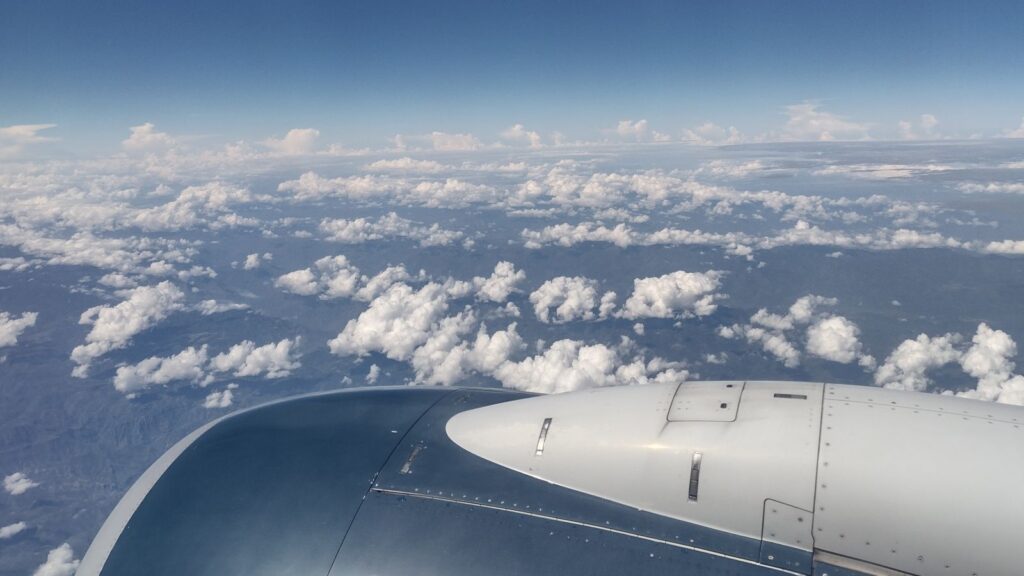
Tivat Airport
The smaller Tivat International Airport provides the fastest connection to the two popular tourist destinations, the Bay of Kotor and the resort city of Budva (also close to Dubrovnik in Croatia).
Again, the only direct flights are from even fewer European countries, the Middle East, and the Caucasus, but you can still find good deals.
Getting to/from Tivat Airport:
There are no official taxis or buses at Tivat Airport, so beware of overpriced transfers. It’s best to book a taxi in advance online or through your accommodation. If you don’t have the chance to do it, you can still check the suggested taxi prices on a board at the airport.
It should be €10 for a 3km trip to Tivat, €20 to Kotor, and €30–35 to Budva. Multiple local and international car rental companies operate at the airport, too.
If you only have a backpack, you can reach the Tivat bus station on foot in no more than 20 minutes. The station connects Tivat with all the surrounding towns and more.
Timetables and tickets can be found on the BusTicket4.me website I linked above. This won’t be for everyone, though, as there’s no sidewalk and the traffic can get busy along the road.
You can also try to wave down local buses to Kotor, Budva, or, in the opposite direction, to the center of Tivat. You should do so on the main road next to Restoran Spezza at Bus Stop Tivat Airport (maps). Getting one is a bit of a toss-up since waiting times can be long. If you decide to do this, please walk on the safer Aerodromska Street instead of the main road. The local timetable can be found on the Blueline website.
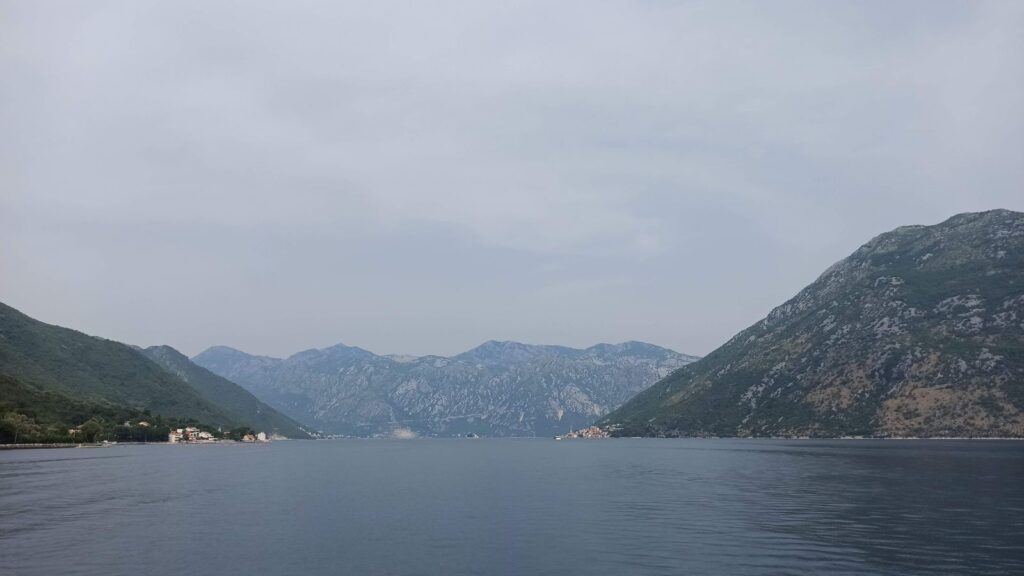
Driving in Montenegro
Renting a car in Montenegro is easy, and especially useful if you’d like to explore the National Parks, which have little to no public transport.
Foreigners whose driver’s licence is written in Latin or Cyrillic script don’t need an additional international driver’s permit, but everyone else will need one.
Most of the rental companies require you to be at least 21 years old and have at least two years of driving experience. Prices depend on age (surcharge for those under 25), location, and season. I found rental cars in Podgorica for about €25/day, €40/day in Tivat, and, to be honest, ridiculous amounts in Kotor and Budva.
Large companies only accept credit cards, which can sometimes be bypassed by getting a more expensive insurance policy. My go-to is Discover Cars, a comparison website similar to Booking.com. If you decide to use it, I recommend sticking to companies with an 8+ rating and reading the terms and conditions carefully.
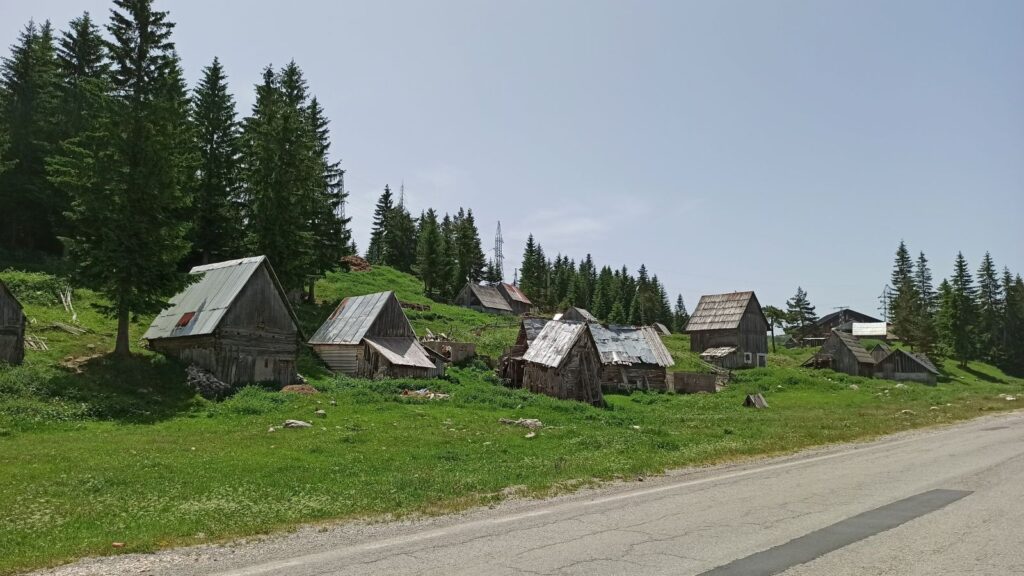
The Bus System
Intercity and international bus transport is very well organized in Montenegro. You can find trip planners and tickets online at Busticket4.me, Flixbus, or Bookaway. Every larger town has a bus station that’s easy to navigate, and buying tickets in person tends to be cheaper. Keep in mind that popular routes may sell out in the summer.
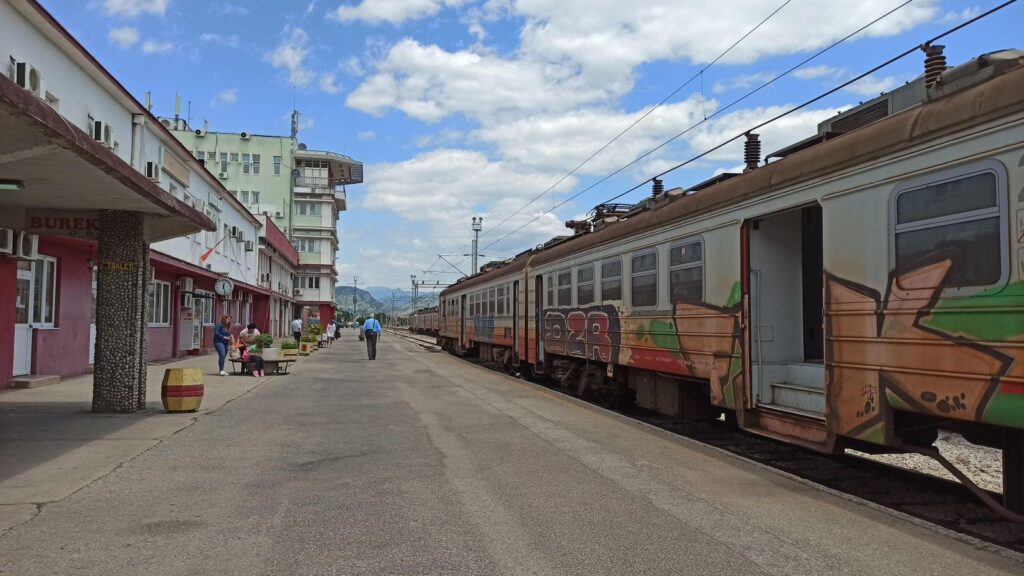
The Train System
Unfortunately, the golden age of railway transport in Montenegro is long gone. Buses are much faster and have less chance of technical difficulties. However, if you love trains, as we do, there are still a few functional train lines. It’s also very affordable!
The main hub is in the capital, Podgorica, with the other major train stations being Bar, Bijelo Polje, Danilovgrad, and Nikšić. There are also many small stops in between. A typical day trip destination is Ostrog Monastery, where you’ll then hike up to the popular pilgrimage site.
You’ll also find one train a day from Podgorica and Bar that goes all the way to Belgrade, Serbia. Timetables and prices are here.
THE TITO EXPRESS
The Bar to Belgrade railway was built by Yugoslav President Josep Bro Tito. He used to take important world statesmen on a ride in his beautiful blue train (Plavi voz). Nowadays, Plavi voz is retired in a museum at Belgrade’s Topčider Station, although some parts are still occasionally used for tourist trips.
Adventurers and enthusiasts can instead take the regular Bar–Belgrade train for an 11-hour panoramic ride over 400 bridges and the Dinaric Mountains.
Staying Connected When Visiting Montenegro
Internet
Internet connection in Montenegro is good and sufficient for streaming or online work. Solid Wi-Fi is a standard in most accommodations and cafes. Montenegro even has a digital nomad visa now.
Phone
The Montenegro country code is +382, and the universal emergency number is 112. In less serious situations, you can call the police (122), ambulance (124), or fire department (123) directly.
Best SIM For Montenegro
Montenegro is not a member of the Schengen Zone or the EU, so be mindful of high roaming charges if you’re coming from those areas.
In our opinion, you can manage a shorter vacation without a foreign SIM card. Just arrange your arrival time at the accommodation in advance, or use wi-fi in a cafe/restaurant. Also, download offline maps beforehand.
If you prefer data on the go, the three providers – Telekom, One, and Mtel – advertise identical tourist packages. Each starts at 500 GB of data for €15 and is valid for 15 days. The only difference between them is the amount of data you can use for free within the Western Balkans Zone (Albania, Kosovo, North Macedonia, Serbia, Bosnia and Herzegovina).
You can get physical SIMs at all the providers’ stores and kiosks, along with newsagents (including Tivat and Podgorica airports), supermarkets, and select gas stations. If you have a phone compatible with e-SIM, all the above-mentioned packages can be purchased online directly from the providers’ websites. You’ll need an ID to get a Montenegrin SIM.
If you’re not a fan of any of the offers, Airalo is a good e-SIM alternative. In Montenegro, it starts at 4 USD for a single 1 GB lasting 3 days.
Electrical Outlets
The most common electrical outlets in Montenegro are type C (Europlug) with two round pins and no grounding. You may also come across a type F plug with grounding clips on the side. The voltage is 230V, and the frequency is 50 Hz. You’ll need a converter or plug adapter if your devices don’t match this.
Montenegro Accommodation
In our experience, Booking.com is the best place to find accommodation in Montenegro.
Besides hotels and B&Bs, they also offer lots of private apartments for a good price. Download the app and create an account, as both can get you considerable discounts.
Airbnb is worth checking out if you’re looking for an apartment for a larger group of people. Hotelworld is okay for dorms, too, but there isn’t much on there outside of the main travel destinations.
Money in Montenegro
Montenegro used the Yugoslav dinar until 1999, but the hyperinflation was so devastating that the government decided to adopt a dual currency system. They chose the strong, stable German Mark, and by 2001, there were enough marks in circulation that they replaced the dinar entirely. When Germany switched to the euro in 2002, Montenegro did the same.
While cash is still popular for Montenegro travelers, you can pay by card almost everywhere! That being said, you should still carry some cash for taxis, public transport, small shops, and in rural areas.
If you can, get some euros beforehand at a place you trust. While in Montenegro, I’d avoid money changers at the airports, hotels, and unlicensed offices. Local banks like CKB, NLB, Erste, etc. are the safer option for exchanging money, as they offer fair rates and avoid possible scams. Just don’t forget to bring your passport; legitimate exchange offices have a licence from the central bank, and should inform you about any commission fees first.
We prefer to get local currency directly from an ATM with a Wise or Revolut card with great exchange rates. However, it seems that all ATMs in Montenegro have now started charging a withdrawal fee of at least €5.
Ziraat used to be free, but it isn’t that common, and policies often change. That means, unless you’re a lucky owner of an American Schwab debit card, which refunds these fees, a money exchange is probably the better option.
In case you’re still planning to use an ATM, only choose bank-affiliated ones, ideally in or near local bank branches, or shopping centers. Euronet and similar privately owned ATMs get you on exchange rates or hidden fees. We avoid them in every country we go to.
Keep in mind when withdrawing money abroad to choose without conversion/decline conversion. That’s the foreign bank’s way to push an unfavorable exchange rate onto you. You can also check if your bank is part of the same group as one of the local ones to avoid fees (Erste Group, CKB is part of OTP Bank Group).
Prices in Montenegro vary greatly from place to place, with the popular coastal towns being on the pricier side. A budget double room in Kotor in summer costs about €50 to €80 per night, in Ulcinj it is €20 to €40. A main course at a restaurant is around €10 – €20, a soup or salad is €3 – €10, and a glass of house wine is €4 – €7. Groceries are affordable compared to the US and the UK.
Drinking Water
Tap water is officially safe to drink and, especially in the mountainous areas, refreshing. If you find the taste unpleasant in some cities and towns, bottled water is widely available and cheap.
Eating Out
Tipping in Montenegro is not obligatory but greatly appreciated. It’s common to tip 10% at restaurants, round up to the nearest euro at a cafe, and give a few extra euros for good service to a taxi driver.
Paid tour guides generally don’t expect tips, but if you like them, 5–10% will make them happy. If you go on a free walking tour, I suggest leaving a €5 or €10 tip. Some restaurants charge a 10% service fee; in that case, you don’t need to tip, or at most, only leave a little extra. It’s always better to tip in cash.
Montenegro Travel Tips Conclusion
Now, I think nothing will catch you by surprise on your trip to Montenegro. I hope you’ll have a great time, and don’t forget to try some njeguški pršut or Vranac wine.