
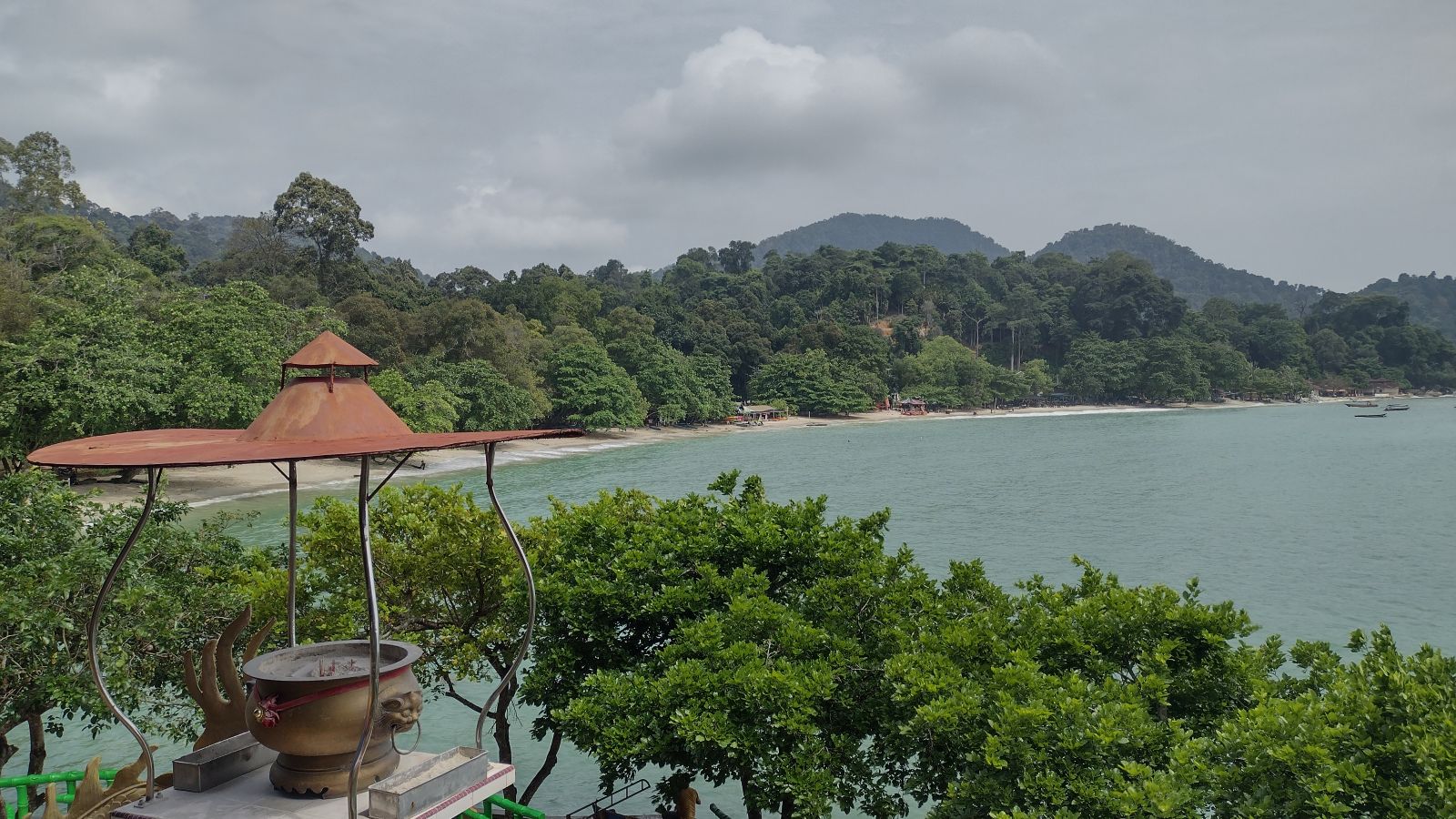
Known for its relaxing beaches, colonial history, and scenic temples, Pangkor Island is one of the most underappreciated destinations in mainland Malaysia. It’s also one of my favorite islands in Southeast Asia.
The tropical vibes and wonderful mix of Chinese, Malay, and Indian cultures are what drew me to its shores; however, it was the friendly locals, delicious food, and lack of crowds that kept me there.
Add in duty-free shops and some of the most unique temples in the country, and you have the ideal place to unwind.
My partner and I spent a fair bit of time exploring the island, and I’m looking forward to heading back in the near future. It’s just one of those places that brings back fond memories.
This is a short guide to Pangkor Island, including some of the major highlights, which temples are worth visiting, an overview of the beaches, and how to embrace the slower-paced island life. I’ll also cover where to stay and how to get there.
Here are 9 things to do on Pangkor Island, Malaysia.
Visit Fu Lin Kong Temple
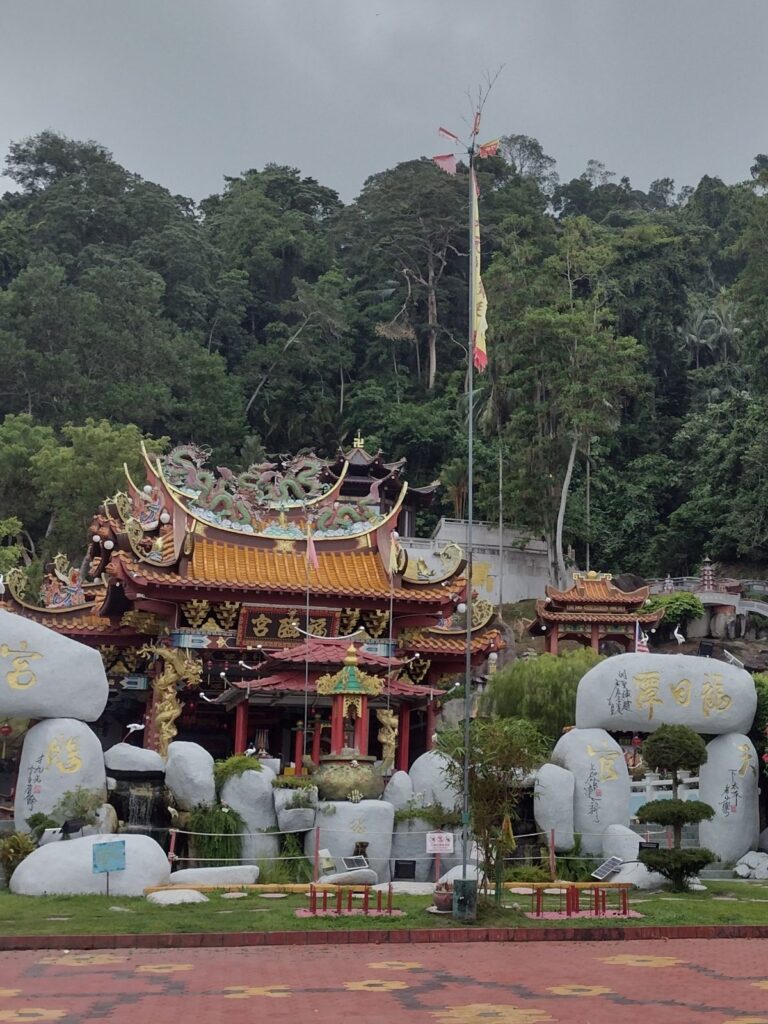
Fu Lin Kong Temple is the first, but not the last temple I’ll mention on Pangkor Island. Sitting at the base of Pangkor Hill, it’s a popular place of worship for the Chinese community, and probably the most family-friendly religious complex on Pangkor Island.
That’s probably because several structures double as slides and play areas.
There are several parts to the Taoist temple, each with unique sculptures and symbols representing different things within the religion. People are encouraged to wander the grounds, and picture taking is more than welcome.
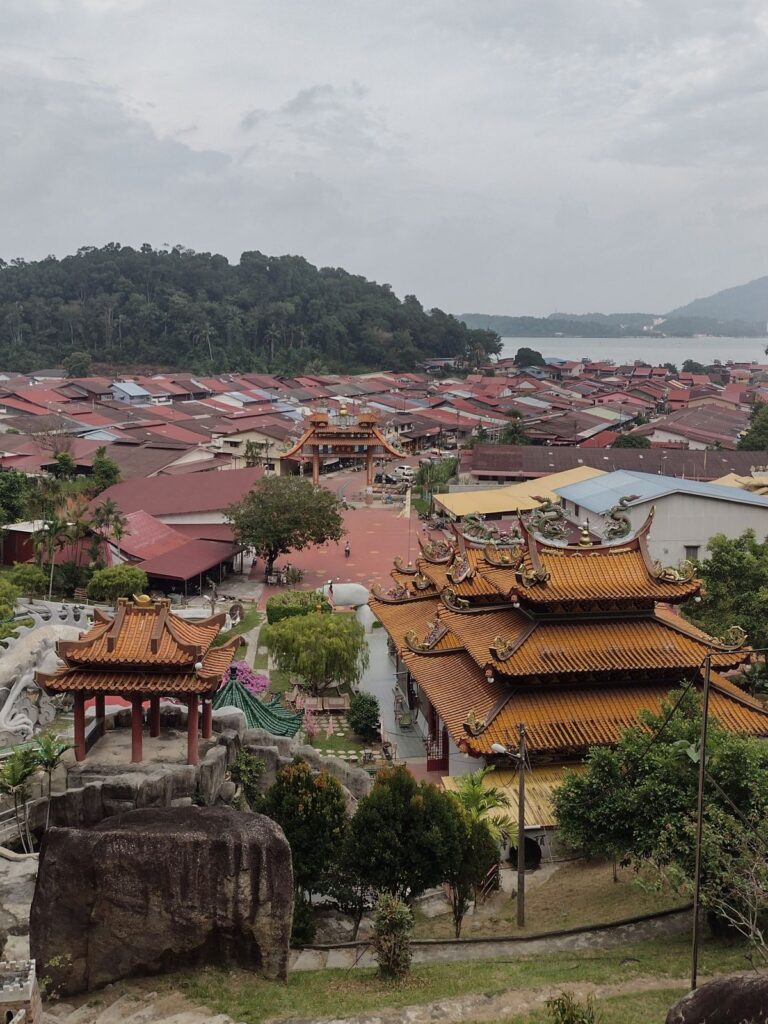
Some of the sights include a massive dragon sculpture weaving down the hillside, a walkway that replicates the Great Wall of China, a large koi pond, and open-air temple halls.
Make sure to head up to the top of the property, too. You’ll get a panorama of the temple and neighborhood below, plus the sea lingers in the background. It’s one of the best viewpoint spots on the island.
Getting There | Fu Lin Kong Temple is through a neighborhood, just inland from Sri Pathira Kaliamman Temple on the east coast. There’s plenty of parking for those coming by bicycle or motorbike. If you’re staying on the east side of the island, walking is an option.
Marvel At The Chinese Mosque
Masjid Al Khairiyah, better known as the “Chinese Mosque,” is as beautiful as it is unique.
It’s also a place that goes by many names, often referred to as Masjid Sungai Pinang Kecil or Masjid Seribu Doa (Mosque of 1000 Prayers), along with the original name I mentioned. What makes it stand out is its traditional Chinese-Islamic architecture, which sort of merges the two designs.
It’s very fitting as well, considering the mosque sits in a neighborhood that primarily consists of generations-old Chinese families. With that being said, you’ll still have to remember this is a mosque and the same dress codes apply here as in any other.
The interior is quite stunning, with a gorgeous colorful carpet in the prayer hall that merges into white and red-accented walls covered in green graphics and text. And while the inside is a magnificent sight, the exterior was the thing that stood out most to me.
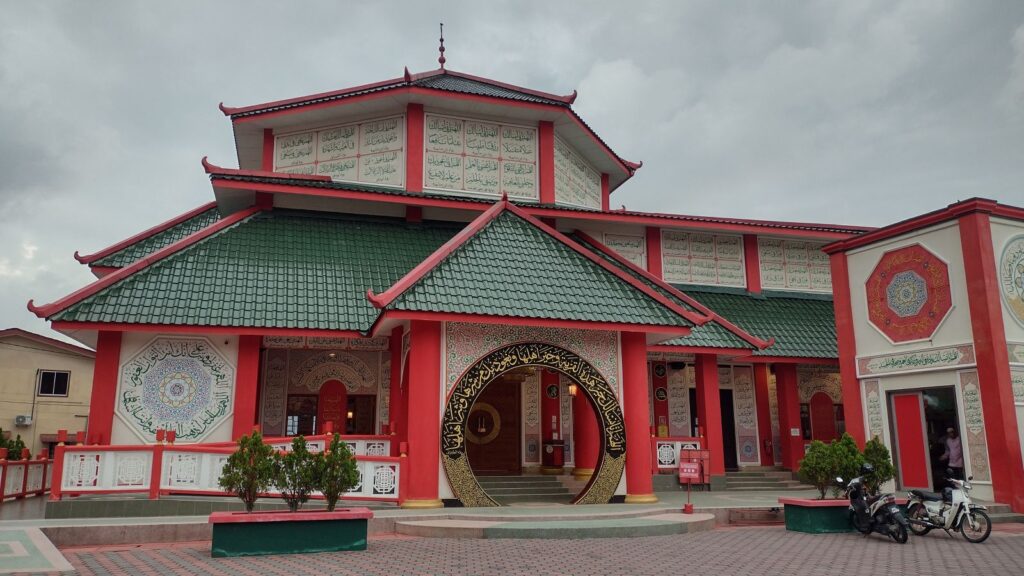
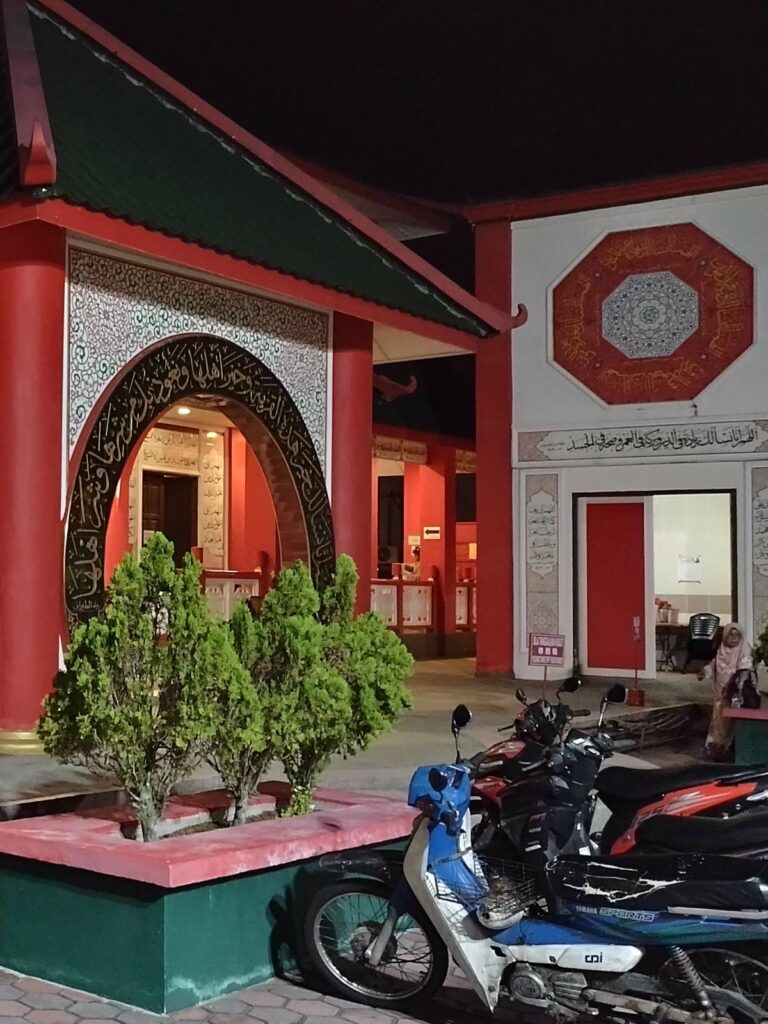
Similar to the inside, the facade is a blend of white walls with ornamental green script and graphics, dark green roofing, and red edges. The entranceway is built in a circular fashion with a black background and gold script around its diameter.
The combination gives the building a very distinctive Chinese feel.
I didn’t see a specific timetable for tourists on my visit, so you should be alright to enter as long as prayer isn’t in session. Along the side of the mosque is also a map that shows some popular Chinese sights around Pangkor Island.
The information signs are in Chinese and Malay, so if you want more details about the place, either bring an offline translator or ask one of the staff for history about the place.
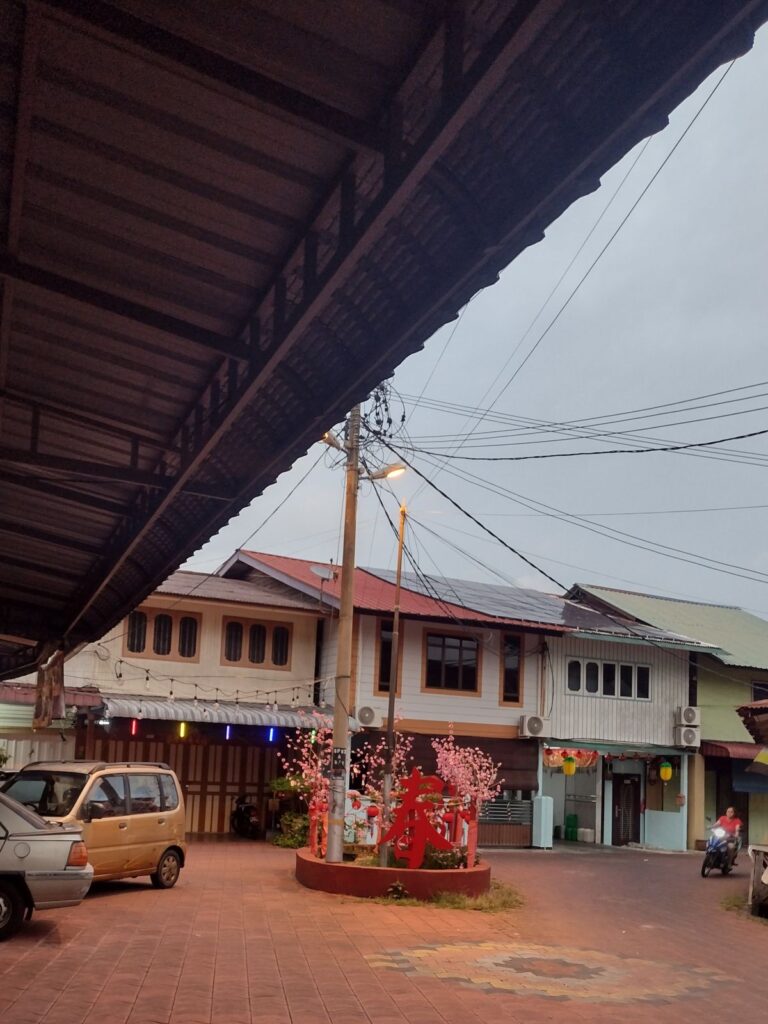
See Sri Pathira Kaliamman Temple
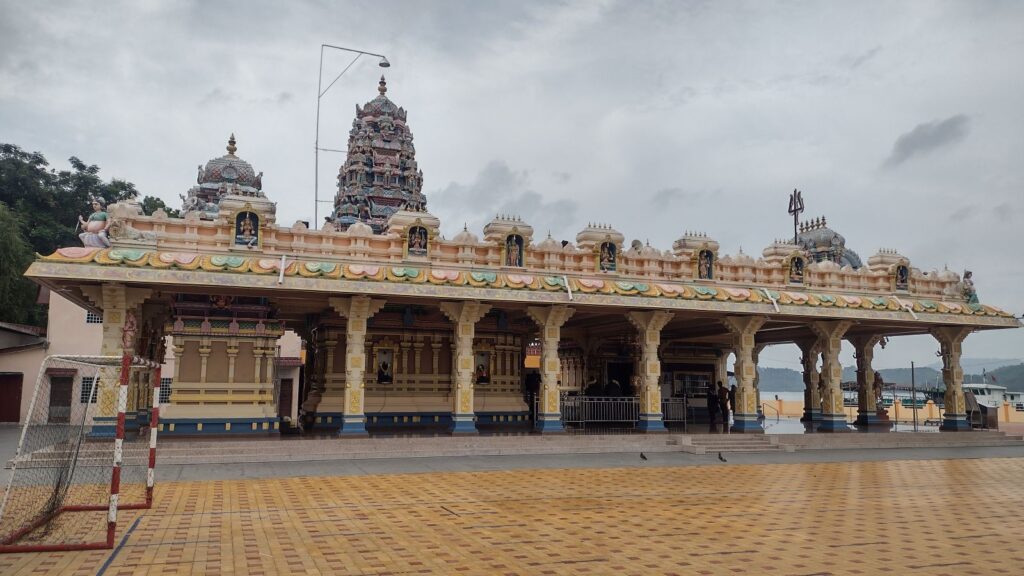
I’ve mentioned a Taoist temple, followed by a mosque, and now it’s time to bring up Pangkor Island’s main Hindu complex, Sri Pathira Kaliamman Temple.
The open-air shrine features a mix of eye-popping colors and intricate sculptures, the most prominent of which is that of the Goddess Kali. It’s a bit unassuming from the road, but the views from the property are great, especially on a sunny day.
And if I remember hearing correctly, Sri Pathira Kaliamman Temple is Malaysia’s only Hindu temple that directly faces the sea. So for many who practice the religion within the country, it’s considered a bit of a pilgrimage site. I’m not sure if that’s always been the case, since it was first built in the 19th century. But after its recent renovation, that’s been the case
It’s worth noting that on calmer days, the stray dogs love hanging out on the large concrete-and-tile patio. They were quite friendly when I was there, as many of them are on Pangkor Island, but just go with caution. You never know if they’ll feel territorial in that particular moment.
Head Over To The Floating Mosque
Pangkor Island is home to two of the most beautiful mosques I’ve visited, the first being the Chinese Mosque, and the second is Masjid Al-Badr (1000 Selawat).
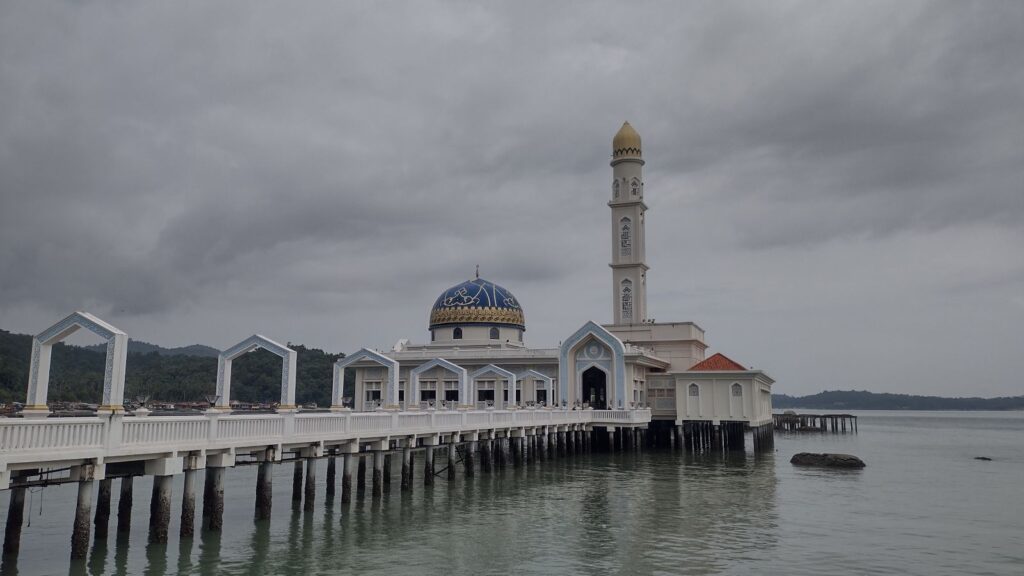
Also known as the “Floating Mosque,” it sits at the end of a pier not far from the Dutch Fort at the southern half of the island. Malaysia has a few of these floating mosques around the country, the most popular being the Malacca Straits Mosque (Masjid Selat Melaka) in Melaka.
However, I found this one even more beautiful.
The walkway is much longer, so it feels like you’re visiting a proper separated island; it’s open to the public far more often, and the remote atmosphere makes for a peaceful visit. It’s also splashed in a variety of stunning blue paints that intertwine with intricate gold patterns.
I heard it being called a Blue Moroccan design, and I think that fits the bill. It has a mixture of Middle Eastern influence with local Perak architecture.
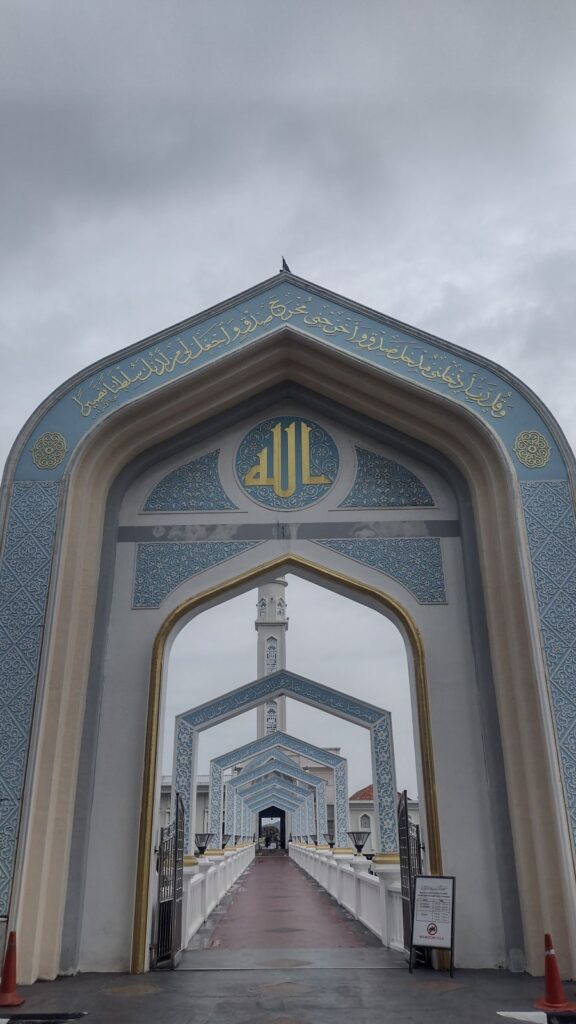
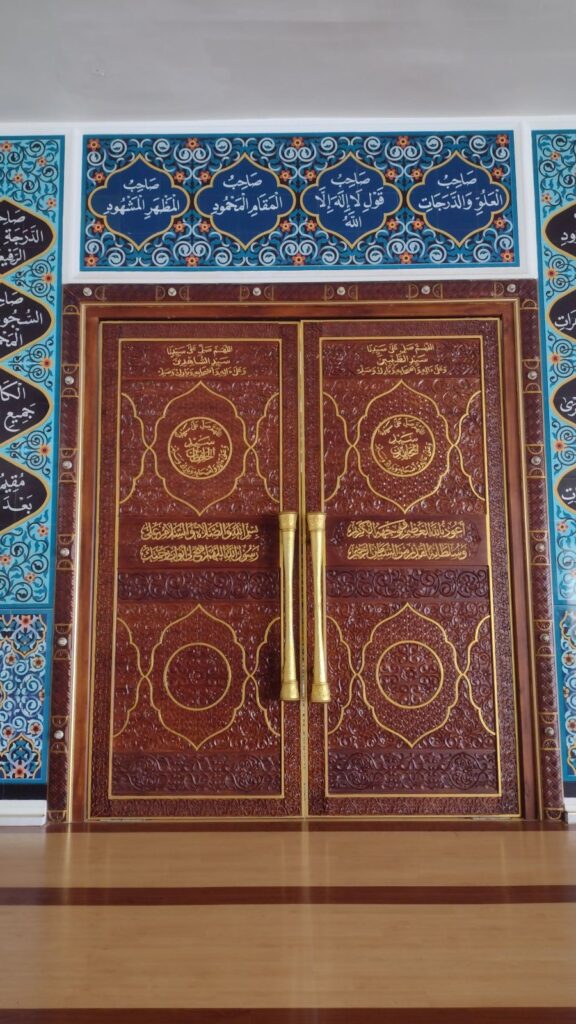
It’s very noticeable from the front, but the interior is even more spectacular, especially the doorway and main dome inside the musalla, or prayer hall. You’ll be asked to change into appropriate attire before entering, but they offer up the correct clothing for free, and the staff is super friendly and helpful.
Besides the Floating Mosque name, it also goes by 1000 Serawat, or Seribu Serawat. This translates to “a thousand blessings” as a reference to the number of prayers inscribed on the walls.
If you’re lucky, you’ll see a few of Pangkor Island’s famous hornbill birds hanging out at the entrance to the mosque.
Visiting Hours for Tourists
Friday | 9 am to 11 am, 3 pm to 4 pm, 5 pm to 6 pm
Saturday to Thursday | 9 am to 12 pm, 2 pm to 4 pm, 5 pm to 6 pm
Experience History at the Dutch Fort
Malaysia, and more specifically the Strait of Malacca, has a long colonial history dating back hundreds of years. Since Pangkor Island sits at about the midway point of the strait, it was seen as a strategic spot for controlling trade.
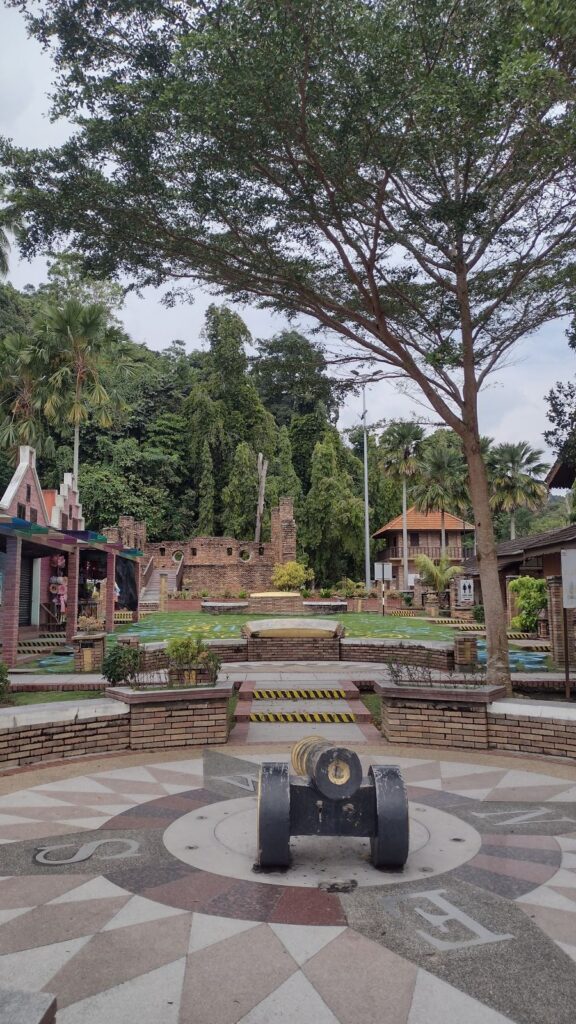
Hence why the Dutch Fort, or Kota Belanda in Malay, was built. The ruins are known to have been a popular outpost for the Dutch Empire and, at the time, was used to store tin produced on the mainland.
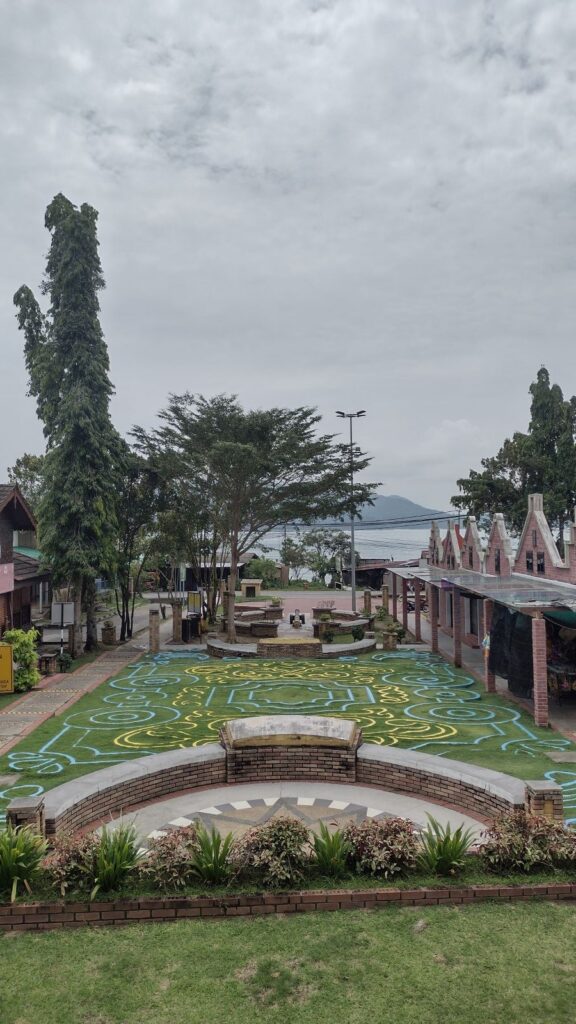
Originally established in the 17th century, the remnants of the outpost are now no more than a few brick walls and information points. But they’ve been taken care of pretty well and are among the most prominent historical sights on the island.
This is despite the fact that they were last manned in 1743 and have been left abandoned ever since. While I was there, the vendors weren’t there, but usually there are souvenir stands and the like on the property.
It’s also just an easy spot to stop by, as it’s not far from the Floating Mosque.
Check Out The Inscribed Rock (Batu Bersurat)
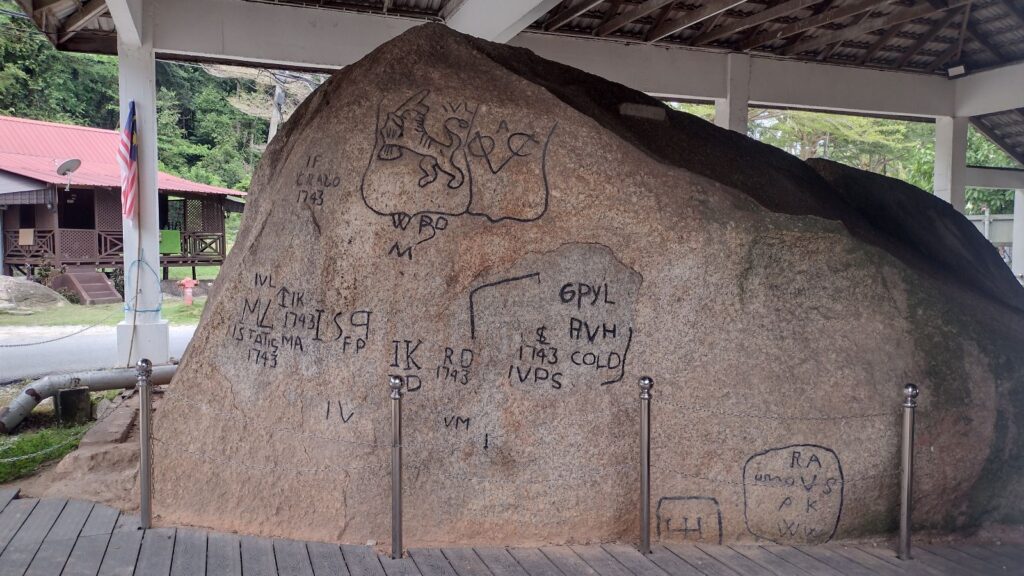
Don’t expect a breathtaking natural wonder at Batu Bersurat, commonly known as the Dutch Inscription Stone. After all, it’s a simple boulder perched underneath a manmade overhang in a small seaside village.
However, I mention it because of the history that comes with the rock.
Dutch soldiers stationed at the nearby fort in the 18th century (1743 to be exact) are believed to be the original “artists.” There are several pairs of letters carved into the rock’s surface. Most are believed to be initials of the soldiers; however, a few others might be recognizable by those who love the history of the high seas.
A large VOC and accompanying lion carving show that these men belonged to the Dutch East India Company. The VOC stands for Verenigde Oostindische Compagnie and was flown on the company’s flag, while the lion was an emblem.
A local Pangkor Island tradition, passed down orally, held a different view of the inscriptions. They believed the lion was a depiction of a beast that had eaten a Dutch nobleman’s daughter, who was last seen near the rock.
Relax at Pantai Pasir Giam
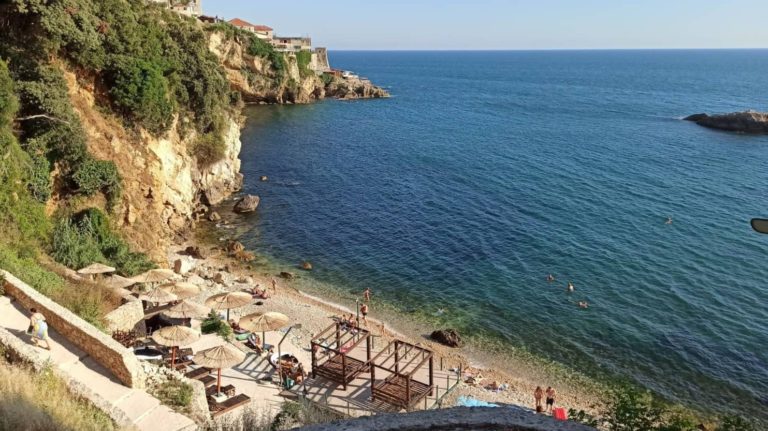
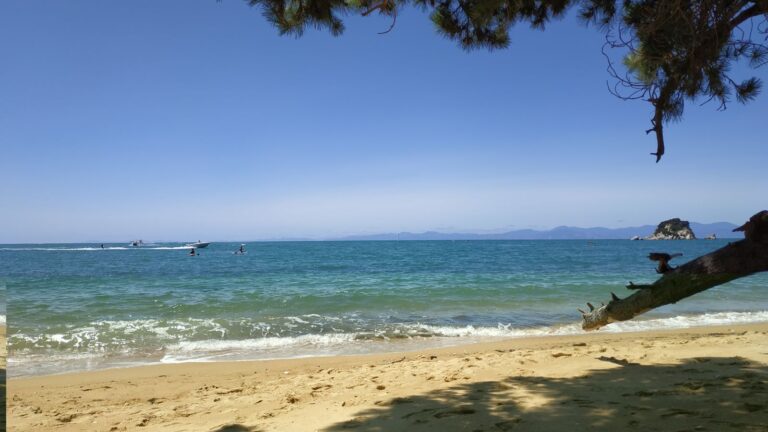
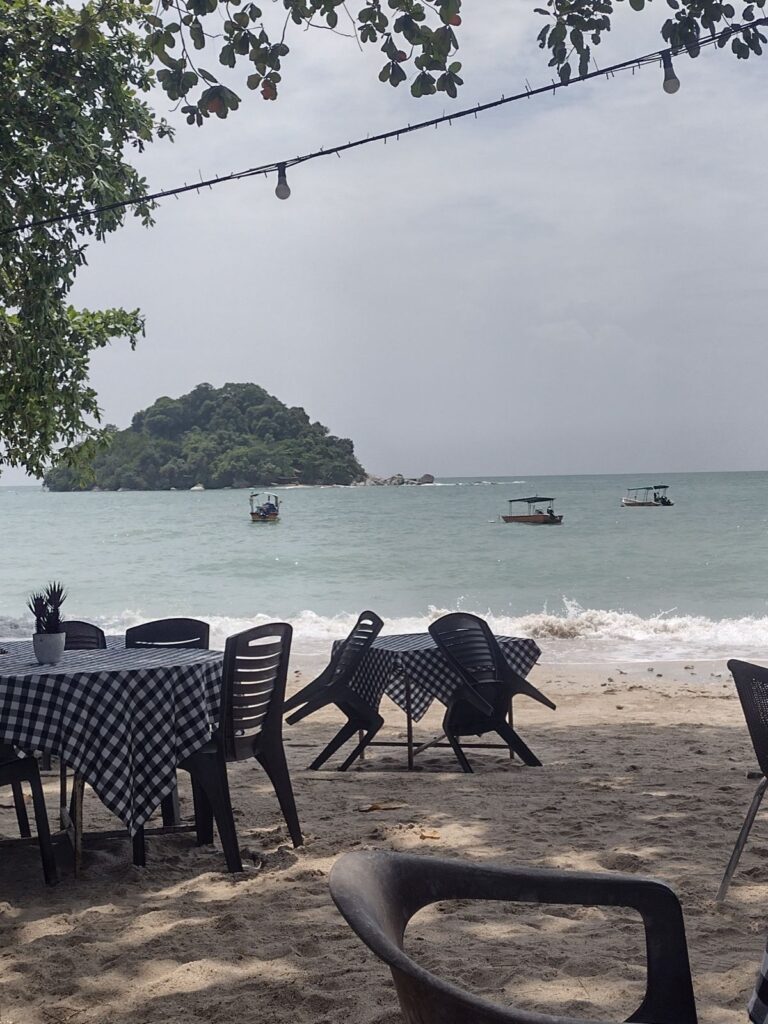
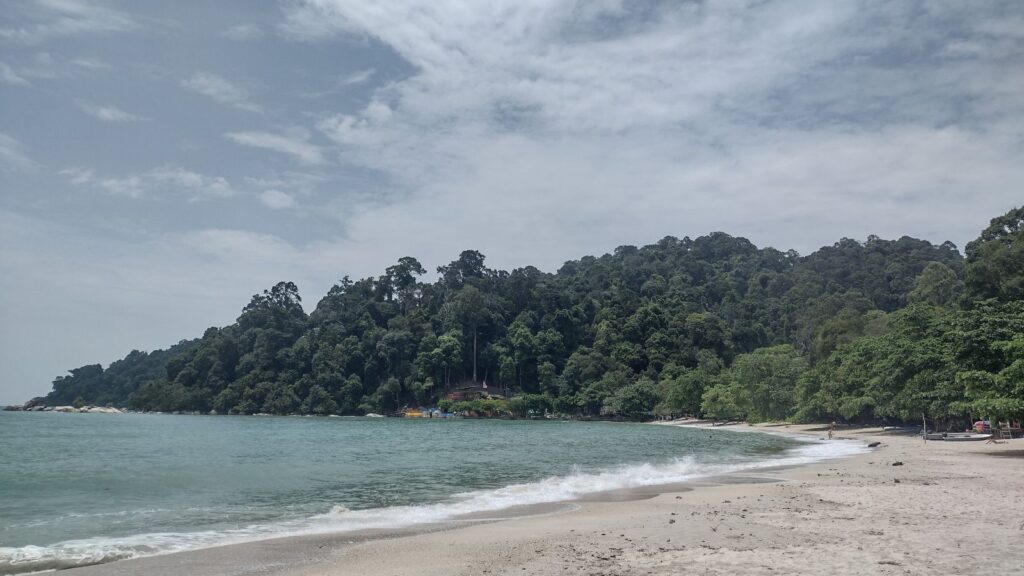
Pantai Pasir Giam, or Pasir Giam Beach, is my favorite beach and one of the top things to do on Pangkor Island. It’s quite a secluded spot in the northeast part of the island, which is sort of the default last stop on the road as long as the northern road in the hills is closed down.
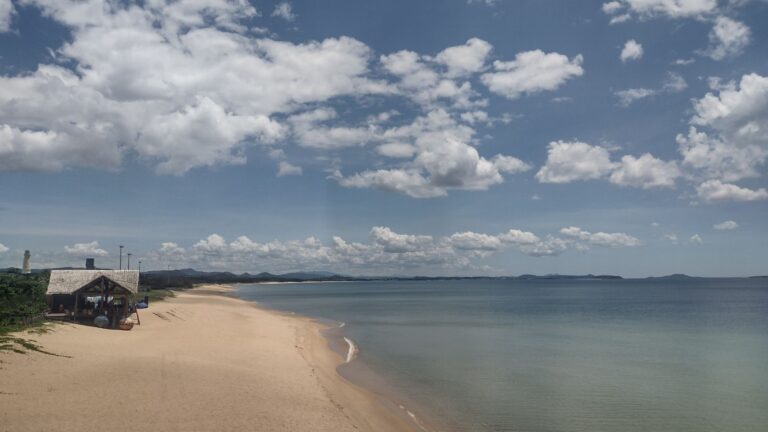
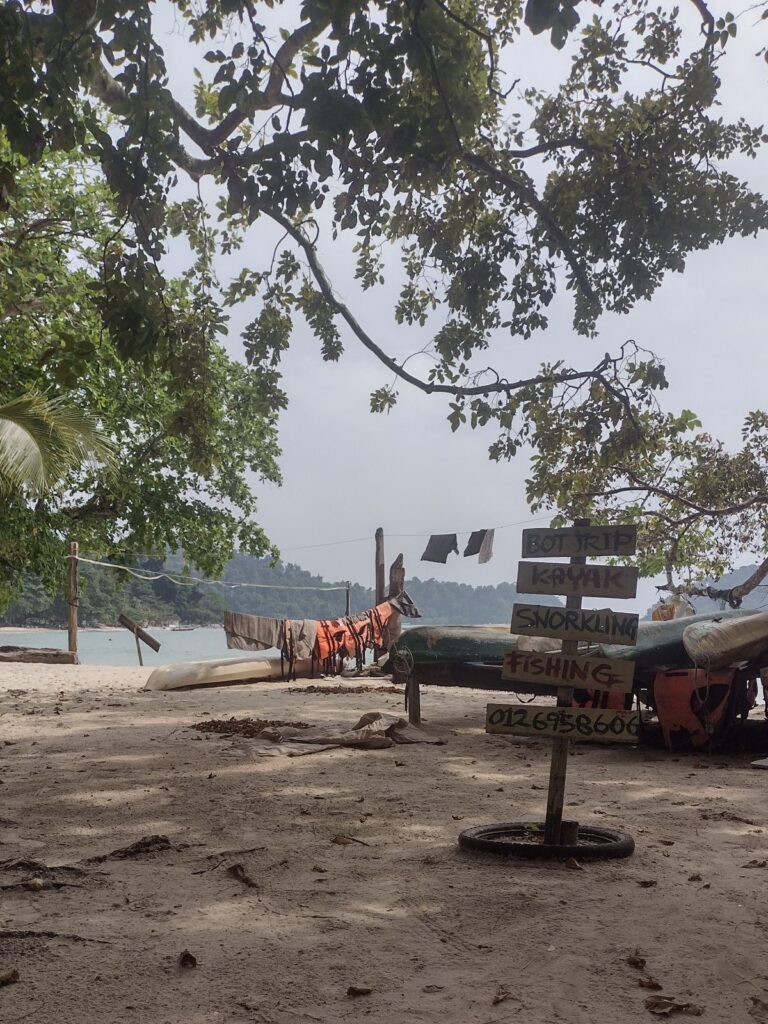
This means fewer visitors and a relaxing atmosphere to go along with its soft white sands. There are also a lot of tropical trees that add a wild feel to the shoreline. You can rent sun chairs here, float in the turquoise waters, or hire snorkel gear and kayaks, too.
And as long as a recent storm hasn’t brought in plastic from the sea, the waters and coastline tend to be quite clean.
Unlike the other beaches on the island, there aren’t really any accommodations across the road from it. The buildings in the area are just a handful of cafes like Nipah Cafe and Daddy’s Cafe Pangkor Island, which sit along the sand’s edge. They have decent food, friendly staff, and Nipah Cafe was one of the only places on the island where I could find espresso machine coffee.
I think this fact kind of led Pasir Giam Beach to be the foreigner beach while I was there.
Like most places on Pangkor Island, monkeys are a problem here.
They swing from branch to branch opposite the beach and love to make a run at any food or snacks you might have on you. For this reason, I suggest limiting the items you bring here or leaving your things at one of the cafes while you swim.
There are also some cool spots nearby like Lin Je Kong Temple and Coral Beach that can be accessed from Pantai Pasir Giam that I’ll cover more in later sections. You can also catch a boat trip to Giam Island, which has a small beach on it.
Getting There | Unless you’re staying on the western side of Pangkor Island, you’ll want to rent a motorbike or bicycle to get to the beach. Just follow the main road (Jalan Pasir Bogak) west and then north until the end.
Wander Up To Lin Je Kong Temple
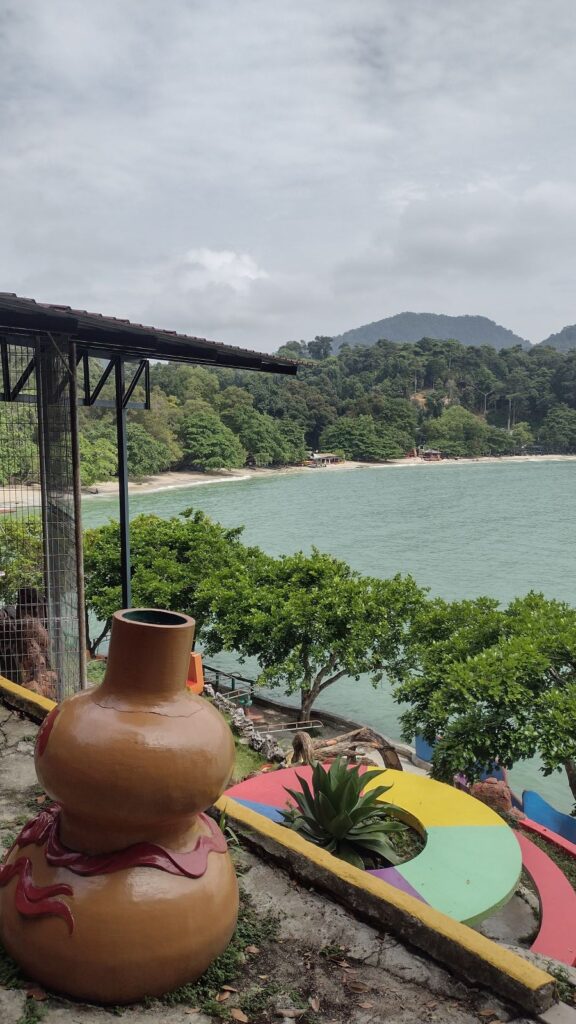
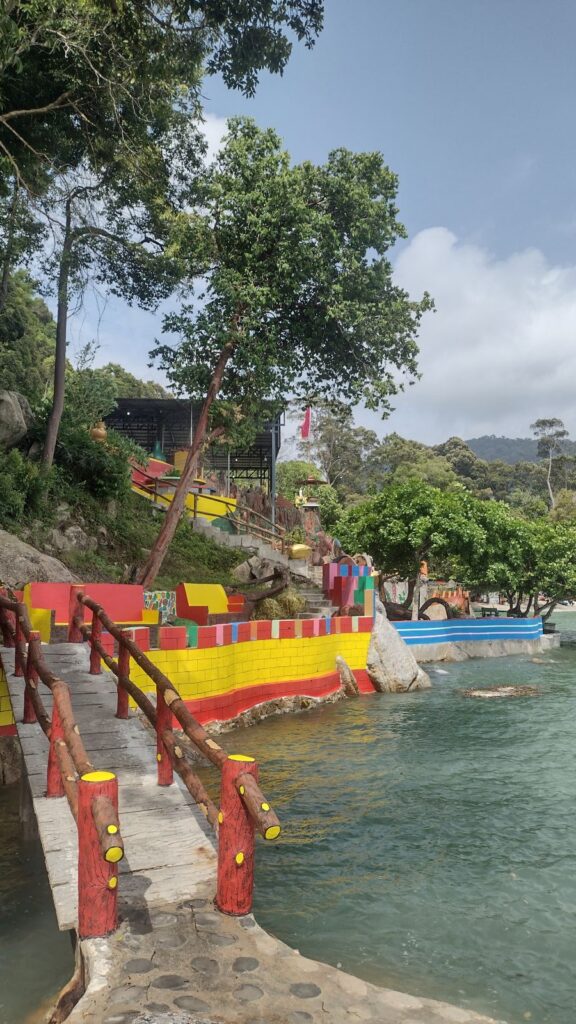
Sitting at the northern end of Pantai Pasir Giam is the small, colorful Lin Je Kong Temple.
The seaside temple has some of the best views of Pangkor Island’s western coastline and is built into a tiny rock hill. It’s a serene open-air complex that offers shade from the sun, a peaceful place to enjoy the slow flow of the Malacca Strait, and a small prayer hall.
What stands out most is the abundance of brightly colored, unique sculptures and walls. Rainbow-like stairs crawl up towards the temple, a small walkway connects some of the rocky shoreline, and the seafront wall is a mixture of reds, blues, and yellows.
Like the whole coastline, the monkeys can be annoying, but they are often away searching for food in the afternoon. If you want a quick drink while hanging out on the beach, there’s a stall run by a friendly guy here selling basic bottled drinks from an ice cooler.
The trails alongside Lin Je Kong Temple are also the ones that lead to Coral Beach. It’s absolutely worth a visit if you’re coming to the western beaches for the day.
Explore Pangkor Island's Other Beaches
Pantai Pasir Giam is one of several beaches on Pangkor Island. If you’re staying on the island for more than a couple of days, you’ll probably end up seeing a few of these.
Pasir Bogak Beach
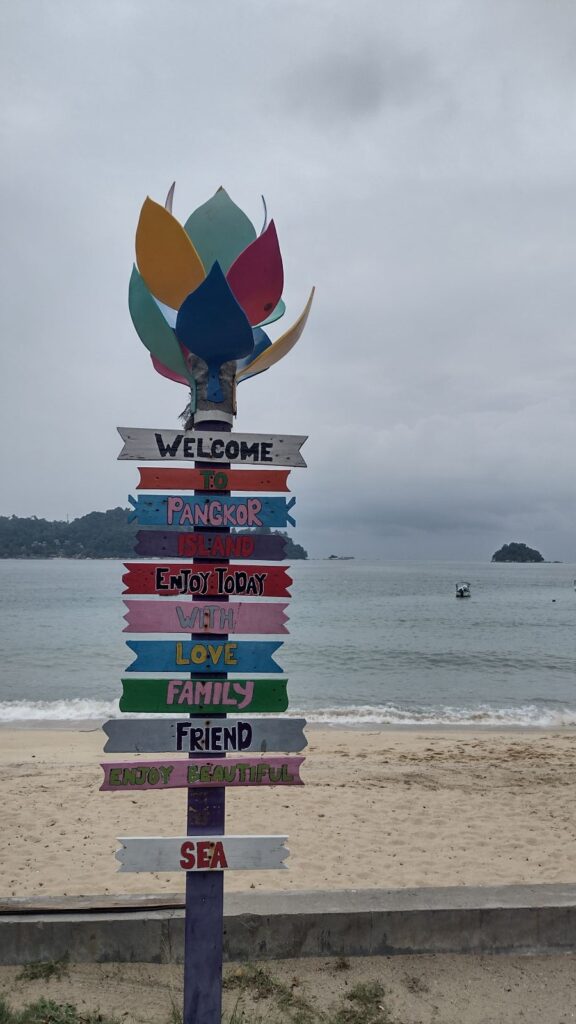
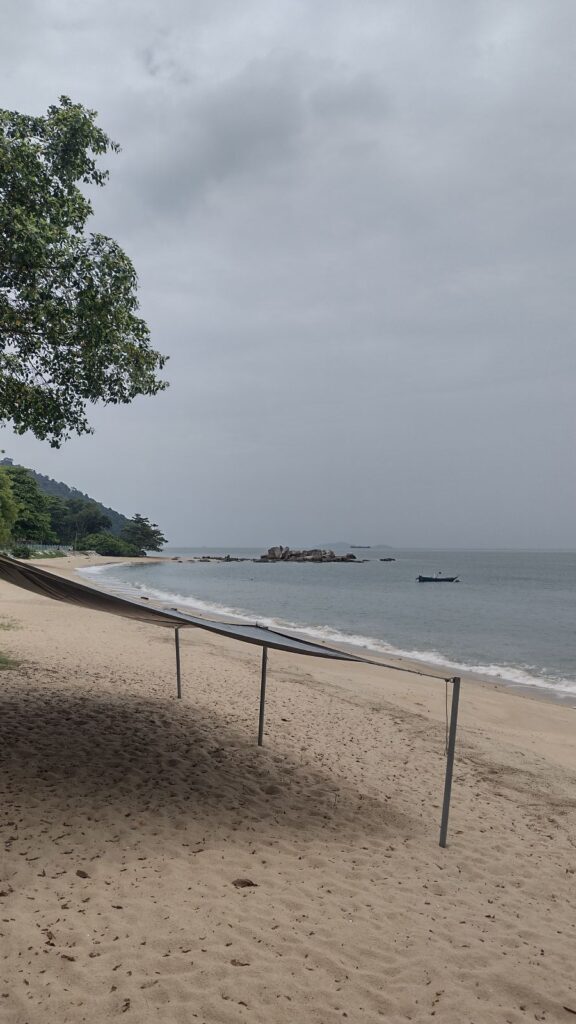
The first beach you’ll come across if you’re driving from the east coast to the west. It lies at the end of the main road, and is one of the more popular beaches on Pangkor Island. It’s a large beach that’s quite pretty, and tends to be well kept.
There are several resorts nearby, some decent fresh seafood restaurants, and soft yellow sands make up most of the shoreline. When the Malaysian travel season is in full swing, it can get busy, as they offer island-hopping excursions and some other tours from the beach.
The waters can get a bit murky at Pasir Bogak Beach, but the water is swimmable nonetheless. It’s also not a bad spot to come for sunset. Oh, and watch out for monkeys.
Pasir Ketapang
Between Pasir Bogak Beach and the next one on the list is the small Pasir Ketapang. It’s a pretty beach that’s home to Pangkor Island’s turtle conservation center. For this reason, I think swimming is off limits here.
It’s worth stopping by to see if any turtles are being rehabilitated, but it’s not a given you’ll see any.
Teluk Nipah Beach
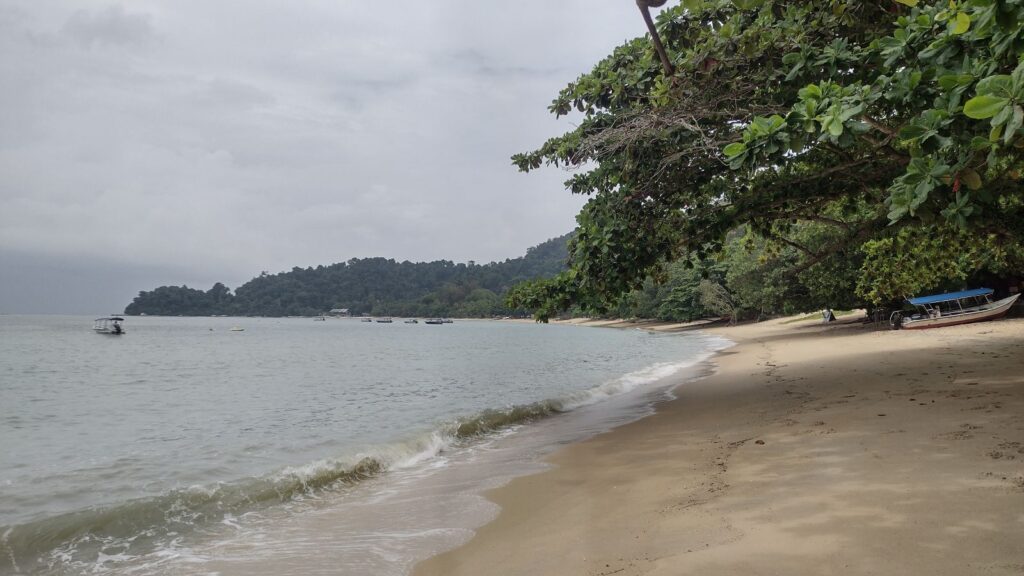
I’d consider Teluk Nipah Beach to be the favorite beach for most visitors on Pangkor Island. It’s a lovely sandy beach with vibrant waters, adventure and fishing tours leaving from the shore, and beautiful views of the nearby islands.
There’s a small village nearby which mostly consists of guesthouses, villas, resorts, and restaurants. And in the evening it gets crowded with tourists and monkeys, as many come to see one of the do his daily hornbill feeding. I didn’t join in on this since I saw hornbills at the floating mosque and I’m not sure how ethical it is, but it’s the best place to see the tropical birds if you haven’t already.
Coral Beach
The small beach I mentioned alongside Pasir Giam Beach is a hidden cove on the other side of a small peninsula near the temple. It can be quite secluded and nice, but mostly gets covered during high tide, so make sure to come when the tide is out. Monkeys hang out in this area plenty, so be careful with your belongings.
Teluk Dalam & Pantai Teluk Belanga
These two beaches sit in the northern part of Pangkor Island. At one point, you could go to Pantai Teluk Belanga, but I don’t think that’s the case anymore. It belonged to a resort in the past and has been blocked off for some time now. If you’re taking a boat tour, it’s worth asking if you can get there by sea.
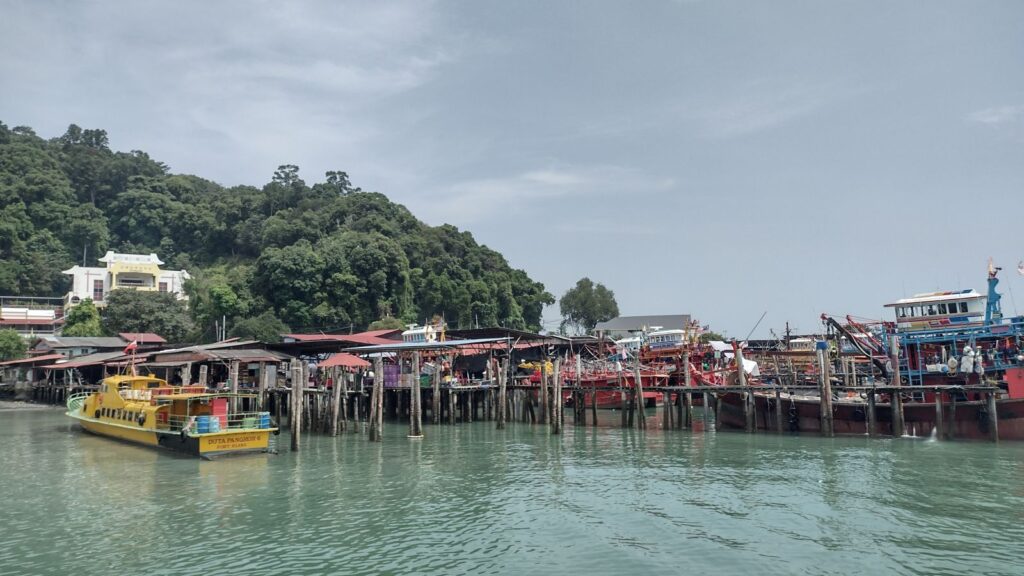
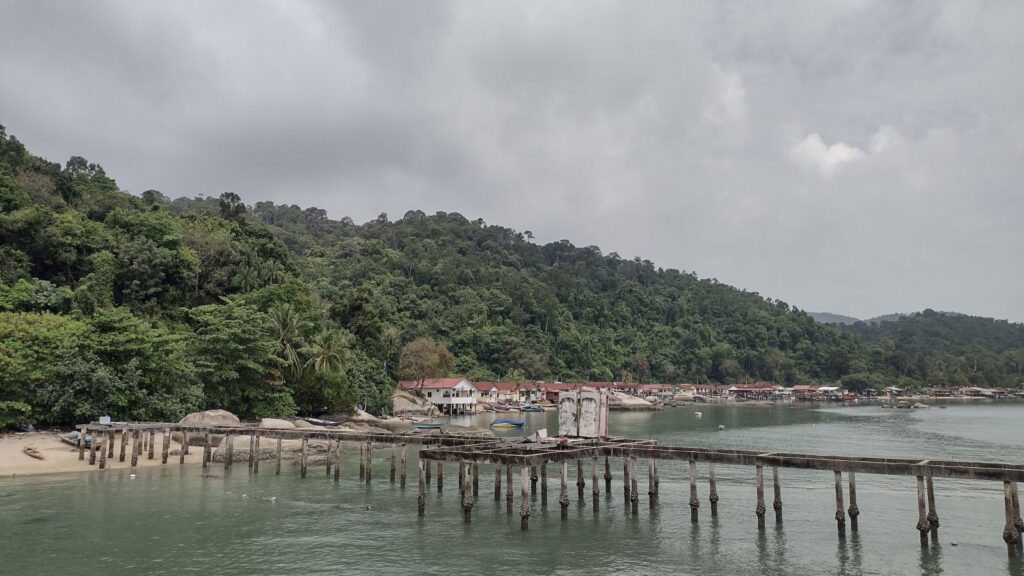
Teluk Dalam, or Deep Bay, is on the east coast as far north as the road allows. It’s mostly a fishing village with a pier that juts out into the sea. But during low tide, there are some sandy patches that open up more. It’s one of the quietest, least visited beaches on the island.
Pantai Teluk Segadas & Teluk Baharu Beach
These two beaches are in the south of Pangkor Island.
Pantai Teluk Segadas is a hidden beach that must be visited by walking through a jungle path. It can be a bit of a tricky walk, so bring shoes, but the result usually includes a wild, isolated beach with few visitors. Trash does get stuck here from the sea, so it can feel dirty at times.
Teluk Baharu Beach is just the sandy shoreline near the Floating Mosque. Many fishermen live nearby, so the water isn’t the cleanest in the area, but it’s a decent spot to snap photos.
Getting There and Getting Around Pangkor Island
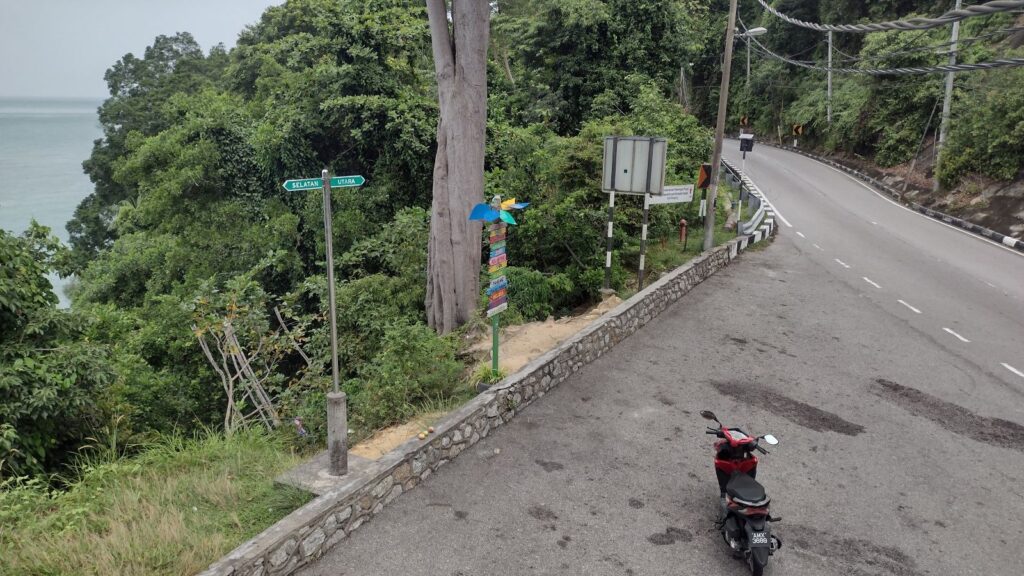
Pangkor Island is quite small, so everything will be either directly off the main road that loops around it or close by. It’s easy to navigate, but only if you have a motorbike or bicycle. Most hotels will rent motorbikes out to guests, but if you want one right away, you can get one from the moment you get off the ferry.
I recommend a motorbike for anyone who feels comfortable driving one. The rental for my accommodation was 25 RM, but that was 5 RM cheaper than I saw elsewhere.
There are hundreds lined up along the main road near the Pangkor Island ferry terminal, so it’s hard to miss. You’ll also notice the iconic pink minivans that double as taxis.
You’ll have no problem hopping in one of these and taking it anywhere on the island. If you’re staying further away, you’ll want to grab a taxi driver’s number or have your hotel help you out.
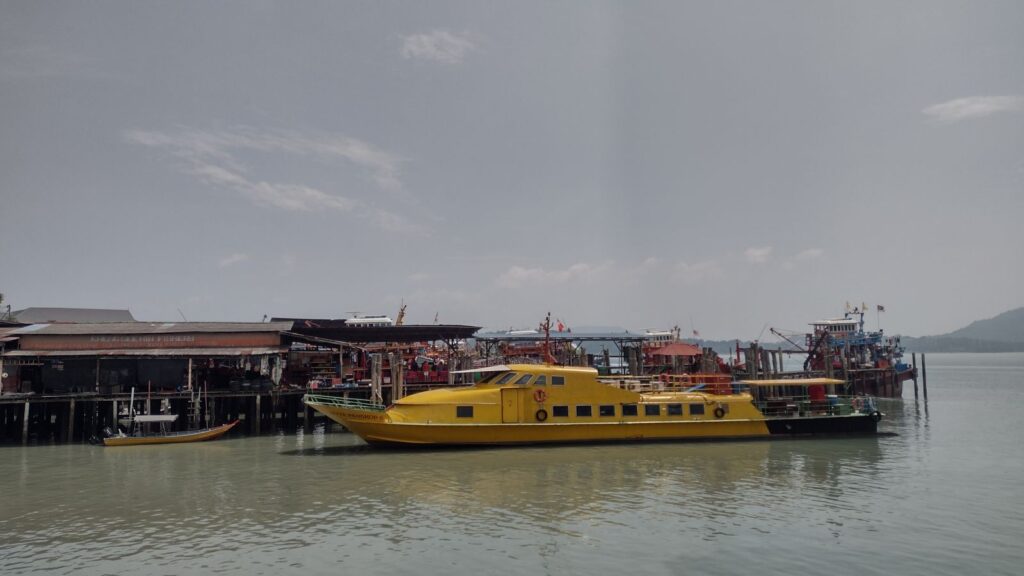
The only way to enter and exit Pangkor Island is by boat. The main ferry terminal is at Pangkor Jetty (maps), with services running to Marina Island and Lumut. For just about everyone, Lumut will be the one you use. Prices are 10 RM each way, and you can purchase them in person at the respective terminal ticket offices.
Lumut also has a bus station (maps) that’s a couple of minutes’ walk from the Lumut Pangkor Ferry Jetty (maps). It serves many routes, the most common being Penang and Ipoh. Each has a few routes per day, and you can buy tickets at the stations. Here are the costs for me on these routes.
Lumut to Penang Bus | 23.20 RM
Lumut to Ipoh Bus | 15 RM
Where To Stay On Pangkor Island
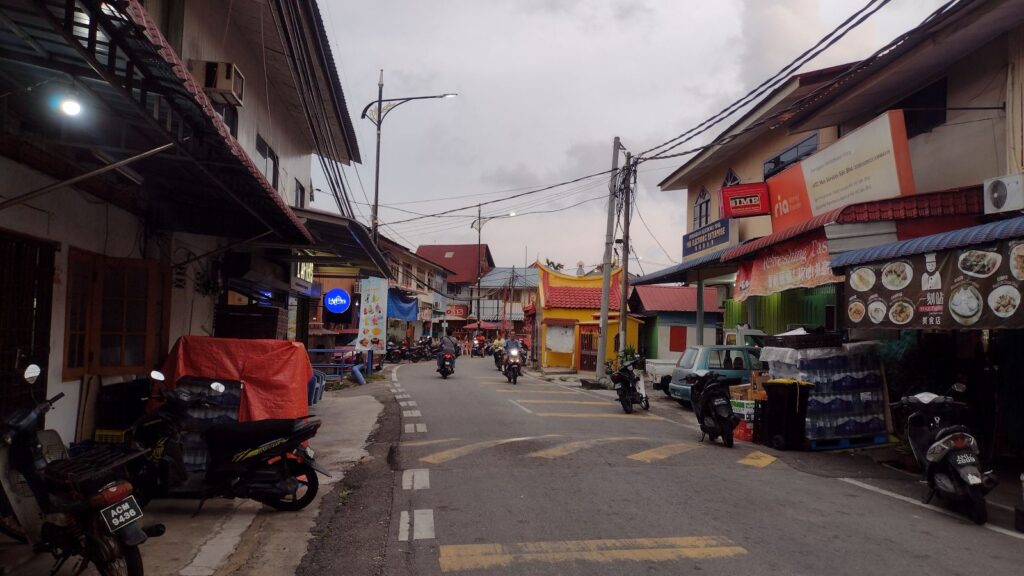
Like I said in the previous section, Pangkor Island is tiny, so most accommodations will be within a 20-minute drive of each other at most. If you’re staying on the eastern half of the island, you’ll have access to more restaurants but no beaches within walking distance.
The western side of Pangkor Island has a small community with guesthouses directly across from some of the popular beaches. It won’t really matter where you stay if you rent a motorbike. Most places are on the simpler side, so if you’re looking for 5-star luxury, your options will be limited.
Here are some recommendations:
Pangkor Guesthouse SPK | A budget guesthouse with simple rooms in a lively little neighborhood on Pangkor Island’s east coast. The owner and staff members are absolutely amazing here, and can help you with anything you may need, including tips for restaurants, motorbike rental, and help navigating the island. I stayed here for a few days, and it seemed to have had more than a few people extend their stay.
Pangkor Nature View House | Mid-range Pangkor Island hotel option that’s just a short walk to Teluk Nipah Beach. There is a range of rooms, and the property has a nice common area with a beautiful swimming pool.
Utan Teluk Nipah | Another solid mid-range hotel option near Teluk Nipah Beach. It has a shared pool and wooden cabin rooms that are clean and come with mosquito nets for the beds.
For more Pangkor Island accommodations, check here.