
Nestled in the southern part of the country, within a province of the same name, Nakhon Si Thammarat is a city that often gets overlooked by travelers making their way through Thailand.
I feel like most people opt for the nearby Surat Thani or Krabi in search of white sand beaches and island hopping. While those two things have a place in my heart, so does the history-rich, bustling atmosphere of authentic Thai cities.
And Nakhon Si Thammarat is definitely one of them.
The main attraction here is a 13th-century Buddhist temple that fuses local tradition with a bit of Sri Lankan influence. That plus some downright delicious and wonderfully spicy food, a quirky museum, and other historical sights, and you have an authentic experience awaiting you.
I spent about a week here during one of my many Thailand trips, and it’s a place I plan to visit again in the near(ish) future.
In this Nakhon Si Thammarat guide, I’ll share the highlights of the city, including tips on where to stay, how to get around, and the best places to fill an empty stomach. I also share some day trip options for those of you looking to see more sites within the province.
Here are some of the top things to do in Nakhon Si Thammarat, Thailand.
See San Lak Mueang Nakhon Si Thammarat Shrine
Just about every city in Thailand has lak mueang, or ‘city pillars’, that are considered the home of the guardian spirits of the city. In other words, these are the soul of the city and mostly sit at the heart of the Old Town.
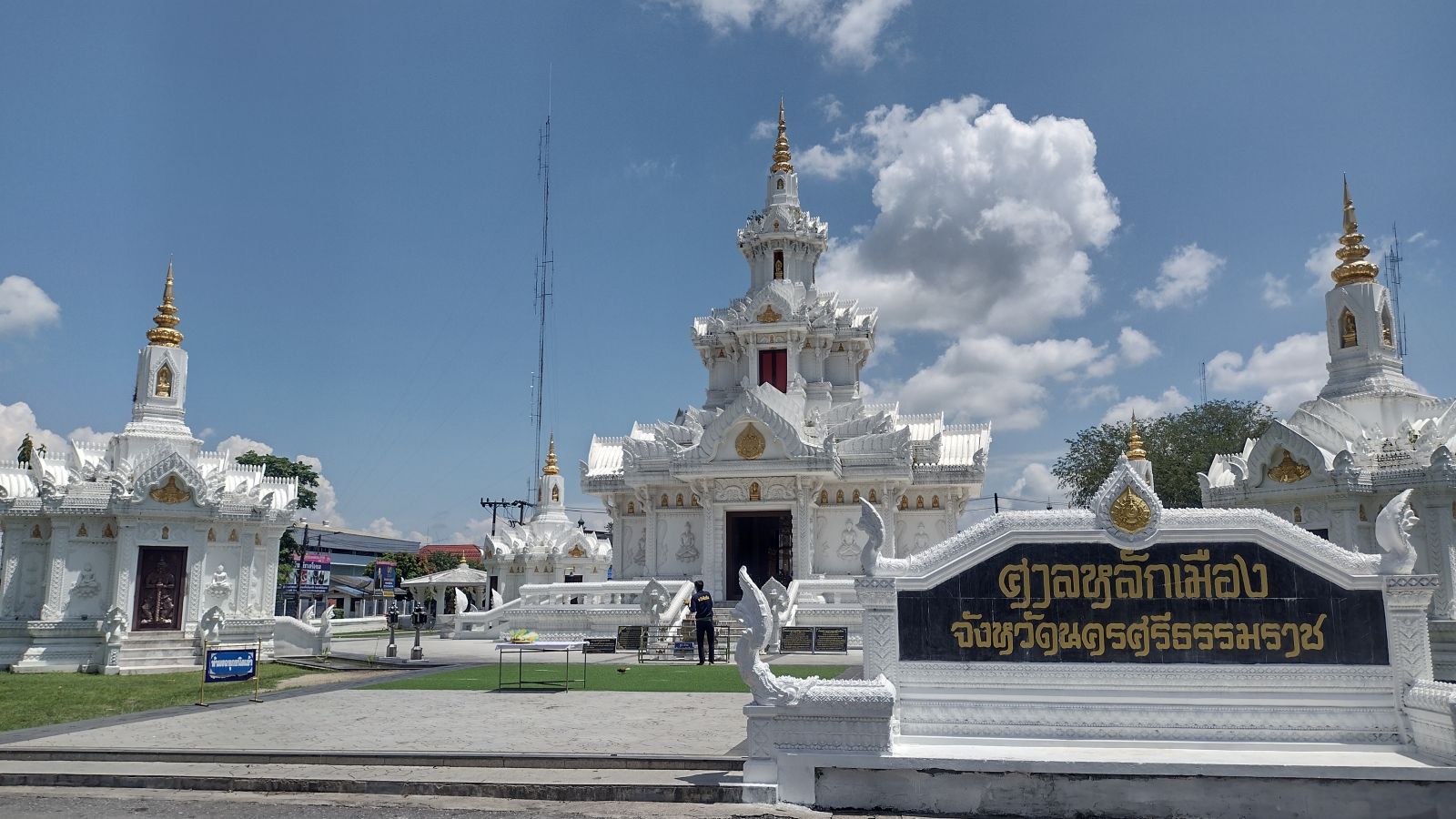
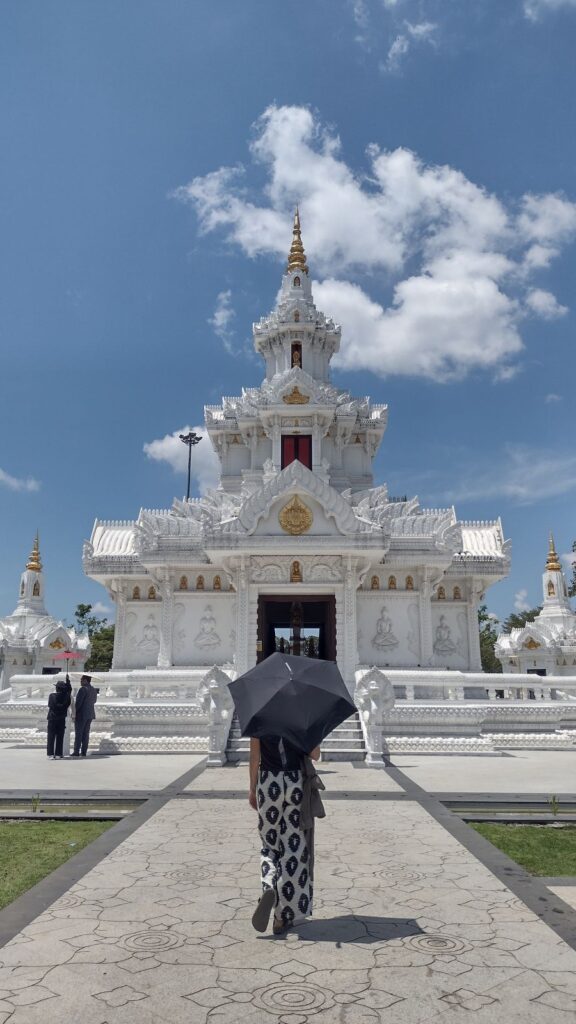
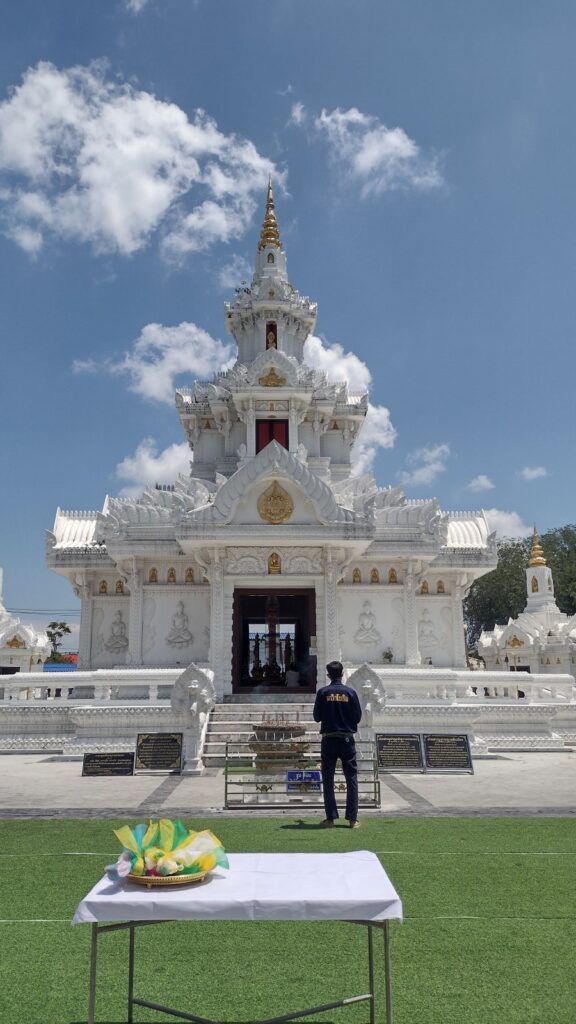
In Nakhon Si Thammarat, this is the San Lak Mueang Nakhon Si Thammarat Shrine, and it’s easily one of the most recognizable landmarks around the city. It’s also one of the most beautiful shrines I’ve seen in southern Thailand.
The bright white exteriors of the buildings that make up the complex seem to glitter in the sun and make for a picturesque sight. The largest of those houses the city shrine, an ornate golden pillar in the midst of a marble room.
It’s quite impressive, and I think most of the locals agree, as it seemed to have a steady stream of visitors every time I walked past. Even during the hottest part of the day, people came here to pay their respects.
As this is a sacred spot, be courteous when visiting. For those of you who want to leave flowers or garments, you can get them across the street at a handful of pop-up stalls.
Entrance | Free
Explore the Old City Walls
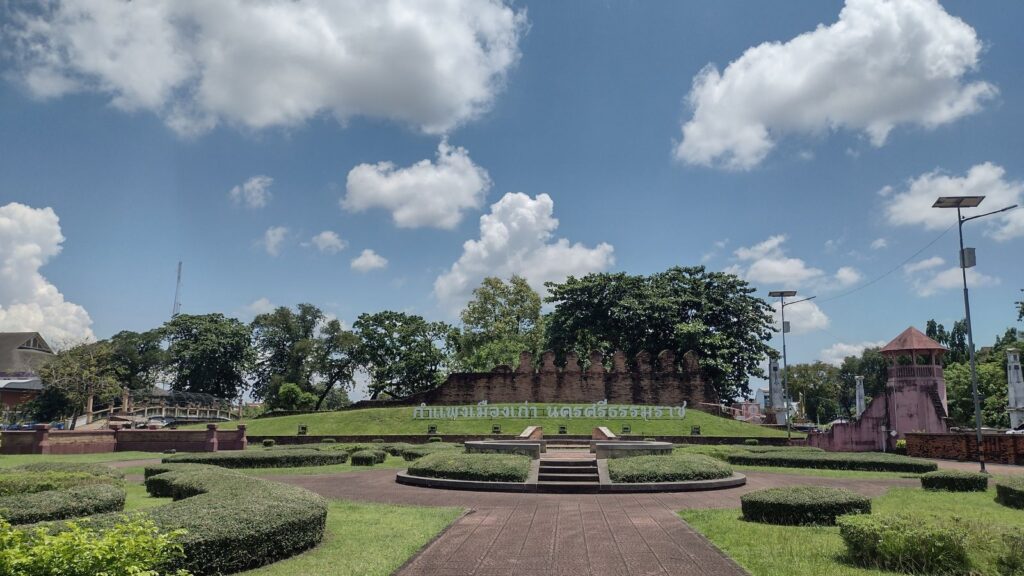
Across the street from San Lak Mueang Nakhon Si Thammarat Shrine lies the heart of the old city. This area is a combination of two large parks, one of which is surrounded by the historic Old City Walls of Nakhon Si Thammarat, and is connected by a bridge.
On the northern end is Sanam Na Muang Public Park, a large open field where Thai celebrations are sometimes held, and the King Rama V Monument stands. Near the shrine are a handful of food and flower stalls, and on the other end, you can cross a footbridge over to Si Thammasokarat Public Park.
That is where you’ll find a King Sri Thammasokrat Monument in the midst of the remnants of the old city. The park is well-kept and a lovely place to wander around checking out what’s left of the brick walls
Like most places in southern Thailand, it comes alive more at night, as the heat starts to dissipate. A small Saturday market is held here in the evening each week, and you can expect good home-cooked food, local cultural performances, and handicrafts and souvenir-type items.
Visit Wat Phra Mahathat Woramahawihan
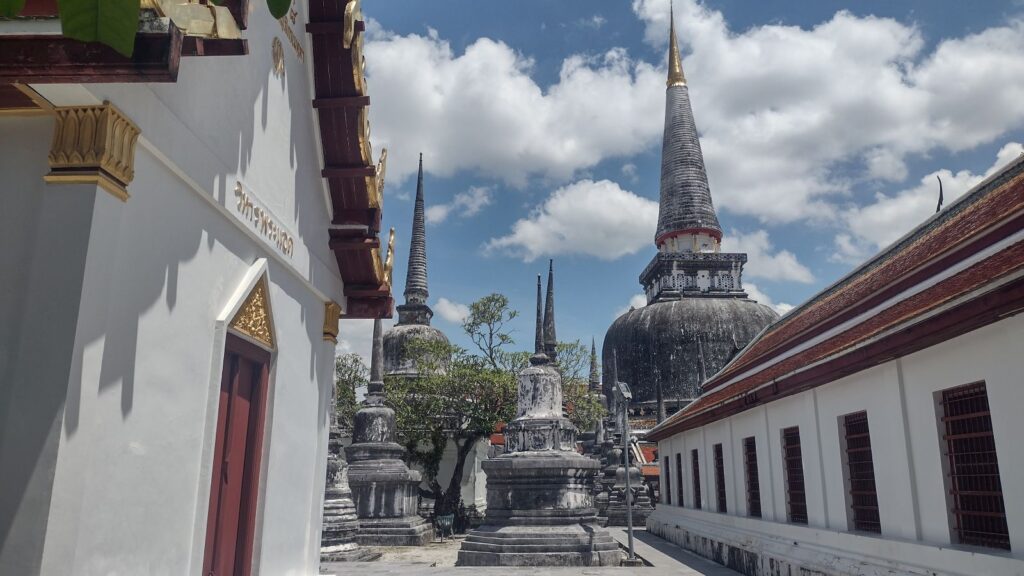
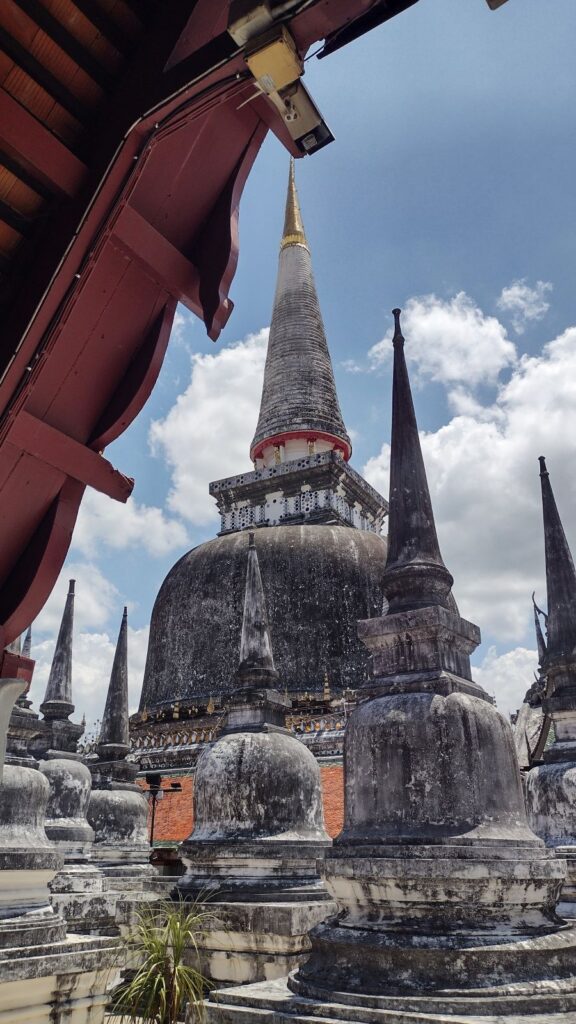
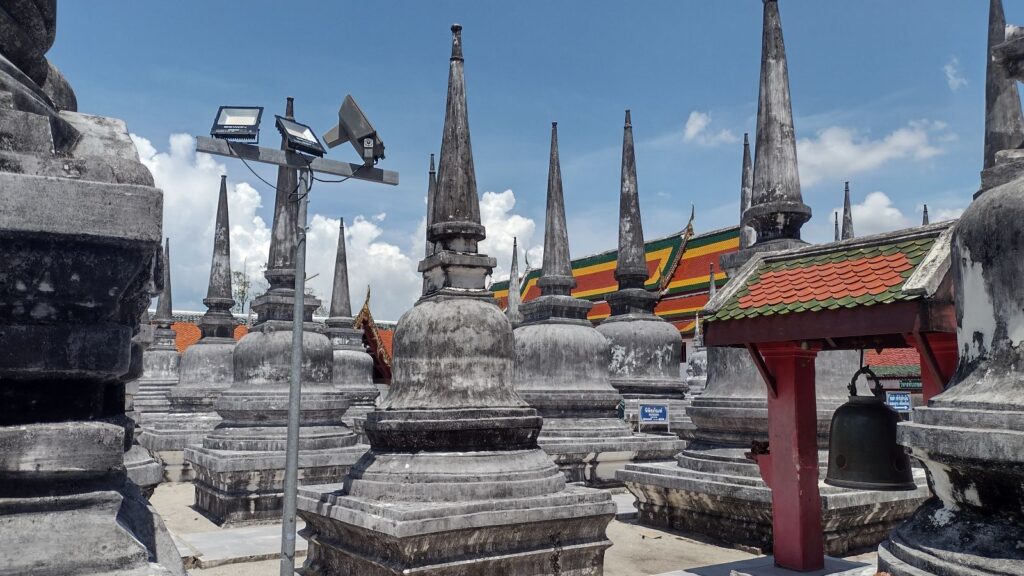
Wat Phra Mahathat Woramahawihan is one of the most iconic temples, not only in the city, but in the whole of Southern Thailand. It’s most recognized by the Ong Phra Borommathat Chedi, which translates to “The Great Relic Pagoda.”
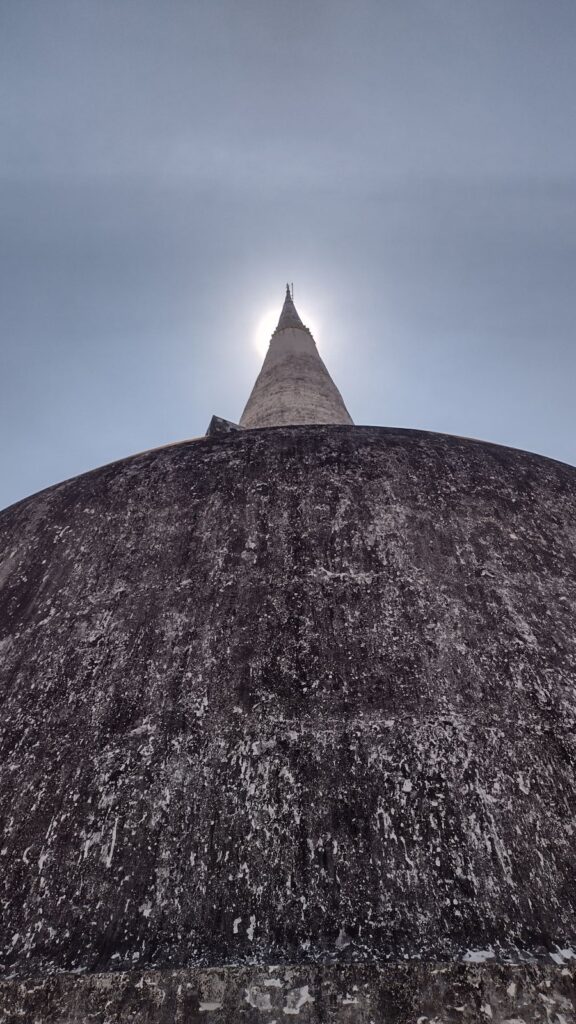
This 13th-century stupa was built by King Sri Dhammasokaraja to represent Theravāda Buddhism in Nakhon Si Thammarat and is one of the main reasons the wat is on UNESCO’s tentative list for world heritage sites.
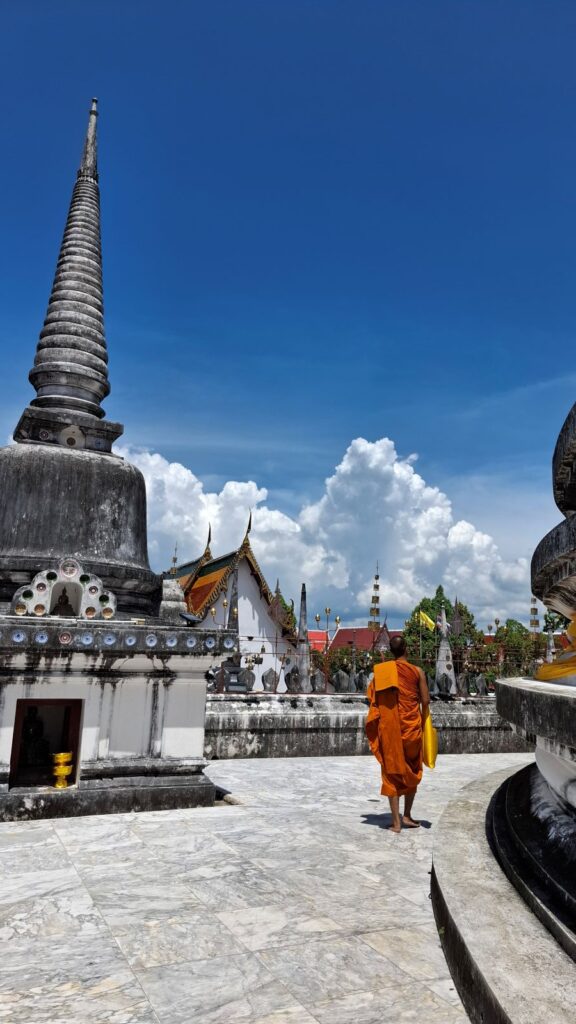
The stupa is also supposed to hold the relics of Buddha himself, and is almost always filled with people giving offerings. It was possible to go upstairs to walk around the gold-tipped stupa and see the golden Buddhas atop it when I was there.
Ong Phra Borommathat Chedi is just one of many small pagodas within the walls of Wat Phra Mahathat Woramahawihan. Each has something unique to see, whether it’s a large-scale monument of Buddha or the replica of Buddha’s footprint carved into a stone slab.
There’s also the Wat Phra Mahathat Museum that’s part of the grounds. It’s a pretty typical Buddhist museum, with free admission and some interesting antiques and historical items.
As a whole, the complex is noted for its Sri Lankan architectural influences, along with more traditional Thai ones. This gives it a distinctive look compared to other temples around Thailand.
I know that at times traveling you can get temple fatigue, but this really is one wat you shouldn’t miss.
Opening Times | Every day from 8:30 am to around 4:30 pm
Entrance | Free
Discover The City's Other Temples and Mosques
You could spend a whole day walking from temple to temple in Nakhon Si Thammarat and not run out of places to see. There are dozens upon dozens besides the famous Wat Phra Mahathat Woramahawihan.
I’m not going to mention them all here, because frankly it’d be difficult to see them all during a trip. However, there are a few that stood out to me that may be of interest to the average traveler.
And, since Nakhon Si Thammarat is located in the south of Thailand, you’ll find quite a few mosques sprinkled in between the traditional wats. Two in particular are quite beautiful. They also happen to be near one another, so you can see them one after another.
Nakhon Si Thammarat Temples
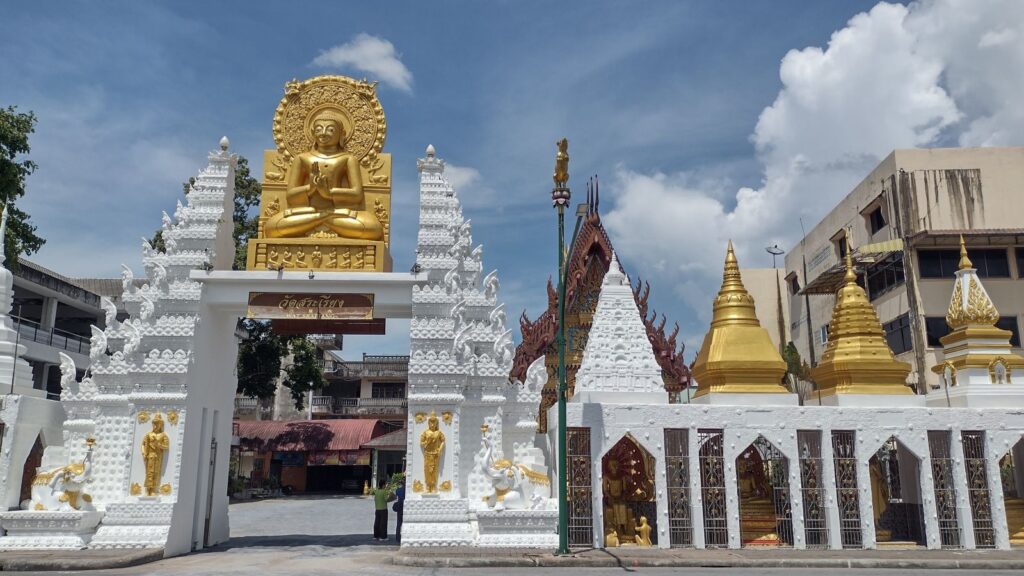
Wat Sra Riang | Most noticeable by its stark white exterior walls, gated golden statues, and large sitting Buddha overtop the gate. It’s small but intricately designed and worth stopping by on the way to Wat Phra Mahathat Woramahawihan.
Wat Wang Tawan Tok | What really stands out about this Buddhist temple is the 19th-century Thai-style kuti attached to the property. These are wooden monastic residences that have been well preserved to this day.
Wat Khao Khun Phanom | Okay, so this one isn’t in the city center but instead in the countryside in the general vicinity of Kiriwong Village. It’s a picturesque cave temple that’s reminiscent of the ones I visited in Ipoh. You’ll need your own vehicle to visit.
A FEW MORE FOR GOOD MEASURE
- Wat Na Phra Borommatha
- Wat Na Phra Lan
- Wat Tha Pho Worawihan
Nakhon Si Thammarat Mosques
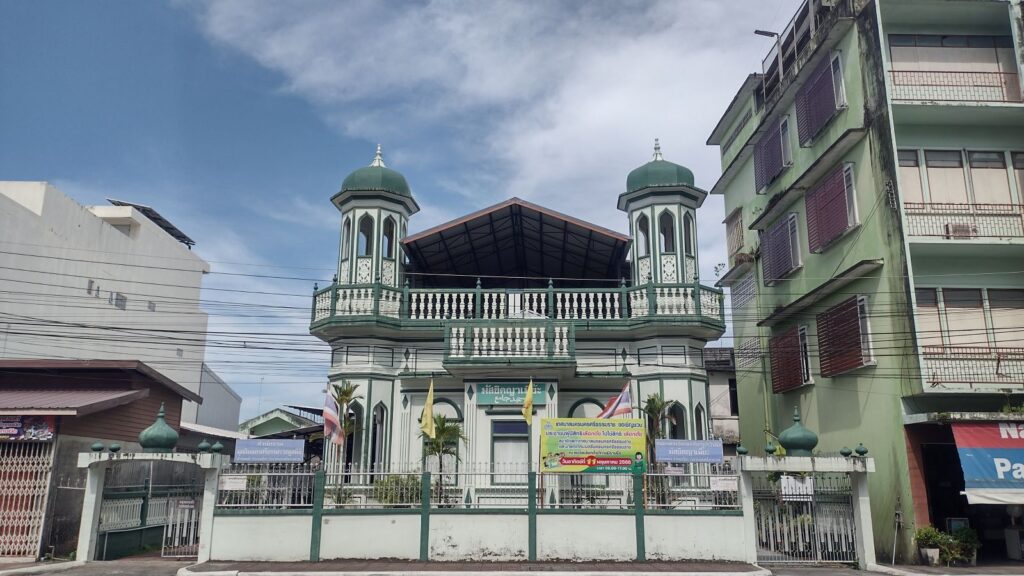
Masjid Salahuddin | Salahuddin Mosque is a very pretty single-minaret mosque with iconic green towers and intricate patterns on the facade. It has a nice mix of traditional Islamic and southern Thai architectural styles.
It’s just down the street from the Tharian Night Market, and I think it’s just as beautiful when lit up at night.
Masjid Jami – ( Masjid Klang Nakhon Si Thammarat) | This small but historic mosque is just a block or so away from Salahuddin Mosque and features an almost identical color scheme, albeit without the patterns. It tends to be locked up quite a bit throughout the day, but you can get a great view of it from across the street.
Have A Meal At Kopitiam
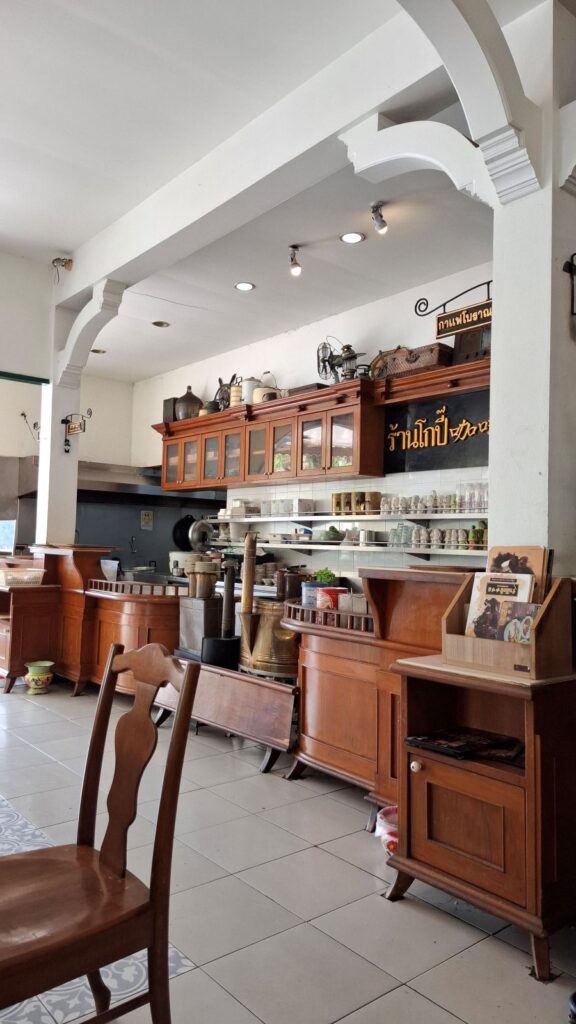
Kopitiam is the most iconic restaurant in Nakhon Si Thammarat, and a place that I feel is a must-visit. Almost every person you meet will explain what kind of eatery it is differently.
Whether that’s a tea and coffee shop, Nanyang breakfast establishment, or dim sum place. And they’d all be somewhat correct, because it’s sort of all of the above.
If you’re familiar with what a kopitiam is, then you know exactly what I’m talking about, and if not, that’s perfectly fine. It’s just a combination of the word ‘kopi ’, meaning coffee in Malay, and ‘tiam’, meaning shop in Hokkien. While kopitiams can sometimes be found in southern Thailand, they are most common to see around Malaysia and Singapore, especially in areas with a large Chinese community.
They also happen to be one of my favorite things about the food culture in both of those countries. My ‘Melaka Food Guide’ can attest to that.
I think that’s why I enjoyed eating at Kopitiam in Nakhon Si Thammarat.
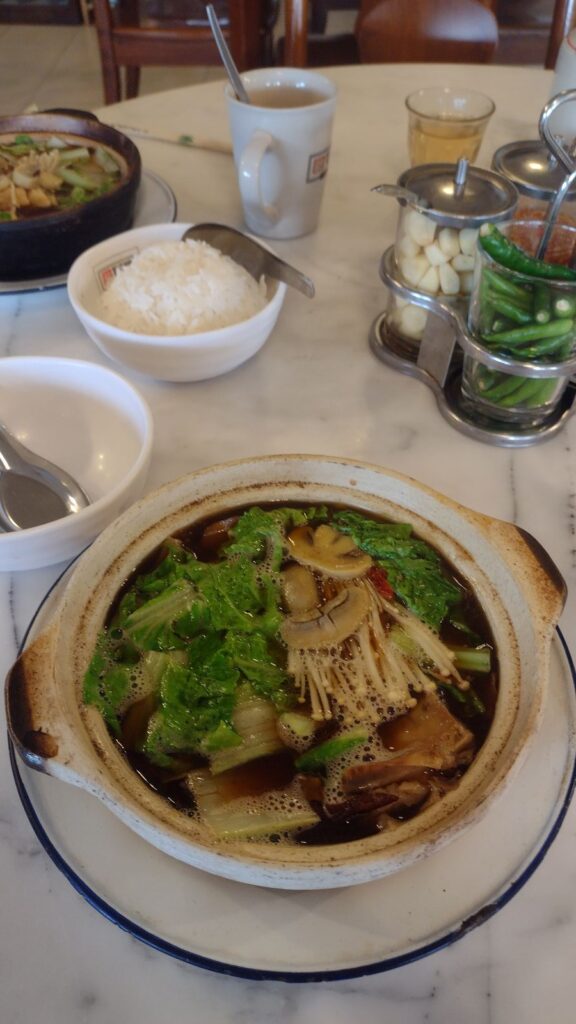
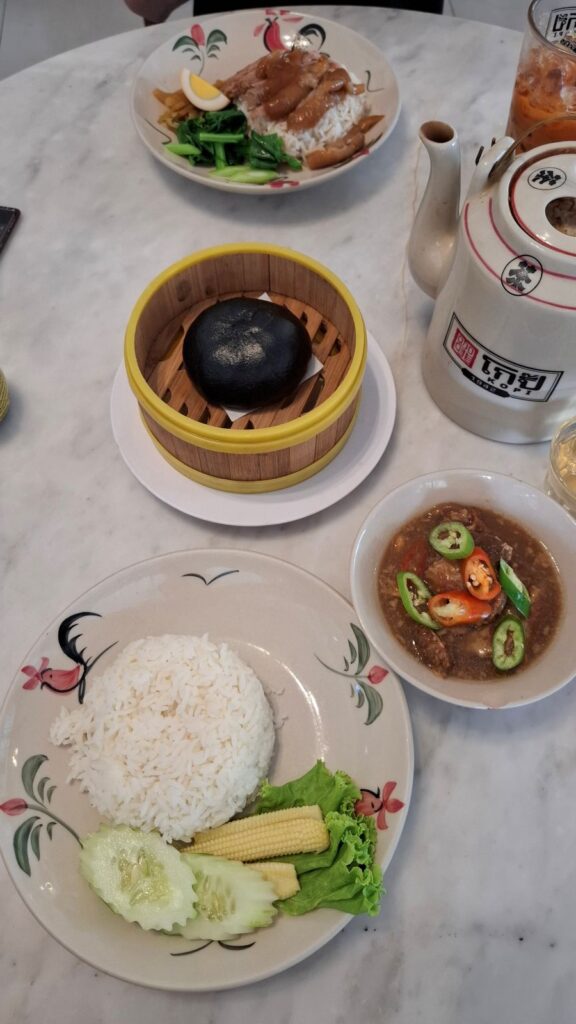
There are two branches I’ve been to in the city, the City Hall Branch and the Ocean Branch, the latter of which seems to be permanently closed now. Some popular things to try are the bak kut teh (pork or goat stew), kaya toast, youtiao (Chinese fried donuts), shumai, steamed dumplings, and oily rice or roti with curry.
And of course, it’s encouraged to have a cup of coffee with your meal!
I found the food well-priced, the staff to be super friendly (and happy to speak English), and the whole place to be extremely photogenic. And I believe they still have some things floating around from when it was started in Nakhon Si Thammarat in 1942.
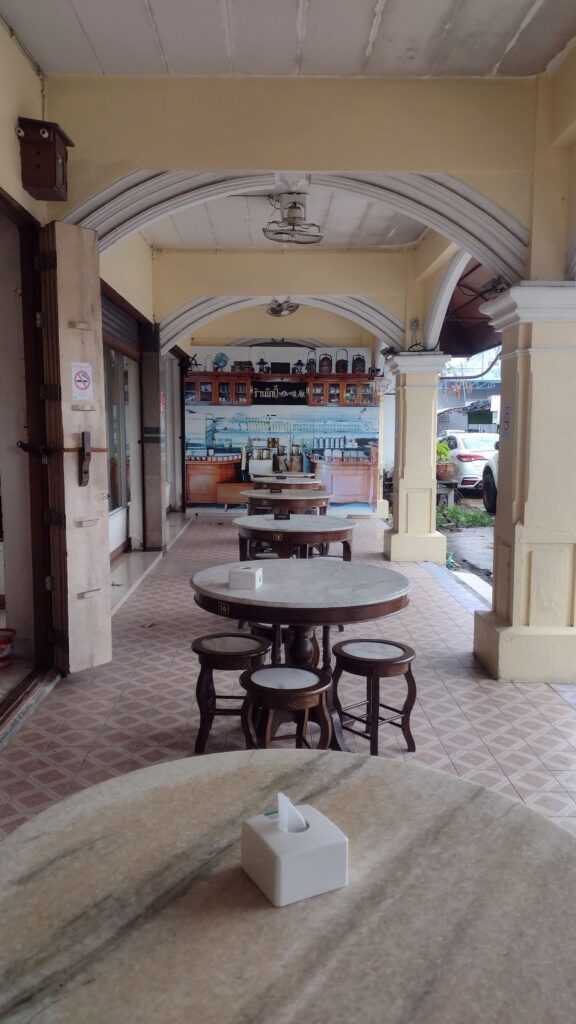
The City Hall Branch felt very much like an exhibition, with separate food carts for the dim sum, an old-school coffee bar behind a wooden counter, and some souvenir-type items for sale. I even purchased one of the tea towels that the servers wear around their head.
MORE RESTAURANTS TO TRY IN NAKHON SI THAMMARAT
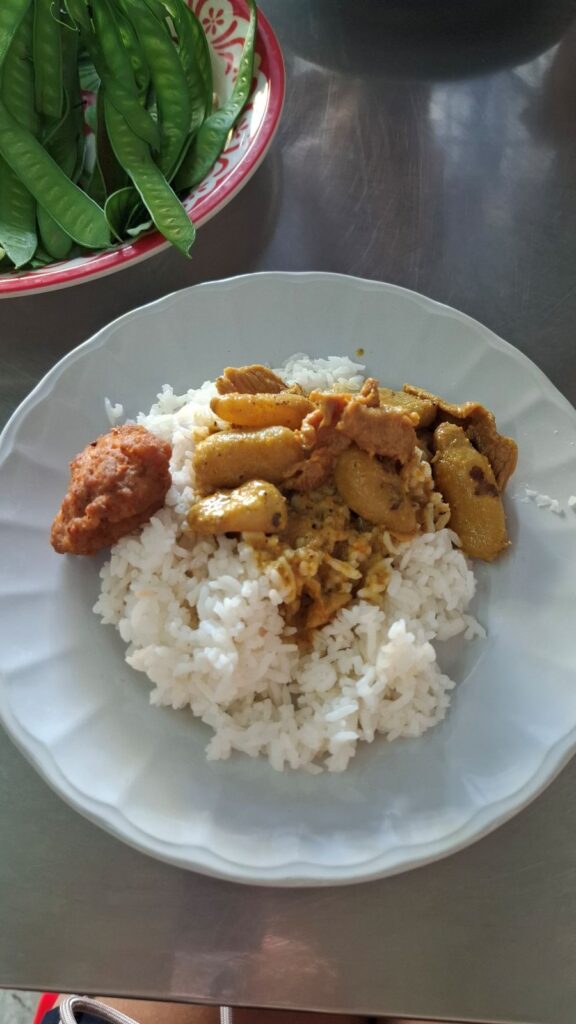
Heng Heng Khaotom | Homecooked meals in a buffet-style restaurant. The curries were both delicious and extremely spicy.
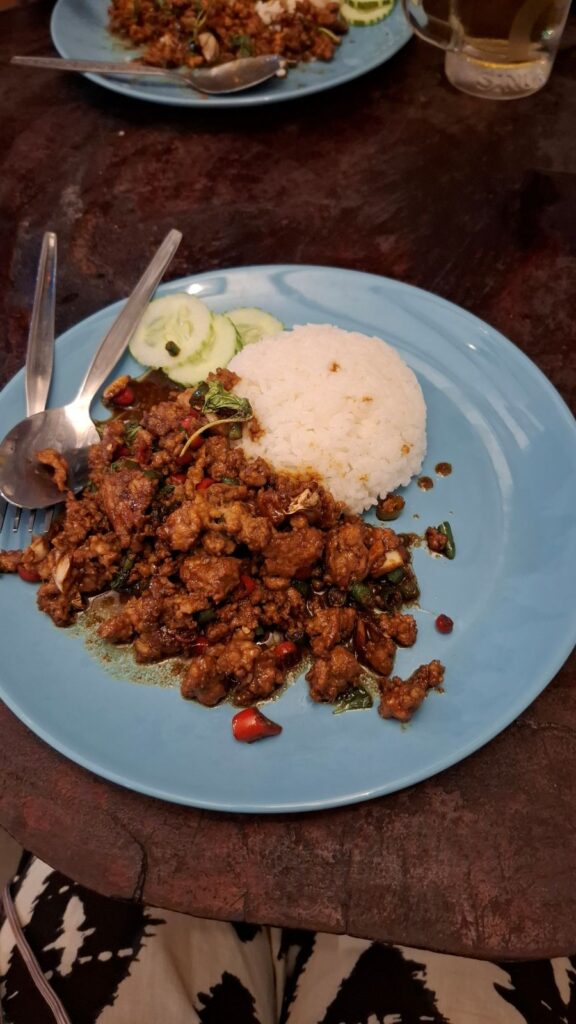
ฉำฉา (Rain Tree) | A lovely restaurant close to Phra Ngoen Garden (maps) that my partner and I went to for dinner. The menu was authentic, the staff knew a little bit of English, the food was really nice, and it always seemed to be busy in the evenings.
Kinkanom Nakornsithammarat | A beloved cafe/restaurant with decent drinks, good food, and a few Western-style dishes for those of you who want to change things up.
Head To Tharian Night Market
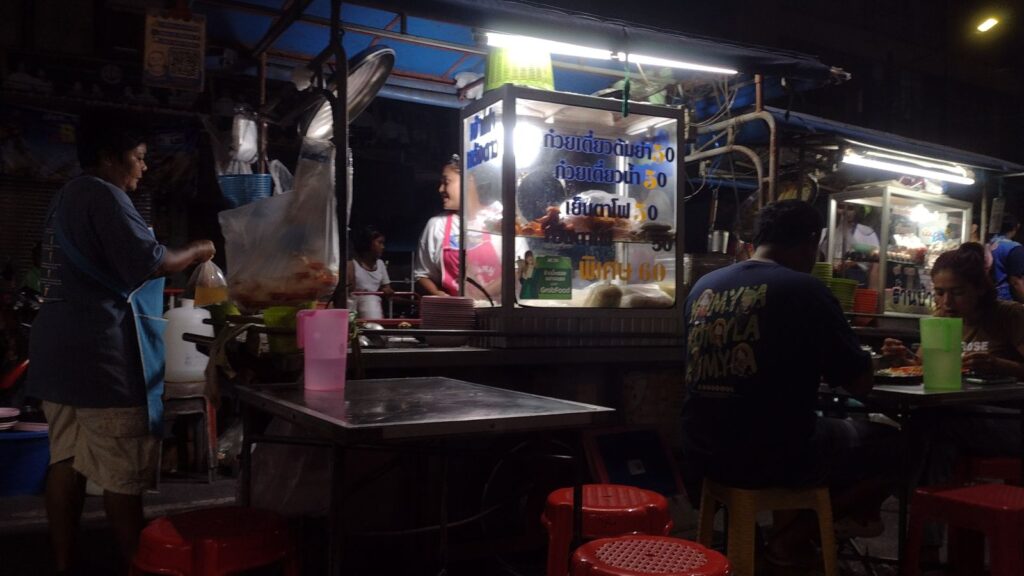
Nakhon Si Thammarat’s main night market is the lively Tharian Market (maps), and it’s surprisingly large. And like every city in Thailand, it’s the place to go for local bites!
I didn’t come here until halfway through my visit to the city, as I stopped by a few other markets before finding out just how great this one was. Set up in a single narrow line of tents and stalls, Tharian Market takes between 15 minutes and half an hour just to walk from one end to the other.
You’ll find many of the regional food favorites here, especially khanom jeen and the variety of spicy curries it’s usually served with. There’s also plenty of tasty pad kaphrao (stir-fried basil), khao mu daeng (red pork with rice), Thai sausage, and seafood soups and omelettes. And if you want a bit of fusion, there was a wonderful pasta stand with some of the best spicy pastas I’ve had in Thailand.
You’ve probably seen a theme so far.
Most dishes here have a nice kick to them, and I mean proper spice. I’m into spicy foods, and the heat level for most things was between medium-hot and downright fiery. So if you can’t handle it, make sure to bring a translator to let the stall owners know you like things on the milder side.
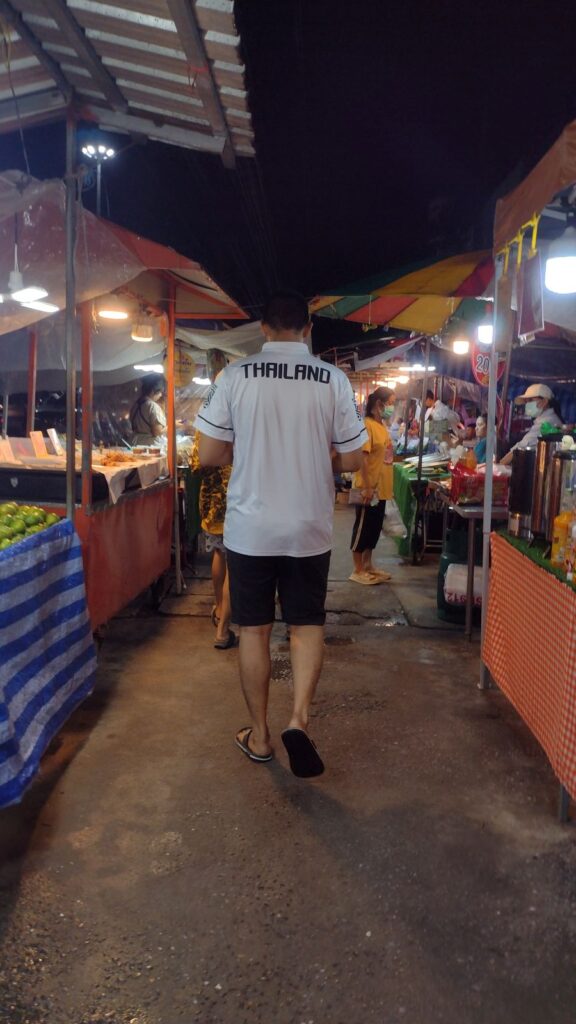
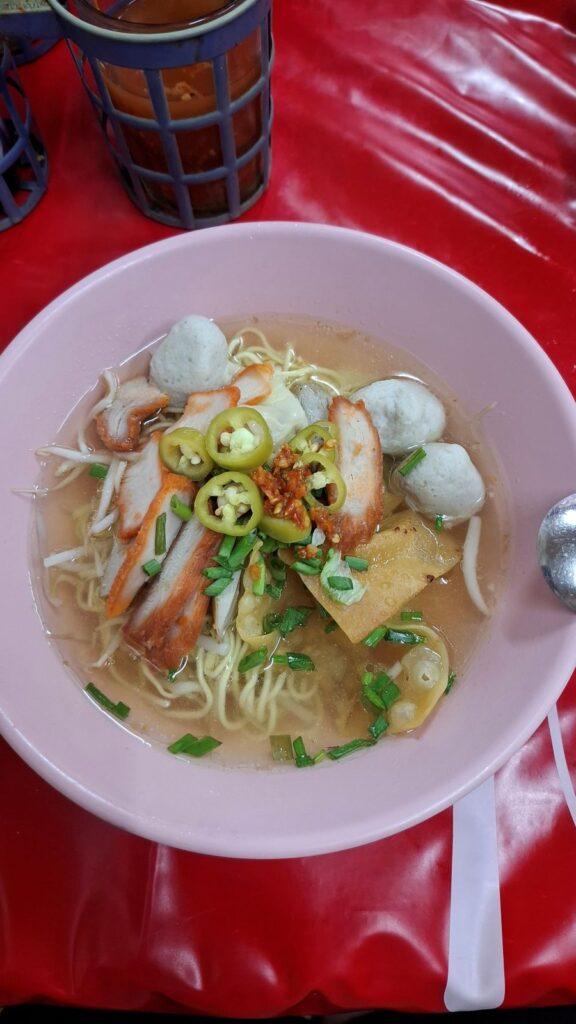
If ever in doubt, you can always go for a pad thai or fill up on the many sweet desserts for sale. You won’t find much seating here as it’s next to the main road, so be ready to eat meals as takeaway.
At the far end of Tharian Market, you’ll also find a handful of clothing booths and pop-up toy stands. There are some interesting second-hand clothes and the usual budget-friendly items that come in handy when you’re traveling long term.
Opening Times | From 5 pm to 10 pm. It’s open on weekends and sometimes has vendors during the week.
OTHER NAKHON SI THAMMARAT MARKETS
Nakhon Si Thammarat City Wall Market | A smaller market near the Si Thammasokarat Public Park, shrine, and city walls. There are stalls throughout the day, but it picks up in the evening.
Lang Dao Night Market | I ended up here a handful of times because my hotel was nearby. It’s a small food-only night market with a nice variety. I had some good soups here after a rainy day. Some days, there are only a couple of stalls that set up.
Tha Mon Market (maps) | A small market in an alleyway with beautiful street art. It’s only open every other Sunday evening.
Others | Municipality Market Tha Sak (mornings and evenings), Hua It Market (daytime vegetable and fruit market), Saturday Market Khlang
Check Out Baan Than Khun
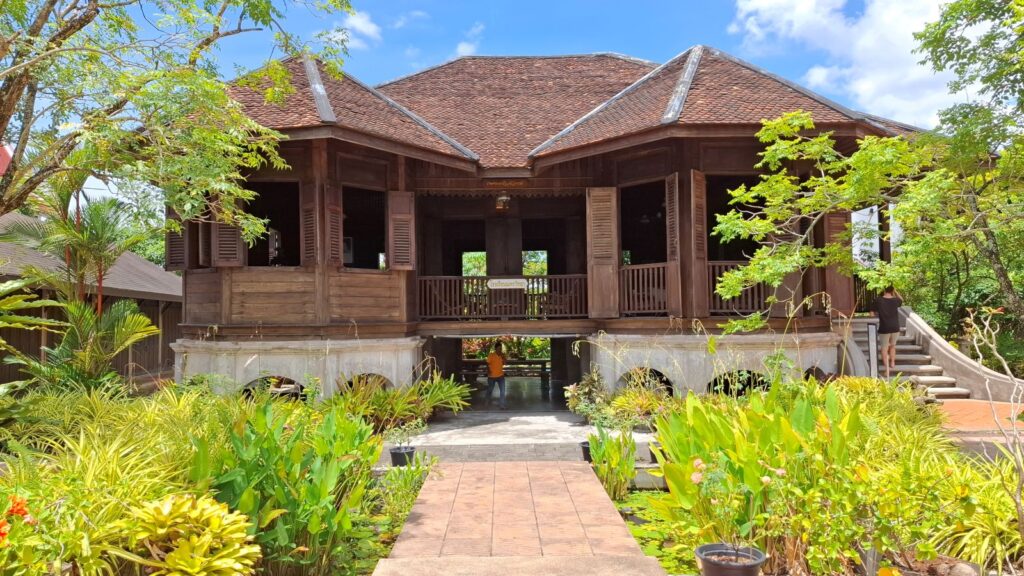
Just down the street from Wat Phra Mahathat Woramahawihan is a small museum housed inside a century-old manor house. This is Baan Than Khun Rathawut Wicharn, a former lord’s house that has been turned into a historical exhibit.
While it’s technically a museum, I’d call it more of a cultural display.
It doesn’t have much information written down, but it’s fully furnished with antique furniture and has won architectural awards within Thailand. The teak wood is also magnificent, and it gives you a feel for how the upper class in Thailand lived in the early 20th century.
In total, it takes about 10 to 15 minutes to wander through the home.
When you’re finished, you can stop by the nearby Hassadin Coffee Roasters for a drink. It’s a modern cafe with a decent cup of coffee, nice Thai teas, and tasty but slightly pricey desserts.
Opening Times | 8 am to 4 pm
Entry | Free
Visit the Puppet Museum
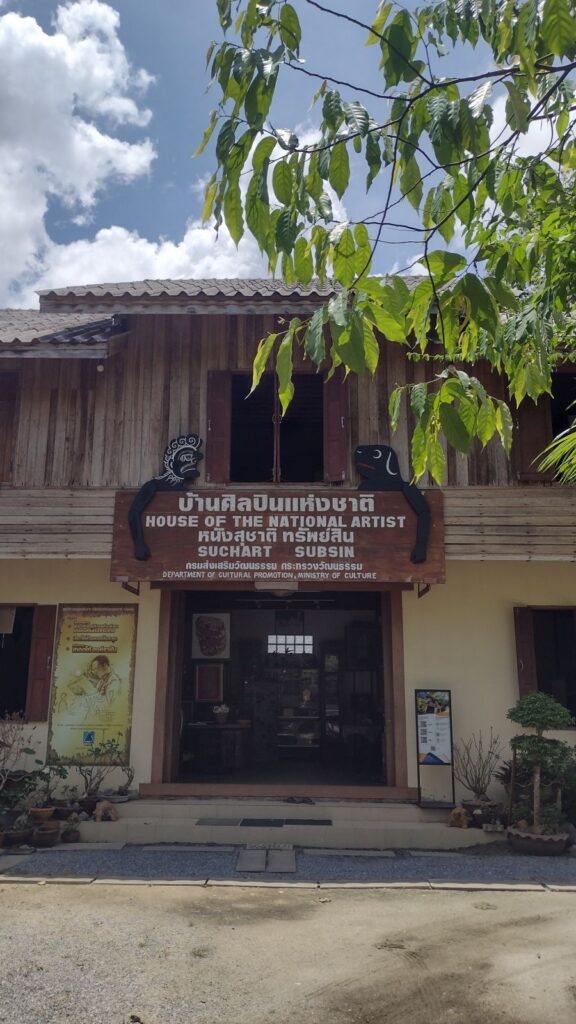
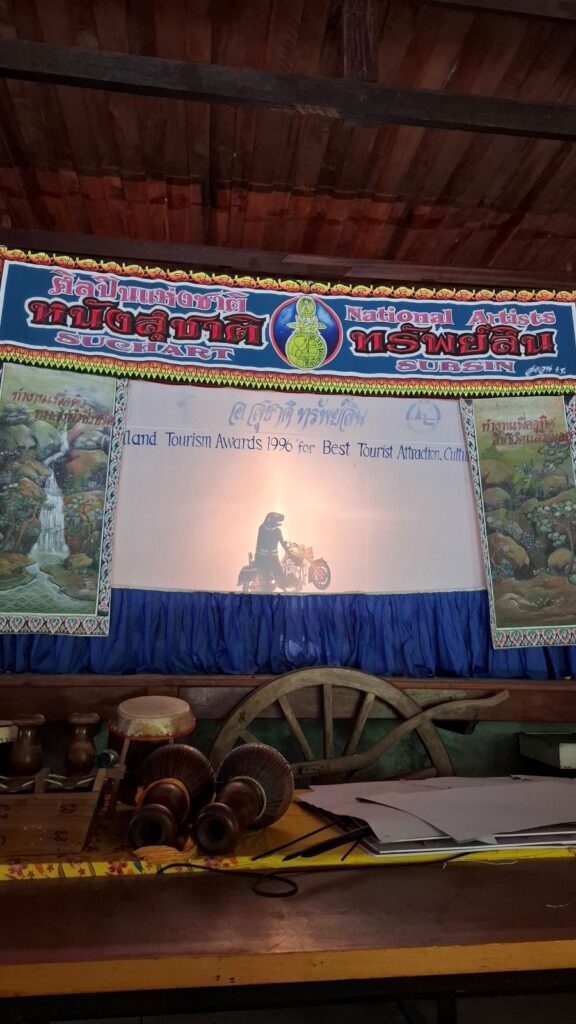
The Suchart Sapsin Shadow Puppet Folk Museum is not only one of the best things to do in Nakhon Si Thammarat, but also one of the most unique museums in Thailand.
Dedicated to the artful craft of shadow puppetry, this is a small-scale museum run by a lovely family. There are essentially three parts to the property, all encompassing different aspects of “Nang Yai,” better known as Thai shadow puppetry.
The first is a large room with little tidbits and various puppets that sits upstairs in a traditional house and doubles as the museum portion. The second is a craft shop where you can purchase handmade items, including puppets. The lady who helps run the place also shows how to make these puppets from leather.
The last part is a short show where you can see the shadow puppets in action. This is a paid activity, so it’s not mandatory, but it’s well worth the cost. A classical performance from Thai folklore is usually on display, and the family is the one doing it all. I found it to be a bit funny, a bit enchanting, and quite wonderful.
Museum Entry | Free, but donations are encouraged.
Puppet Show Price | 100 baht
MORE NAKHON SI THAMMARAT MUSEUMS
There are a handful more museums around Nakhon Si Thammarat worth visiting if you want to learn more about the history of the region.
The National Museum of Nakhon Si Thammarat | The provincial museum covers the region’s rich history that dates back more than 30,000 years. There are some pretty cool artifacts that were excavated from various temples and ruins on display. Entry is 200 baht for foreigners, and it’s open from 9 am to 4 pm every Wednesday to Sunday.
City Museum Nakhon Si Thammarat | The city museum has a nice mix of artifacts and historic exhibitions that cover the city and area over the centuries. Quite a few things are translated into English, and the entrance is free.
Ban Lakhon | A small, private museum with antiques and a few other objects. The entrance is free.
Hang Out in Princess Mother 84 State Park
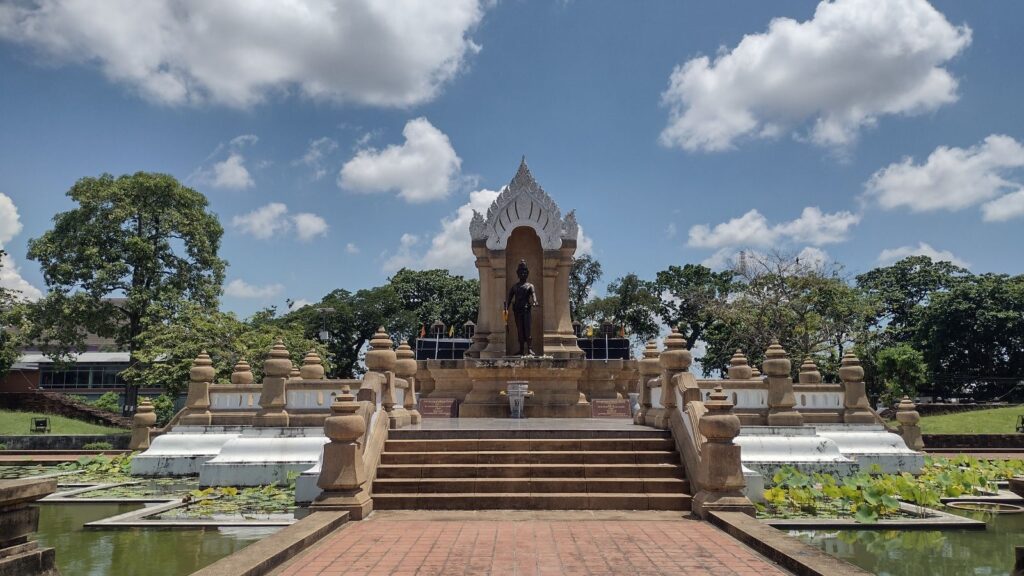
In the northern part of the city is the large, open-fielded Princess Mother 84 State Park. I feel like most cities in Thailand have a park like this one, which is mostly used in the early evening by very active locals.
You’ll find people running, working out, walking their dogs, and generally just hanging out here. But it’s also home to a few sights that might be of interest to those staying a little longer in Nakhon Si Thammarat.
In the south of the park is the City Museum Nakhon Si Thammarat, which I mentioned in the previous section. The free museum is definitely worth popping into for those trying to learn about the area’s history. Most things are bilingual, and it’s a nice alternative to the national museum for those on a budget or just interested in Thai history.
At the northern tip of Princess Mother 84 State Park is Tal Lat Open Zoo. It’s a small free zoo with a variety of animals to see. I’ll mention first that I didn’t actually go here. I’m not really into visiting zoos in Southeast Asia, as the conservation and housing for animals can be lacking. I’m not sure if this is the case in Nakhon Si Thammarat, but if you’re worried about the conditions, it’s better to skip it.
The park, however, is still worth seeing. They often hold events here, so if you happen to be in town during a holiday, I’d come check if anything is going on. I was here in mid to late April after Songkran, when there is a festival period, and there was a pretty lively market going on near the museum.
Hunt out The Street Art
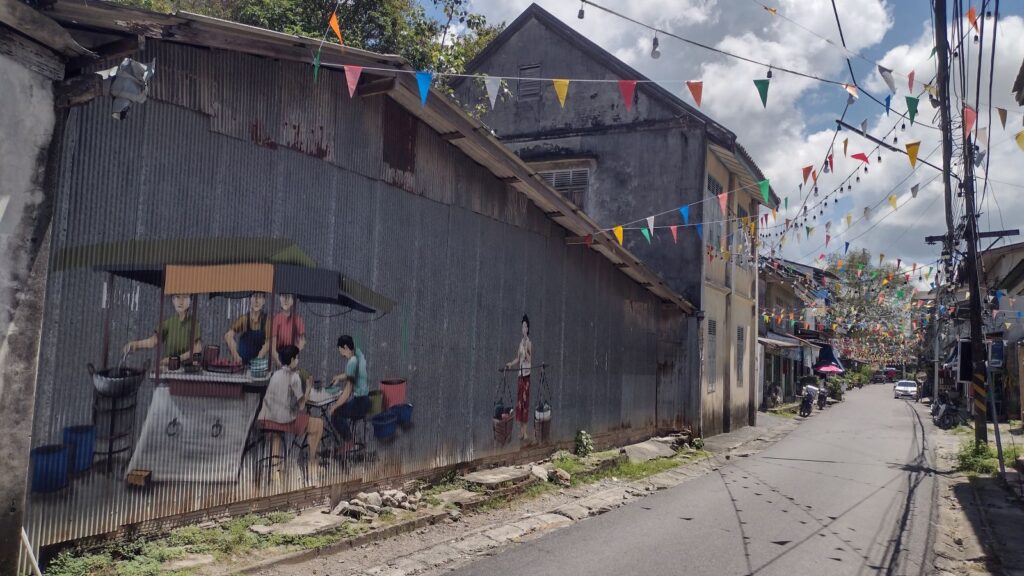
Just about every city I’ve visited in Thailand has wonderful street art on display, and at first I thought Nakhon Si Thammarat would buck that trend. However, on my last day wandering through the old streets, I came across Tha Mon Alley (Thawang Alley) and the surrounding area.
This street is full of beautiful murals that seem to revolve around local tradition and city living. And while most of the street art I found in the city was down this alley, there were some nice pieces littered along the side of buildings in the surrounding blocks. The road by the Inka Hotel is also filled with murals.
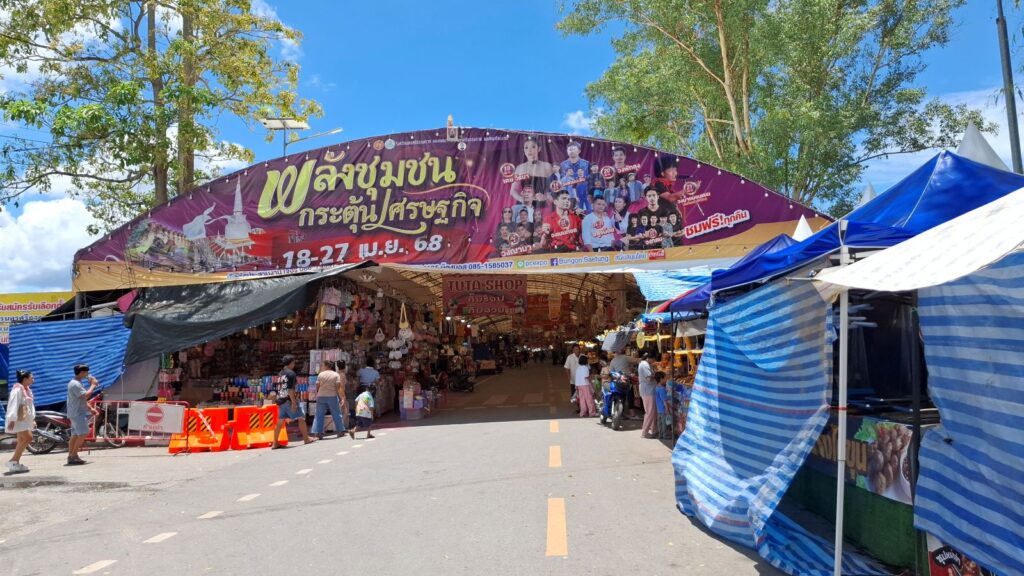
This street is also home to the Tha Mon Market I mentioned previously in the ‘Tharian Market’ section. The market only takes place every other Sunday night, but it brings life to this otherwise calm, colorful alleyway.
Besides food, the market also has musical performances taking place, and it seems to be quite popular with visitors from around Nakhon Si Thammarat. If you happen to be here over the weekend, it’s worth popping by on Sunday evening to see if it’s taking place.
Explore The Countryside
For most, Nakhon Si Thammarat city will be the base for exploring more of the province’s wonderful sights. It’s quite a big place to explore, with mountains, waterfalls, and jungle making up the interior. Along the coast is the Gulf of Thailand, and with it comes a mix of windswept shores and wild, lesser-known beach towns.
Honestly, like many of Thailand’s provinces, you could spend weeks exploring Nakhon Si Thammarat. But that’s not for the faint of heart, so I’ll just mention some of the more popular provincial destinations.
Kiriwong Village | This is a beautiful rural town that’s used as a city escape from the city. It’s said to have some of the cleanest air in Thailand and is often visited as a day trip or overnight trip for those looking for a bit of nature. There are a few spots along the river to swim, the nearby Wang Mai Pak Waterfall, a few other smaller cascades, a couple of coffee shops (including the beloved Good Time Cafe), and the scenic Khiriwong rope bridge.
Getting There | By public transport you’re best option is the Songthaew Stand by Vattana Alley. It has songthaews that head to Kiriwong Village, amongst other places. I’ll link to its location below in the ‘Getting Around’ section.
Where to Stay | There are a handful of homestays and guesthouses in Khiriwong Village for those looking to spend a night. Many don’t use the main booking sites, so you might have to message directly or rock up when you arrive. There are a few, like Passion Resort Kiriwong, that you can book in advance online.
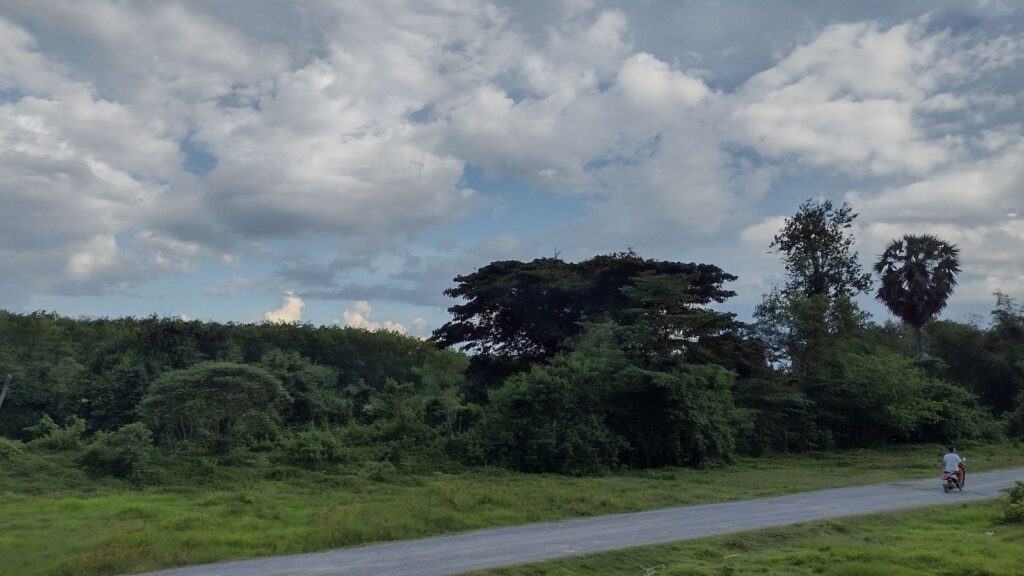
Waterfalls in Nakhon Si Thammarat | Nakhon Si Thammarat Province is a great area to explore waterfalls. There are dozens to see within a couple of hours’ drive, some more epic than others. The most iconic of these are as follows:
- Yong Waterfall
- Karom Waterfall
- Tha Phae Waterfall
- Phrom Lok Waterfall
- Krung Ching Waterfall
Wat Chedi (Ai Khai) | A large temple complex with unique sculpture (like 20+ foot tall roosters) and colorful ornaments. It’s in the northern part of the province and is probably the second most visited temple behind Wat Phra Mahathat Woramahawihan in Nakhon Si Thammarat.
Khanom Town | A smaller beach town up north towards the Surat Thani Province. It’s known for its lesser-known, untamed beaches like Kho Khao Beach, Khanom Beach, and Na Dan Beach. It’s more popular to go for a few nights than to go on a day trip from Nakhon Si Thammarat.
Getting There | You can get here by minivan, but you’ll have to ask around as the route isn’t the most common amongst foreigners. If you’re driving on your own, the Khanom-Sichon road is quite lovely and has nice stops at Phlai Dam Beach and various viewpoints along the way.
Where to Stay | Villafarmsuk@khanom (Budget-Friendly Apartments) / Margarita Beach (Beachfront Bungalows) / Le Petit Saint Tropez Beach Resort Khanom (Secluded Beach Resort)
There are plenty more local resorts and bungalows along this route. Many of the more budget-friendly ones aren’t available on the main booking sites, although that’s slowly changing.
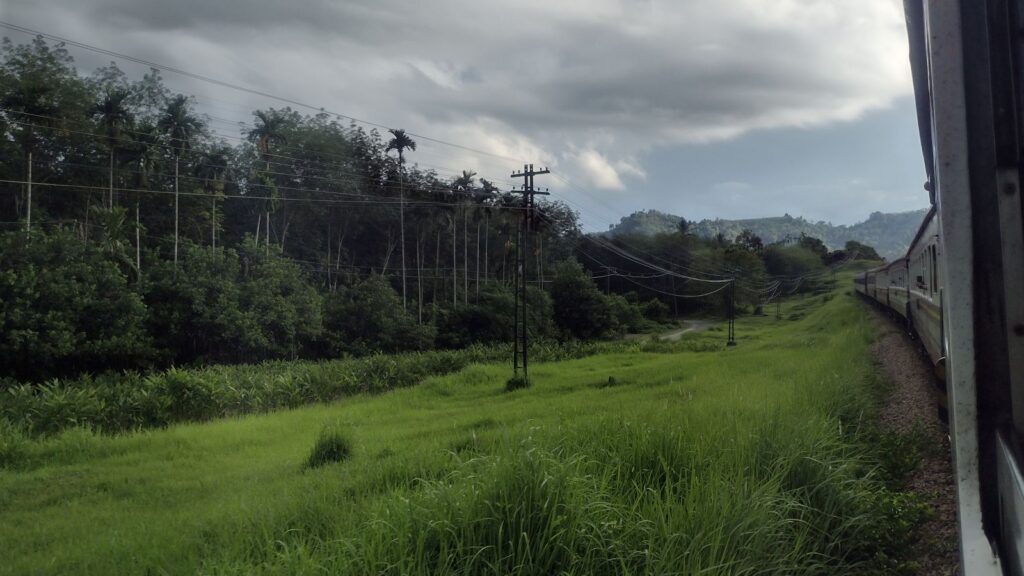
Getting Around Nakhon Si Thammarat
While a motorbike isn’t necessary to see most of the city highlights, it’s a huge help. This is especially true if planning to visit any of the regional beaches, countryside temples, or natural sights.
If you go this route, you can ask your accommodation for rental options, which usually sit between 150 and 300 baht for a daily rental.
For everything within the Nakhon Si Thammarat city limits, you can manage by walking or using public songthaews. Taxis are also available, but as of now, popular apps like Uber and Grab are rare in this part of the country.
Here are the transport spots you might come across in Nakhon Si Thammarat:
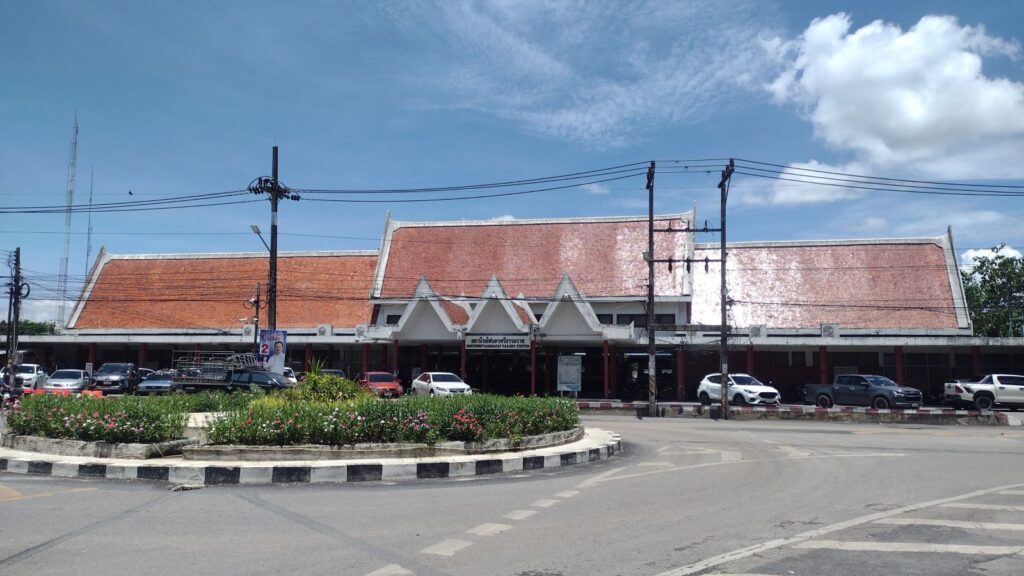
Nakhon Si Thammarat Train Station (maps) | This is one of the major stops in southern Thailand, but it’s actually an endpoint that branches off from the main rail running from the south to Bangkok. With that being said, you can get direct trains to Hat Yai in the south and Bangkok in the north, but they stop at the Khao Chum Thong Junction and end at this station.
Check the Man in Seat 61 website for all the different purchasing options. If you’re buying 3rd-class tickets, you’ll need to get them from the station within 24 hours of departure.
Nakhon Si Thammarat Bus Station (maps) | This is where all the long-distance buses to other Thai provinces arrive and depart from. It’s a pretty typical bus station that you’re only likely to use if you can’t get a train ticket or you’re going to a place not on the train line. You can buy tickets directly from the booths at the station. Someone should be passable at English if you need help.
Songthaew Stand to Kiriwong (maps) | This area by Vattana Alley has a load of songthaews, some of which go to Kiriwong Village. It’s the only public transport option to that area that I know of. Make sure to ask about when the last songthaews come back.
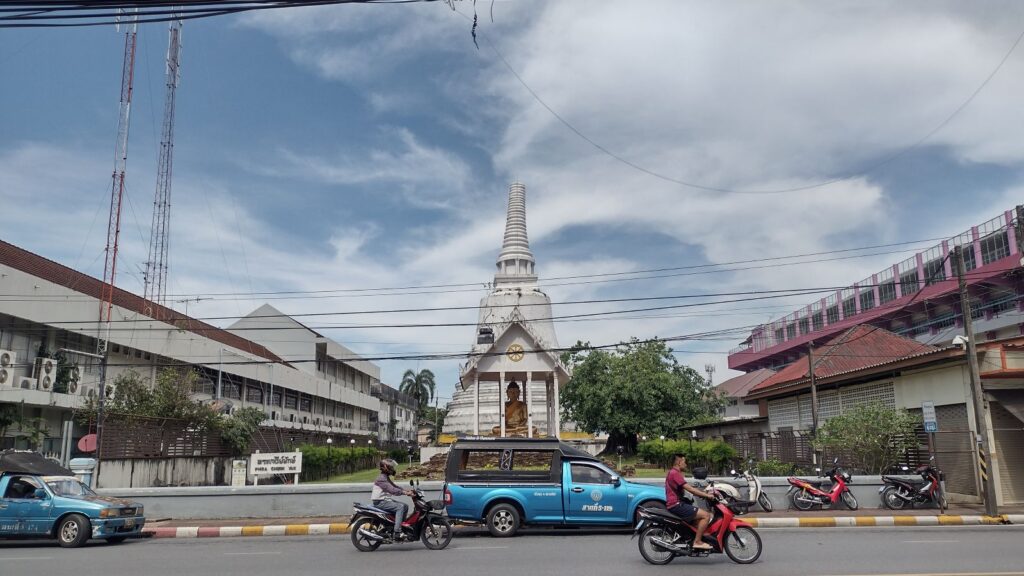
Where To Stay In Nakhon Si Thammarat
The city of Nakhon Si Tammarat is pretty spread out, so when you choose an accommodation, you’ll want to check where it is beforehand. I’d personally stick with the area around the train station, the night market, or near Wat Phra Mahathat Woramahawihan unless you have your own vehicle.
This will allow you to explore the food scene more easily and avoid relying on taxis or local transport for everything. Both of which can be hit-or-miss in the evenings.
Here are some of my recommendations:
Norm Space | This is pretty much the only hostel in town, and it’s more of a guesthouse anyway. It’s located within walking distance of the train station and has private and dorm rooms that only have a single shared room with one bunk bed. But honestly, it’s a pretty cool spot! It’s housed in an Art Deco-style house with a small museum and cafe attached, plus it’s one of the few places in town where you’ll be able to socialize in the same place you stay. Check here on Booking for price comparisons.
บีวินรีสอร์ท (Bewin Resort) | A nice midrange hotel near Wat Phra Mahathat Woramahawihan and the Puppet Museum. The staff is friendly, and the rooms are clean and offer modern amenities.
Bunprasop Garden Hotel | Another great midrange option near the wat and museum. It’s just off the main street, so it’s convenient for food, and it has comfortable modern rooms.
Tree Home Plus | Budget-friendly bungalow-style rooms with a nice garden. It’s almost directly at the midpoint between Wat Phra Mahathat Woramahawihan and the train station.
For more Nakhon Si Tammarat hotel options, check here.