
Tuy Hòa might be my favorite place in all of Vietnam.
It’s also one of the most underrated destinations I’ve visited in Southeast Asia. Despite only seeing a handful of other travelers during my stay, the city has all the amenities you could ask for while on the road.
The beaches are some of the best in central Vietnam, the food is good, and the cafe scene is buzzing. You’ll also find the authentic charm the country is known for in Tuy Hòa, including friendly locals, chaotic markets, and stunning historical sights. Plus, there’s a beautiful coastline to explore by motorbike.
In this guide, I go in-depth about my trip to Vietnam’s hidden gem.
That includes the best things to do in Tuy Hòa city, a list of the top beaches in the area, and what to see on a motorbike trip along the former Phú Yên Province, which has since merged with the Đắk Lắk Province. I also share some tips on where to stay, the best way to get around, and where to eat.
Here’s my guide to Tuy Hòa, Vietnam.
HEAD TO THE BEACH
The beach is life in Tuy Hòa.
This might seem surprising to you if you find yourself there midday, with only a handful of people there. But about an hour before sunset, locals start packing the beaches, bringing with them all sorts of picnics and barbecues.
I can’t really fault them; there’s almost no cover along the shoreline, and the sun is brutal in Central Vietnam, especially in the summer months.
There are two main beaches directly in Tuy Hòa proper. Here’s a little overview of them:
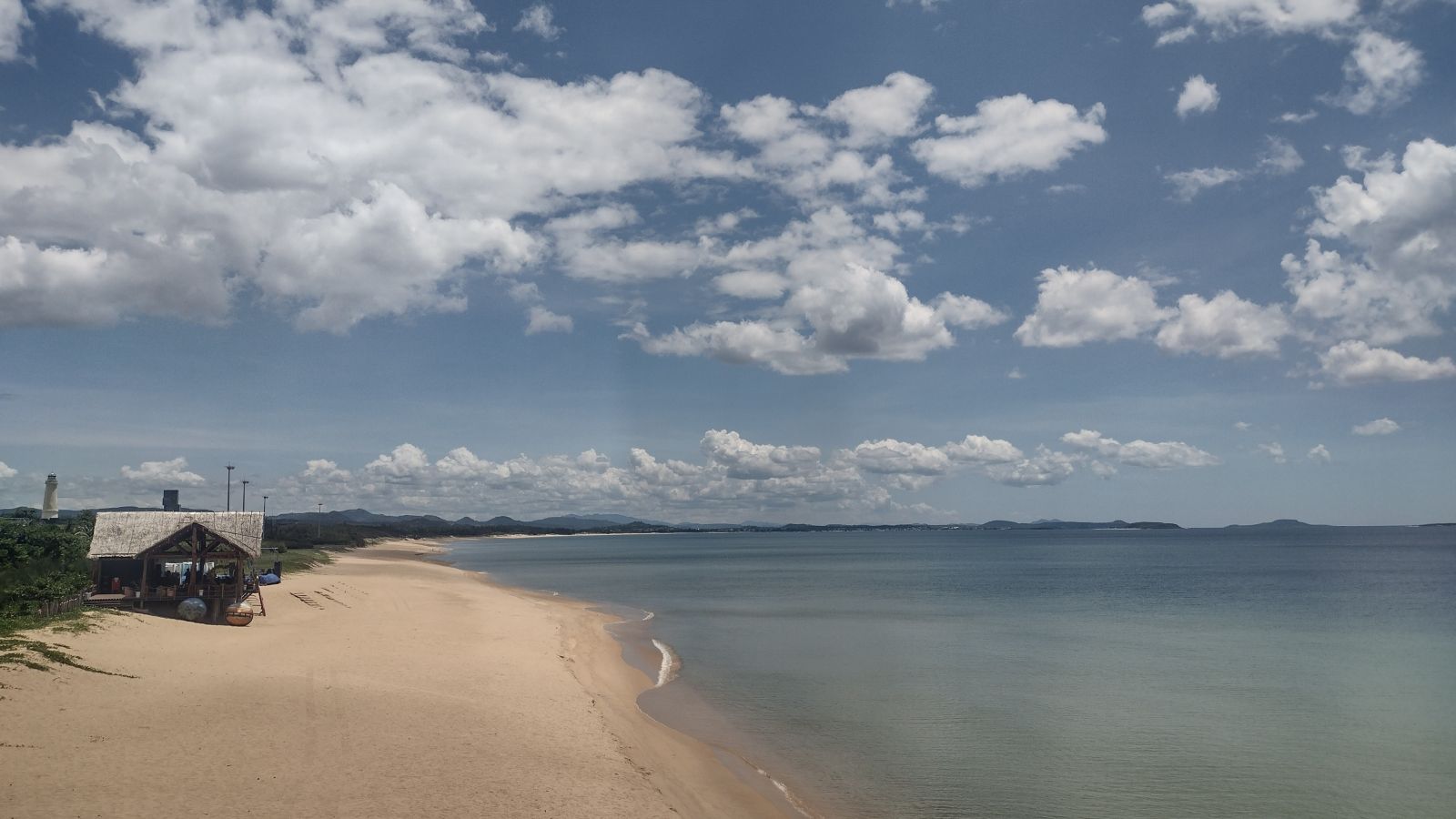
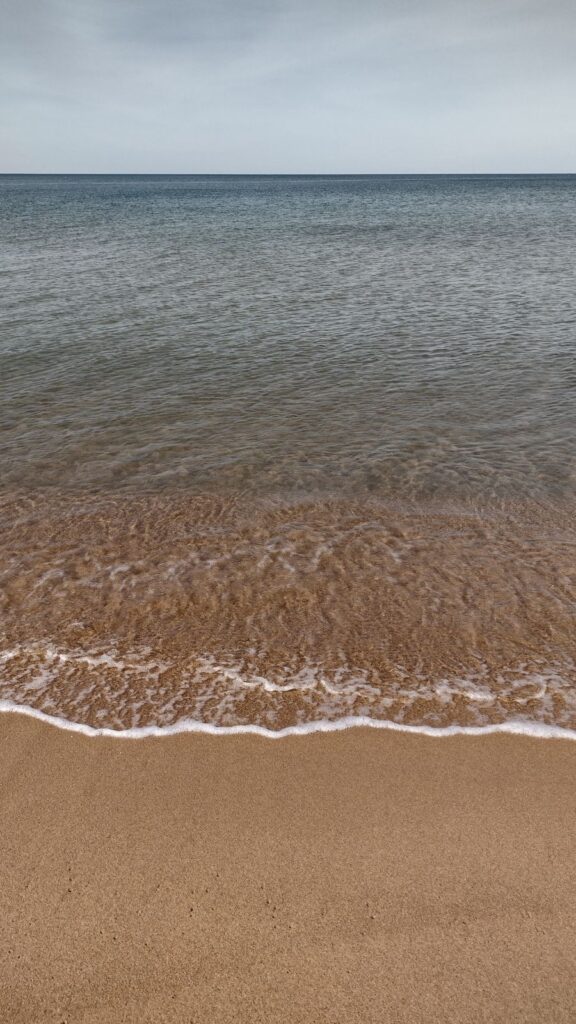
Tuy Hòa Beach | This beach lies at the shores of the city and runs from the fishing pier in the south up past the Nghinh Phong Tower. Between them is a section known as Trần Phú Beach on maps. It’s the prettiest beach in the area and has soft, sloping sands that run into the calm waters of the East Vietnam Sea.
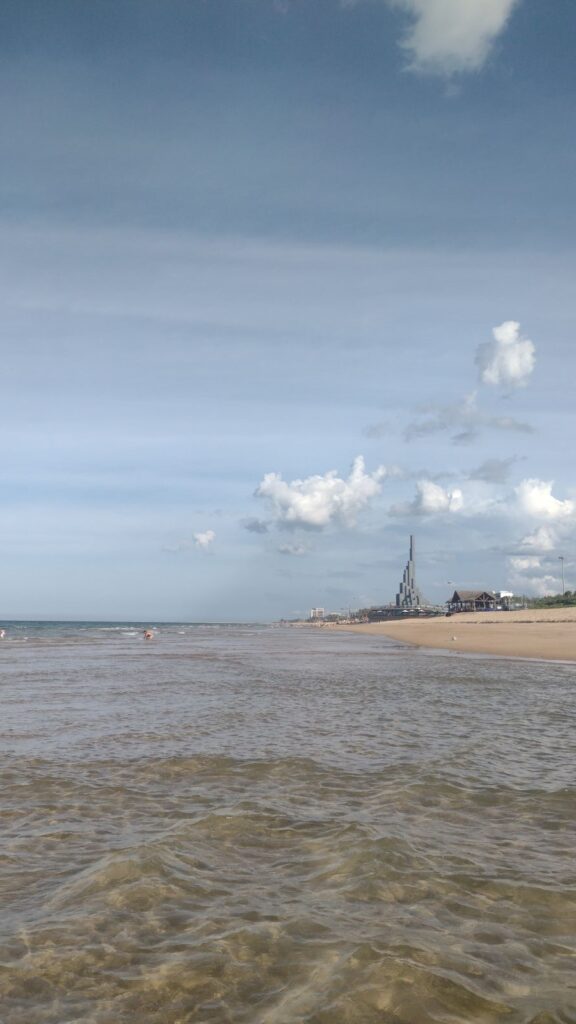
The shadow cast from the tower is the only shade you’ll find, so it’s a good place to base yourself during the day.
There’s also a park called Hải Đăng next to it that has showers, bathrooms, and changing rooms. It picks up around sunset, which makes it a fun place to be. A walking path lines the main road adjacent to the beach, and there are a dozen or so entry points along it.
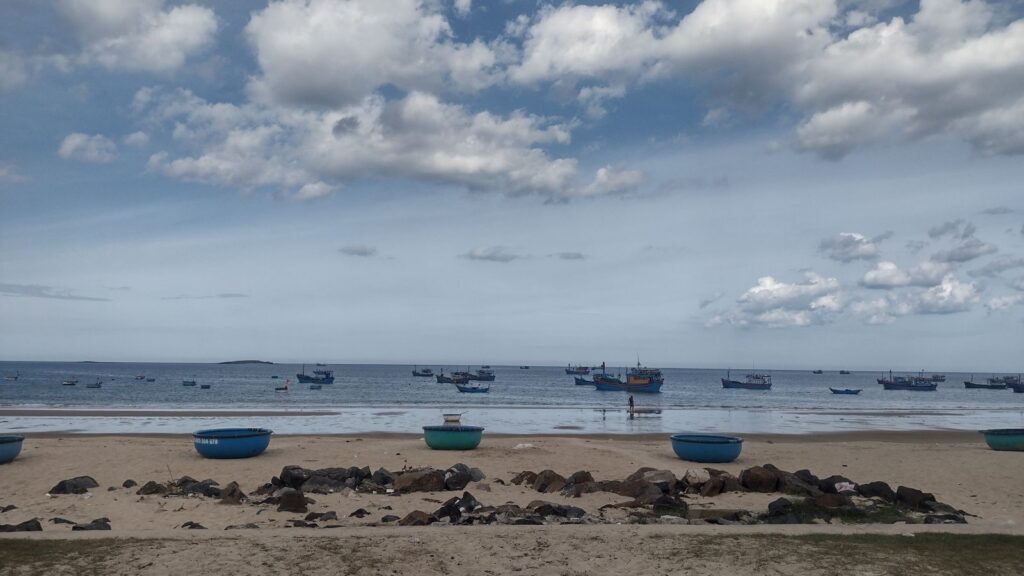
Long Thuy Beach | This beach is north of Tuy Hòa Beach and runs along the length of An Phú fishing village. It has a very local feel to it, with mostly the families living in the area sitting about.
Hundreds of fishing boats float in the water here, creating a striking view around sunset, but also making swimming a little trickier.
EXPLORE THE BEACHES OF PHU YEN
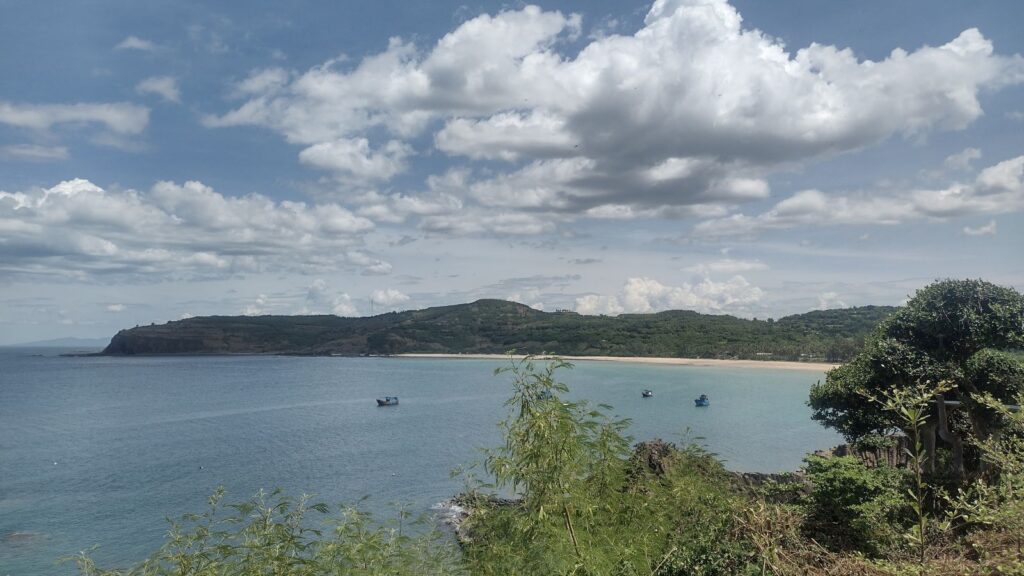
Phú Yên has some absolutely beautiful beaches, many of which are within a motorbike ride of Tuy Hòa. If you find yourself in this area for an extended period, it’s worth riding out to explore some of them.
Here are some options within an hour of the city:
BEACHES NORTH OF TUY HOA
Bãi Xép Beach* | I was beyond excited to visit this small, beautiful beach. Ever since a few scenes from the award-winning Vietnamese movie Yellow Flowers on the Green Grass were shot there, it has been a popular place for local tourists, which is how I found out about it.
Unfortunately, the whole beach area has been walled off (as of 2025) due to the construction of a new resort. I tried finding an entry point for a good 20 minutes but was unsuccessful. I hope there will be a chance to see it in the future. Not to be confused with the popular backpacker beach Bãi Xép near Quy Nhon.
Phu Thuong Beach | A calm, quiet beach about 20 minutes north of Bãi Xép Beach. There is a small village nearby, a few shops, and a family-run homestay at the northern end.
Fishing Village Beach (Bãi Tắm Làng Chài) | This tiny beach is just 10 to 15 minutes from Phu Thuong Beach. As the name suggests, it has a lot of local fishing boats in the water, or, depending on the time, on the shore. It can get surprisingly busy at times.
Ganh Da Dia Beach (Bãi biển Gành Đá Đĩa) | The beach that sits directly next to the picturesque Ganh Da Dia Reef. I talk more about the reef later, but it’s worth taking a dip in the water here to cool off before heading back to Tuy Hòa. The sand is soft, there’s a swimming area, and the sea is clean and clear.
BEACHES SOUTH OF TUY HOA
Green Moss Beach (Bãi Rêu Xanh – Xóm Rớ) | A popular photo spot during the moss season, when the cinder blocks near the sea have green moss growing on them. This was definitely not the case when I was there. From what I read, the best time to visit is from January to April, but I can’t confidently guarantee that. The water isn’t the best for swimming.
Phu Lam Beach | The long beach just south of Green Moss Beach. You might have to drive a bit to find a piece of beach you like. On the northern and southern ends of the beach, you’ll find some seafood restaurants and cafes in the nearby neighborhoods.
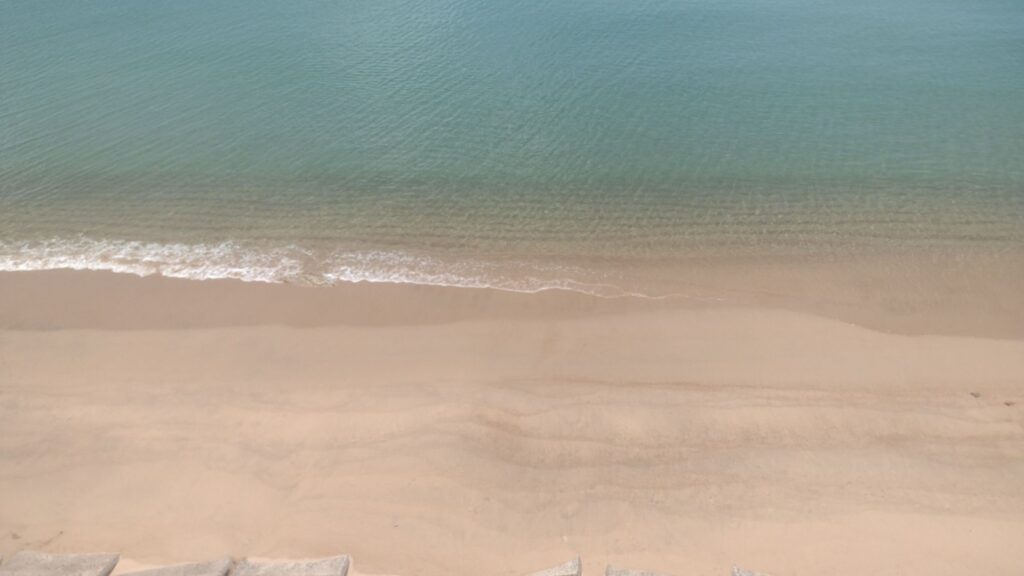
Bai-Mon Beach | A pristine beach that is best seen from the picturesque Dai Lanh Lighthouse. The coastline here is considered some of the prettiest in Vietnam. There’s a small access fee and no natural shade, so bring a sun umbrella if you have one. I’m unsure if it’s an all-year thing, but swimming isn’t allowed.
MAKE YOUR WAY UP TO NHAN TEMPLE
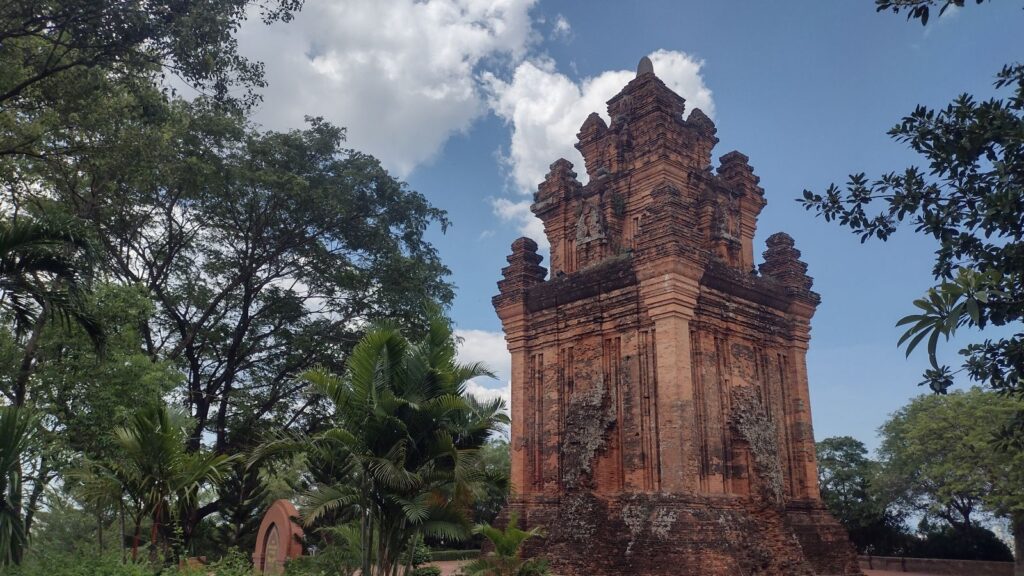
Tuy Hòa City is home to one of my favorite Cham towers, Nhan Temple.
There isn’t anything too extravagant about it, at least not like Mỹ Sơn Sanctuary or some of Vietnam’s other remnants from the Champa Kingdom. However, I found the short walk uphill to be pleasant and the views from the top to be the best in the city. You get an almost 360-degree panorama of Tuy Hòa City, the coastline, and Chop Chai Mountain (Núi Chóp Chài).
The Nhan Temple itself is gorgeous too, with restored red brick that makes it look like the original from the 12th century. It’s over 20 meters tall, has intricately designed roofing, and a satisfying symmetrical design.
Before visiting, I suggest doing a little research on the Champa civilization to learn more about the ancient towers. There isn’t much information here, though, about halfway up Nhan Hill, you’ll come across a picture gallery and some old finds from the site.
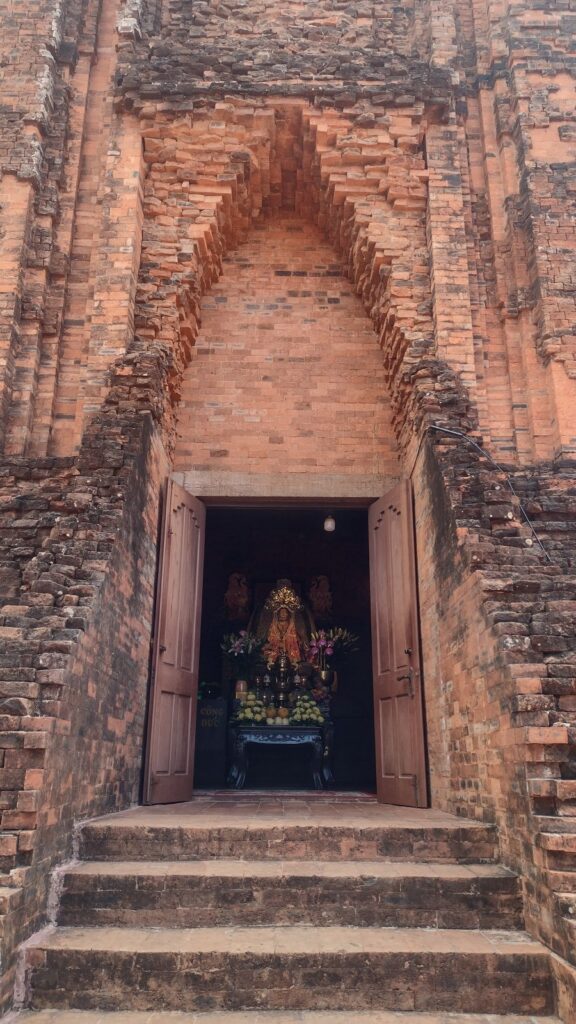
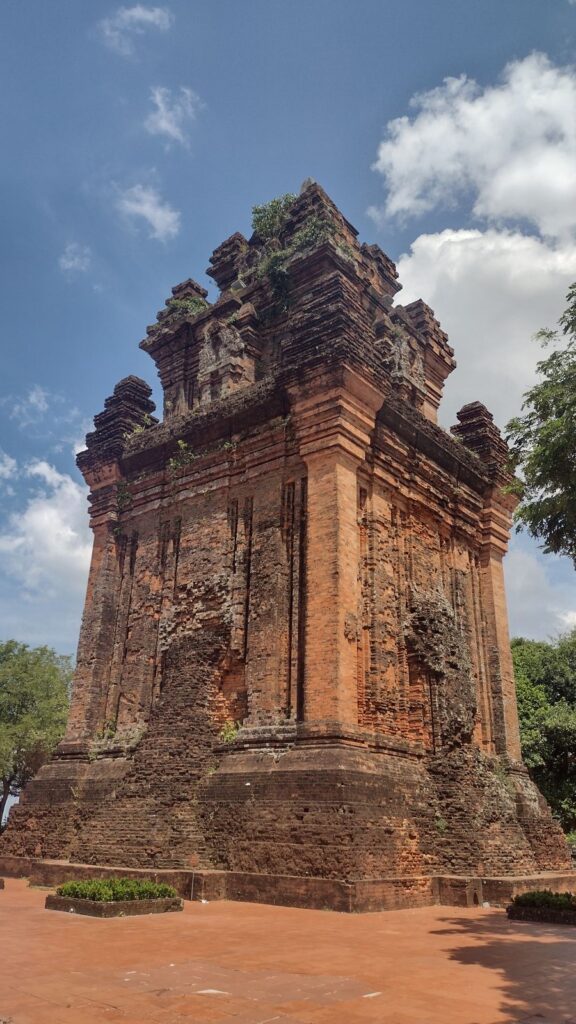
The hill is also home to a Buddhist temple, a small sculpture garden, and the unique Martyrs Memorial, which was currently under reconstruction during my visit.
Travel Tip | If you’re planning to visit Nhan Temple’s small indoor chamber, it’s recommended to wear modest clothing.
Entry | Free
Electric Cart | 10k VND one way and 15k VND round trip
STOP BY THE NGHINH PHONG TOWER
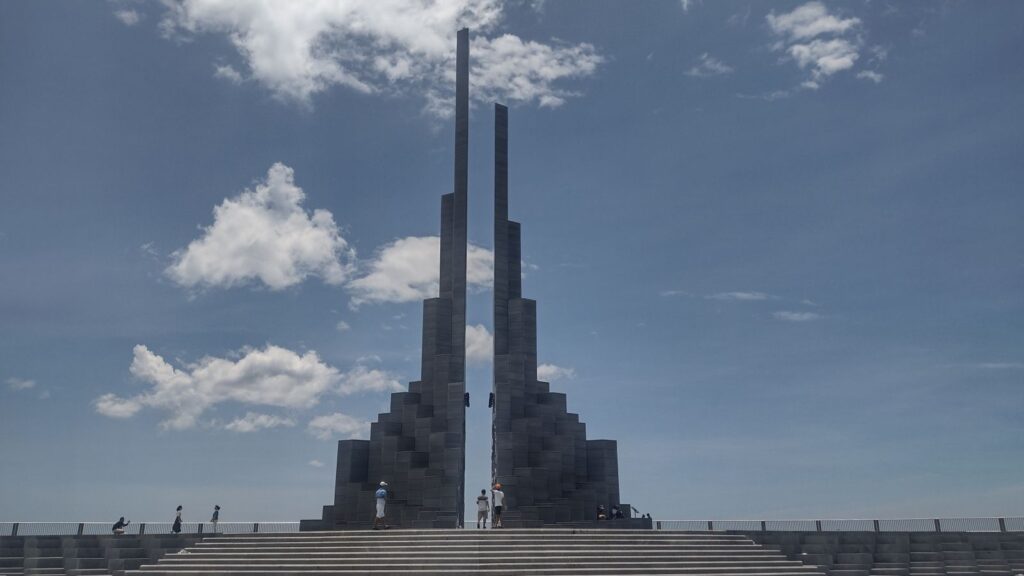
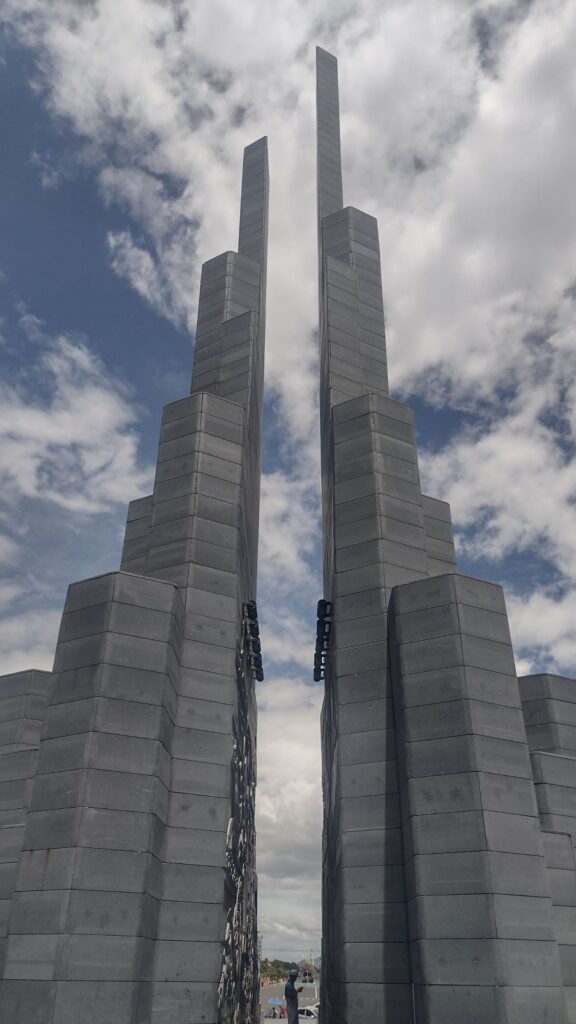
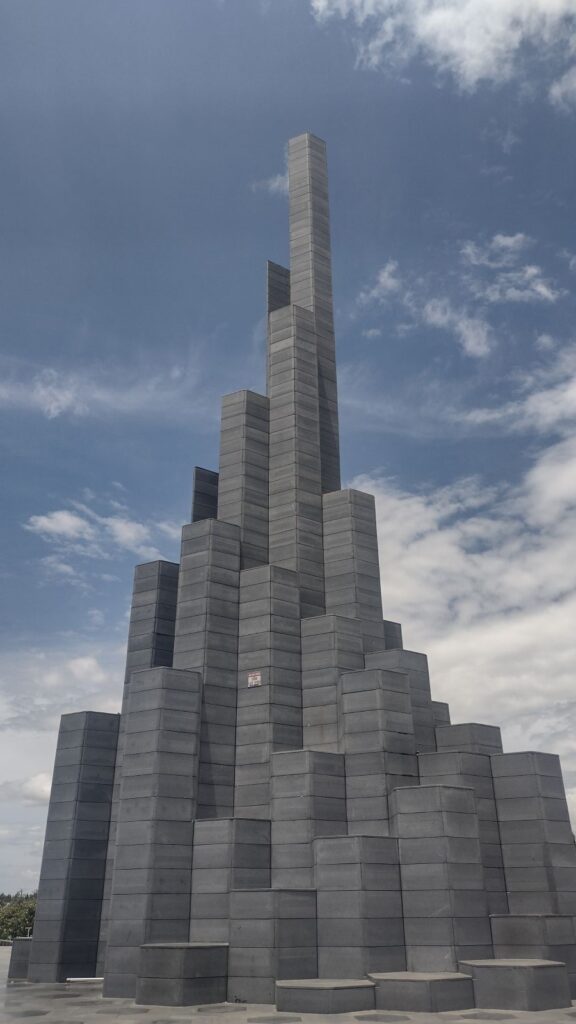
The modern, stylish Nghinh Phong Tower is the most iconic sight along Tuy Hòa Beach. Sitting at the end of Nguyen Huu Tho, just above the calm ocean waters, it was designed with Phu Yen’s culture and history in mind.
From afar, the monument appears to be a single tower. However, it’s actually two separate towers, one reaching 35 meters high and the other just below that, at 30 meters. These two stand 2 meters apart and consist of large granite stones that replicate staggering steps.
The unique square concept comes from the natural shape of the nearby Ganh Da Dia Reef, while the corridor between the two towers has been carved out with pictures depicting a story from the “Hundred Eggs” legend.
LEGEND OF THE HUNDRED EGGS
A Vietnamese creation myth that involves Lạc Long Quân and his wife Âu Cơ.
Lạc Long Quân was a protector of the people, said to have magical powers and a fascination with the ocean. His father was a tribal leader, and his mother was a dragon princess, and he taught the ancient Vietnamese lessons in agriculture and architecture so they could flourish as a civilization. Âu Cơ was an offspring of mountain fairies, who, together with Lạc Long Quân, had a hundred eggs which hatched into children.
As a descendant of dragons, Lạc Long Quân longed for the sea. But his wife, coming from a line of fairies, wished to go back to the mountains. So, they separated, each taking 50 children with them, where they lived as one with nature, learned to build homes, cultivate food, and govern.
These children eventually dispersed across the land and are believed to be the ancestors of modern-day Vietnamese people. The first Hùng king of Vietnam’s ancient Hồng Bàng dynasty was said to be their eldest son.
If you find yourself near the beach at night, you can stop by to see the Nghinh Phong Tower light up in a mix of wonderful colors.
Next to it is a beautiful park you can walk through, which also has bathrooms and changing rooms. It can get crowded here in the afternoon as the shadow from the tower creates the only shade on the beach.
Fun Fact | There are 50 stone slabs at the base of each tower that represent the children from the legend.
Entry | The monument is free to see, but the shaded motorbike parking next to it will cost 3,000 VND. I just parked on the street for free and had no issues.
EXPLORE THE FOOD AND COFFEE SCENE
Phu Yen cuisine is very diverse, with a mix of grilled meat plates(mostly pork), fish-based soups, and seafood. If you’re a foodie, you’ll get to taste some truly unique regional dishes, and there’s no better place to do that than in Tuy Hòa City.
TYPICAL PHU YEN DISHES
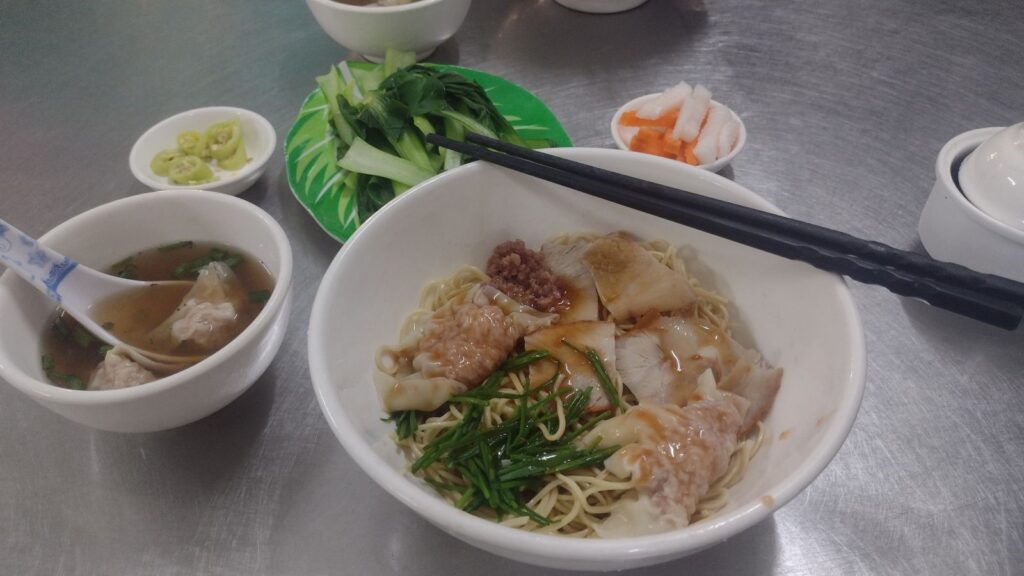
Bánh Canh Hẹ | Chive noodle soup
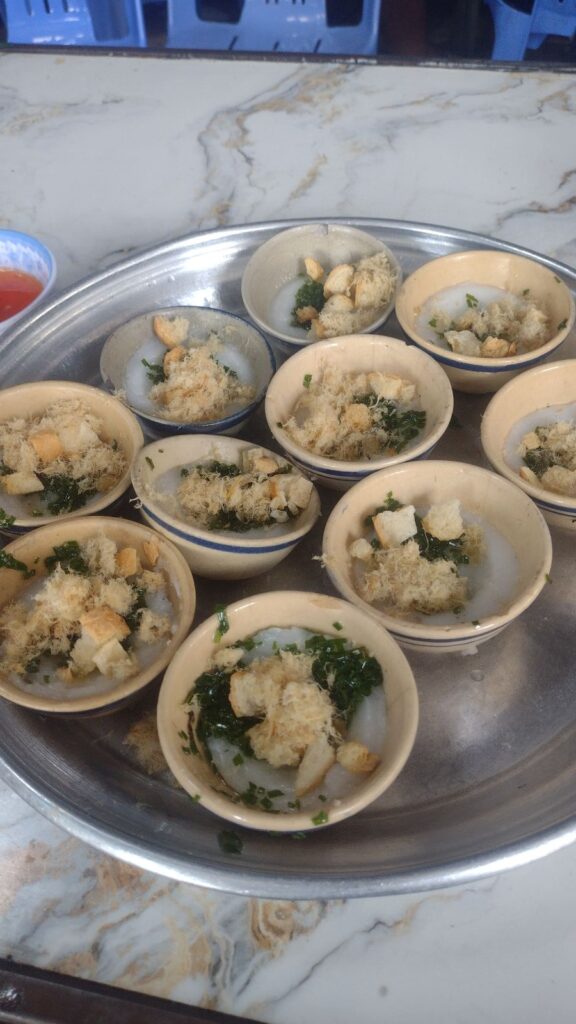
Bánh Bèo Phú Yên | Steamed rice cakes with various savory toppings
Nem Nướng | Grilled pork sausages
Bánh Hỏi Lòng Heo | Rice vermicelli with pork offal
Cơm Gà Phú Yên | Phu Yen-style chicken and rice
Kem Trộn | Mixed ice cream
Hải Sản (Seafood) | Popular seafood dishes include steamed mackerel, raw fish salad, oyster porridge, and tuna eye
RESTAURANTS TO TRY
Bánh bèo Tháp Nhạn 94 Lê Trung Kiên | They serve different variations of rice pancakes. The banh beo was really tasty, and the lady running the place was happy to show me how to eat it properly. It’s right at the bottom of the hill to Nhan Tower.
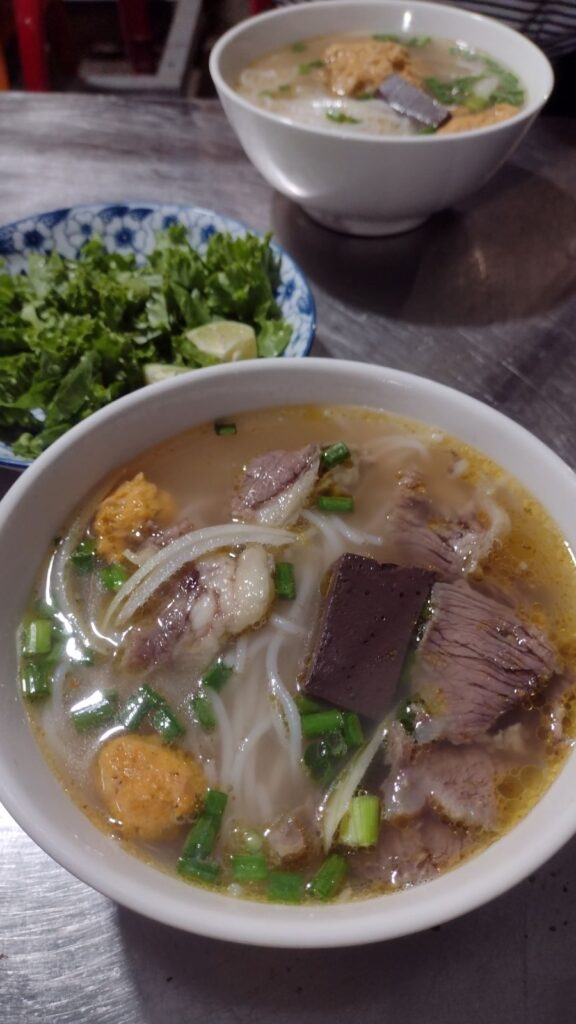
Bún bò Huế O Chắt | Cheap, tasty roadside Bun Bo Hue with a really friendly owner.
Bep Co Do | The chive noodle soup was decent here and lighter on the fish flavor than most other places around town. They’re also known for their broken rice dishes.
Lò Bánh Mì Cô Bé | Simple, delicious banh mi at a very low price. This place always had a line of motorbikers waiting to order when I was there.
Kem nhãn Duy Tân | The go-to ice cream shop in Tuy Hòa. They have the usual flavors like avocado and coconut, but also some more specialized ones like longan. Mixed ice cream with flan, a Phu Yen favorite, is also served here.
CAFES TO TRY
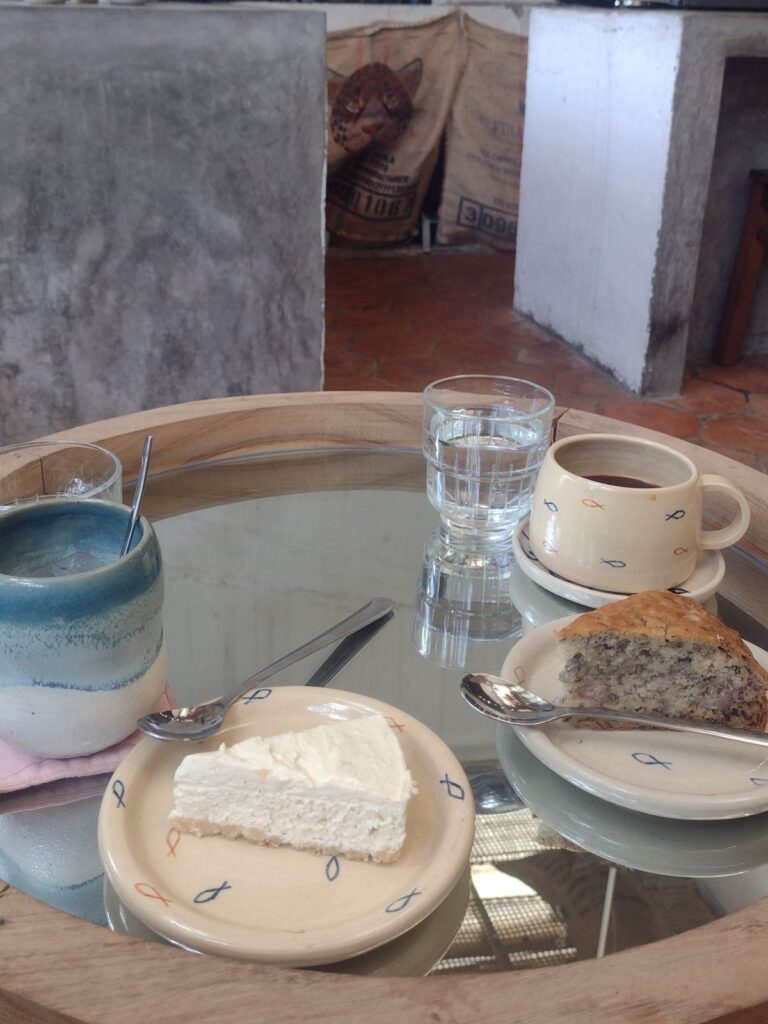
Noonconcept | A slightly higher-end cafe that takes its coffee seriously. It’s one of the best coffees I’ve had throughout my Southeast Asia travels and reminded me a bit of Ome by Spacebar Coffee in Penang, Malaysia. The pastries and cakes are also very nice.
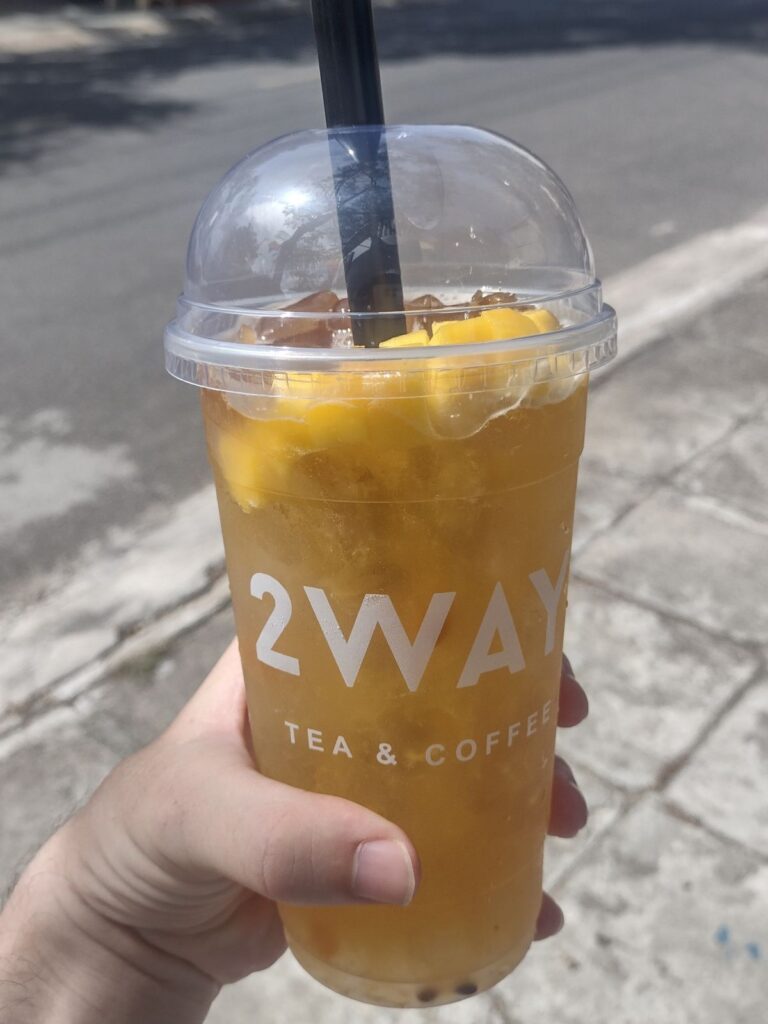
2WAY Tea & Coffee | I had a really nice Taiwanese-style iced bubble tea here that I took to the beach with me. The staff is super friendly and seems to care about the presentation of their drinks.
Bonpy Coffee | A popular local brunch spot with good traditional Vietnamese coffee options.
POP INTO PHU YEN MUSEUM
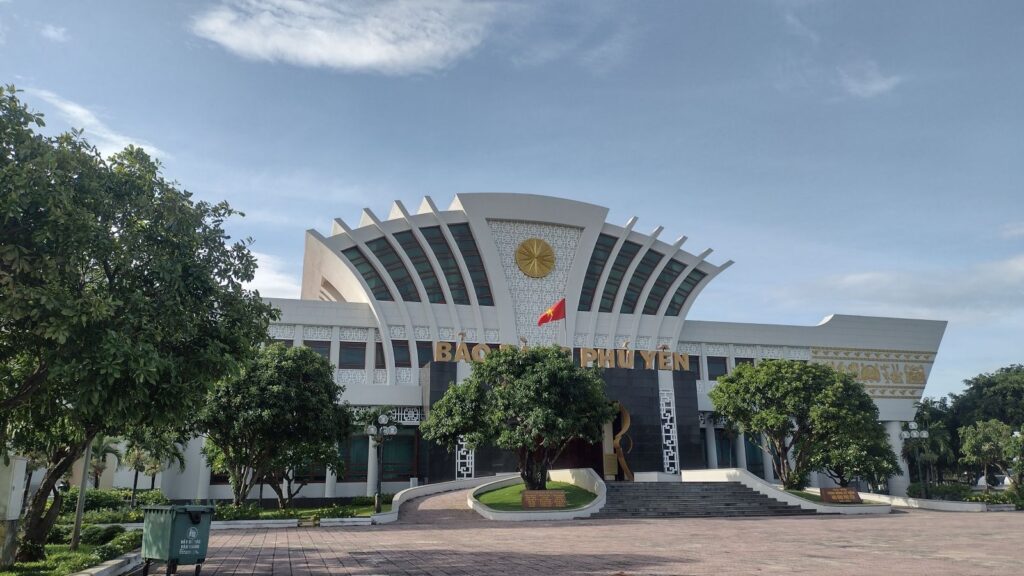
Each provincial capital in Vietnam seems to have a museum, which means Phu Yen’s is located in Tuy Hòa.
Despite the rather spacious building it’s housed in, the Phu Yen Museum has the feel of a smaller museum. You can see some interesting artifacts here, ranging from former military vehicles to ceramics to old coins. Everything is laid out in a sort of open concept with huge rooms with limited things inside them.
You’ll want to tame your expectations during your visit, as most things have limited information about them. But it’s still worth a quick visit, especially if you like older military equipment. I’m hoping that they keep adding more exhibits in the future. This region of Vietnam is especially beautiful, and it would be nice to understand a bit more about its history.
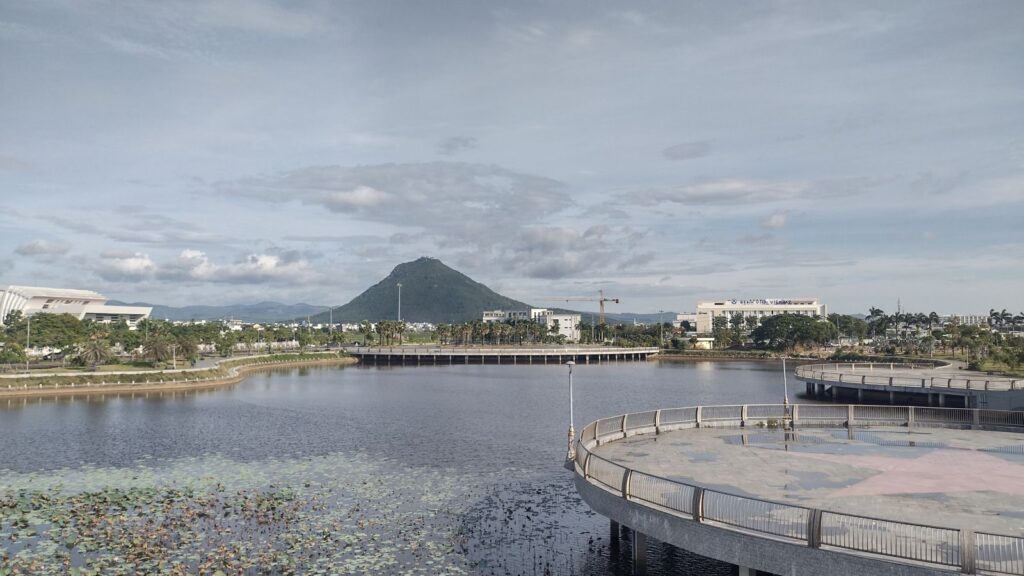
If you find yourself over this way around sunset, make sure to stop by Ho Son Lake afterward. It’s a wonderful place to have a walk and take in the views of the nearby Chop Chai Mountain.
Entry | Free
SEE THE SEA CLIFF OF STONE PLATES
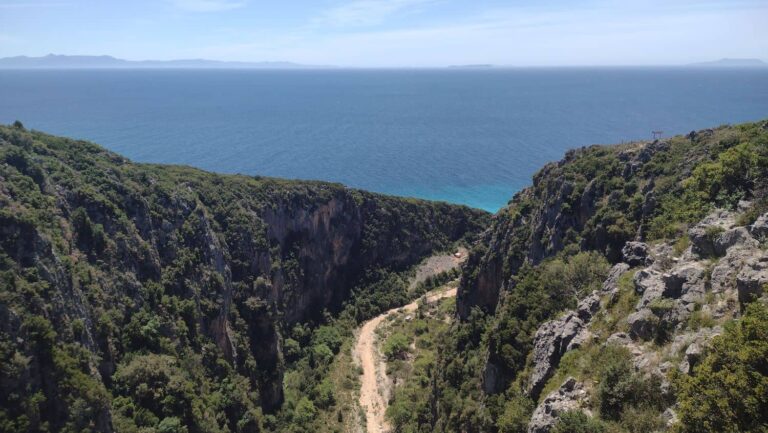
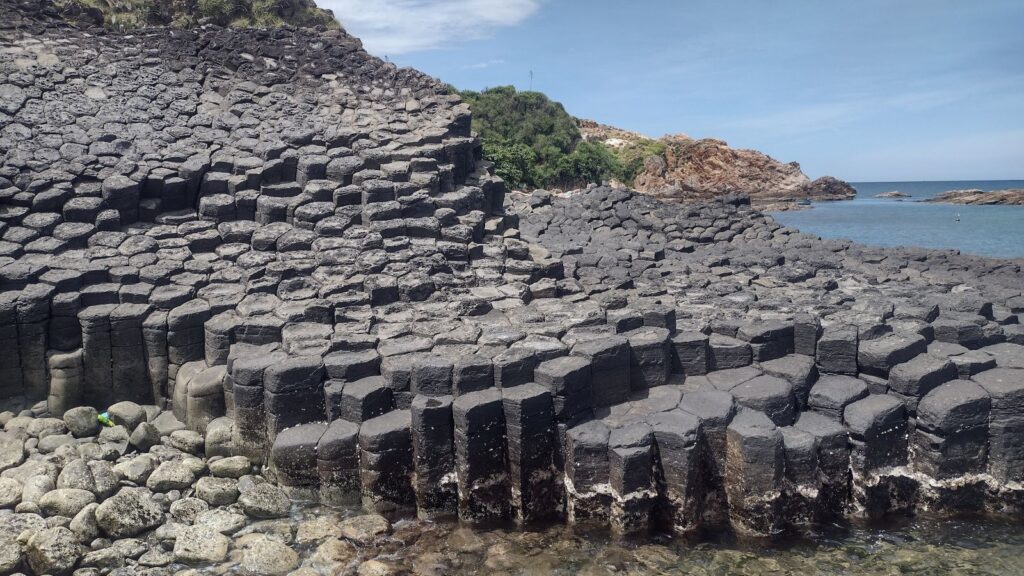
About an hour outside of Tuy Hòa, along the rugged coast, stands one of Vietnam’s most unique natural landscapes. Known as Da Dia Reef (Gành Đá Đĩa), it’s a 50-by-200-meter area of black hexagonal rock columns that formed after a volcanic eruption millions of years ago.
If you’re familiar with the Giant’s Causeway in Ireland, these are a sort of doppelganger.
They’re an awesome spectacle and a place that surprisingly has stayed under the radar. That doesn’t mean you’ll have the place to yourself; hundreds of local tourists still flock here for the photo opportunities of the honeycomb-shaped basalt columns. However, it does have that off-the-beaten-path feel to it, especially when coming early in the day.
DA DIA REEF AND THE PIRATE LEGEND
An “old wives’ tale” claims the little inlet here was a place that a rich man hid his treasure. Pirates discovered this out after seeing a dinner plate and planned a robbery, only to come up empty-handed. So, they lit a fire that lasted for days until a strong wind caused an explosion, throwing them into the air. The next day, the treasure was gone, but in its place were these columns, which looked like stacked dinner plates.
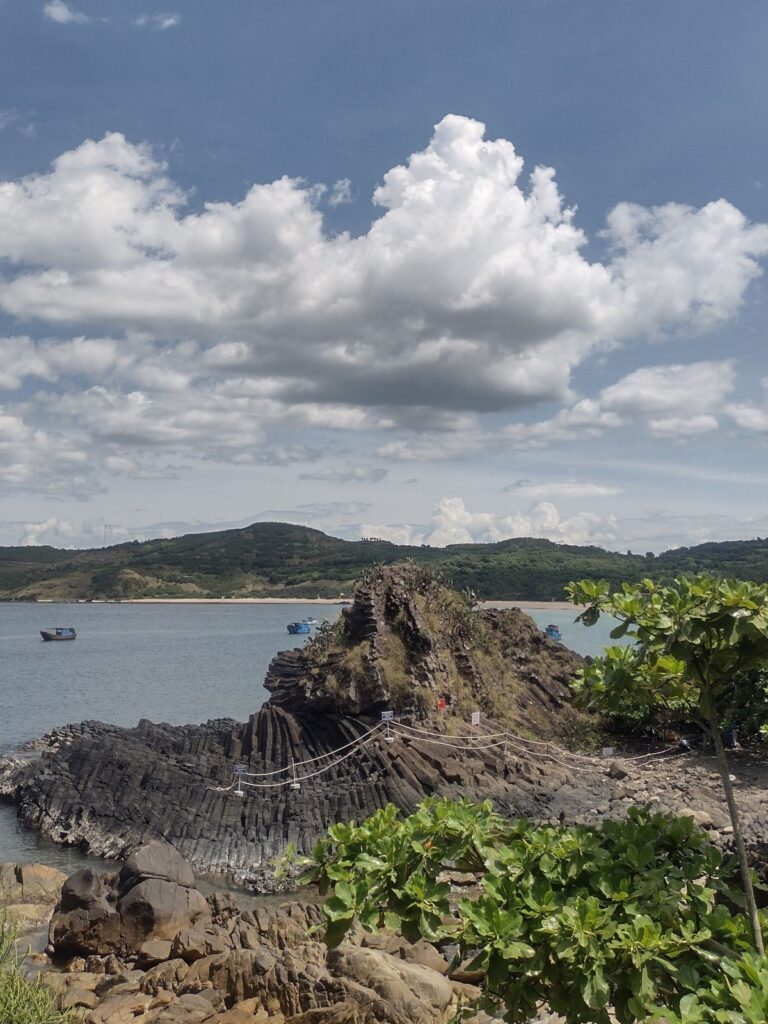
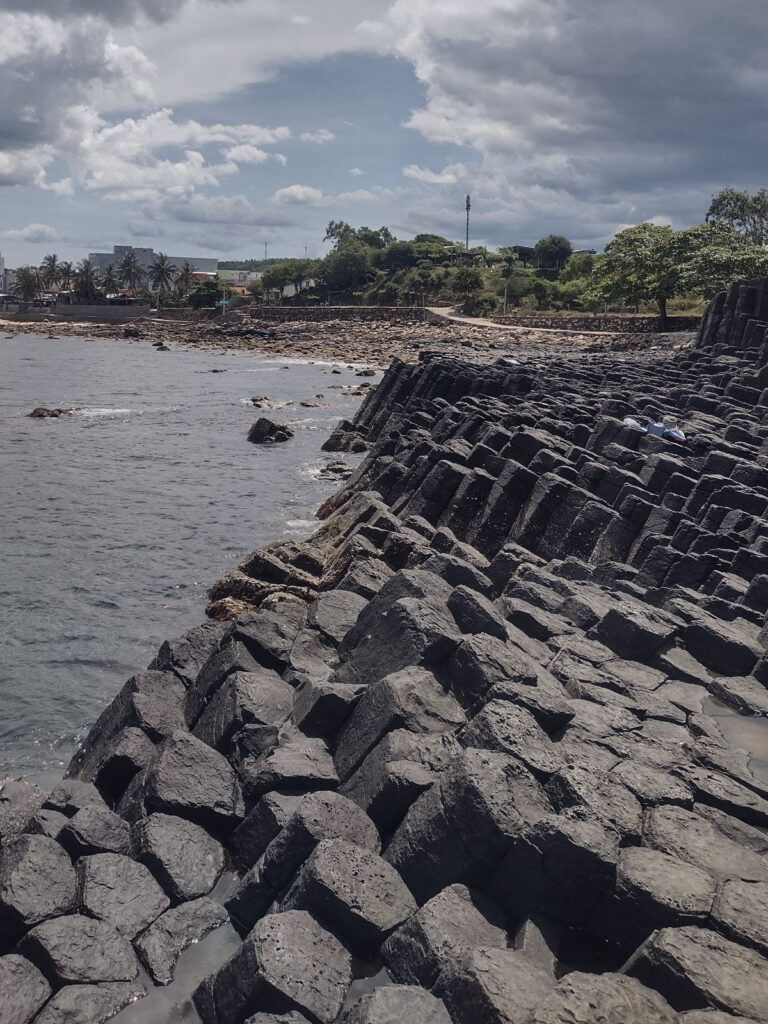
If you have your own transport, I would consider this one of the best things to do in Tuy Hòa. You can easily make a day of it by stopping at some of the sites I mention in this article, including the nearby beach.
Getting to Da Dia Reef | You’ll either need to get here by motorbike rental or hire a driver for the day. It’s about an hour north of Tuy Hòa off the CT01/QL1A highways. It’s best to check on maps before going, because some of the routes there are known for closing down. Tours go here, but usually from Quy Nhon. I mention those in the next section.
Entry | 40,000 VND
Motorbike Parking | 3,000 VND
MOTORBIKE TO MANG LANG CHURCH
I didn’t even know of Mằng Lăng Church until the motorbike ride home from Gành Đá Đĩa. My partner mentioned stopping by what looked like an interesting church, and after a minute of deliberation, we headed in its direction.
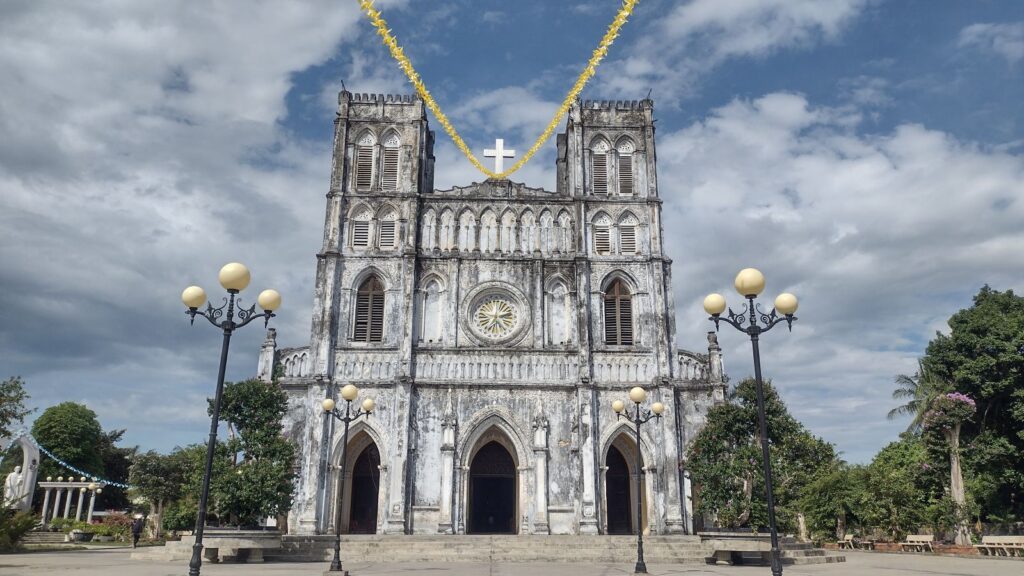
And I’m glad we did; the church is absolutely stunning. It’s a Gothic-style Roman Catholic church with over a century’s worth of history.
Built in 1892 by a French missionary, it stands in the native village of Andrew of Phu Yen, a 17th-century martyr who was beheaded for his beliefs.
It also houses the first Vietnamese book of Quốc Ngữ, which is the Latin-script alphabet that became the de facto form of modern-day Vietnamese writing. Alexandre de Rhodes created the book in the early 1600s.
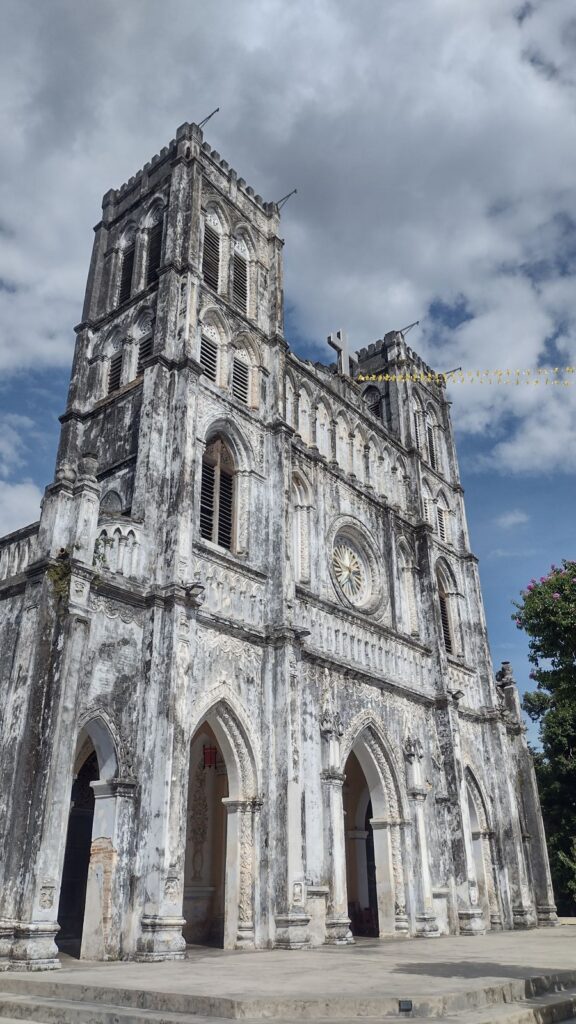
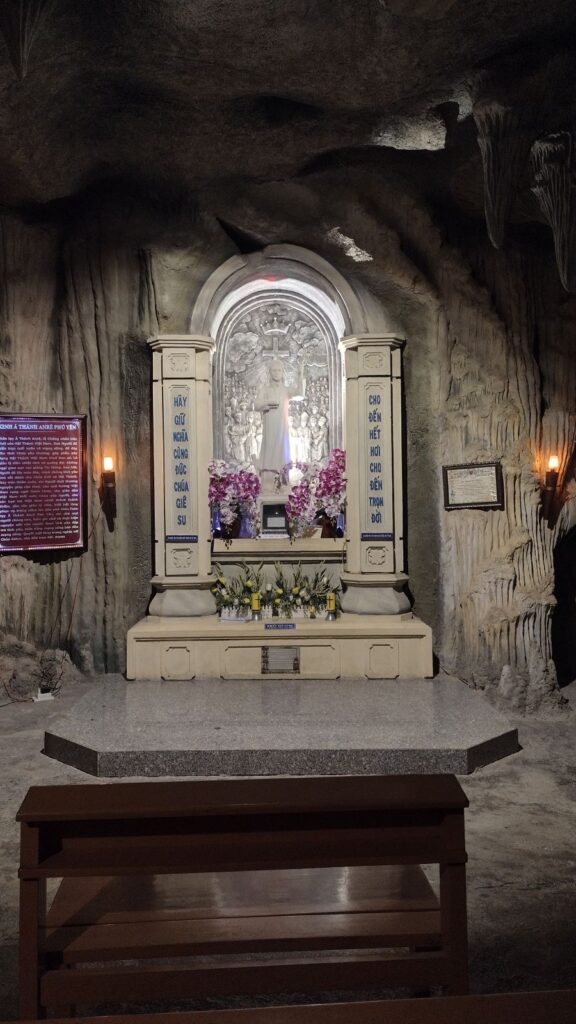
The church grounds consist of the beautiful old Mằng Lăng Church, another colonial-era building, numerous modern statues, and a small cave chapel.
It’s still an active church to this day.
Getting to Mằng Lăng Church (maps) | The best way to visit Mằng Lăng Church is by motorbike. It’s right off the main CT01 and DH31 Highways, but there are often road closures, so check online before going for the best route. It takes about an hour, but it is the perfect place to combine with Gành Đá Đĩa. Alternatively, you can join a tour that visits both the reef and church, but only if you’re coming from Quy Nhon.
VISIT BAO TINH PAGODA
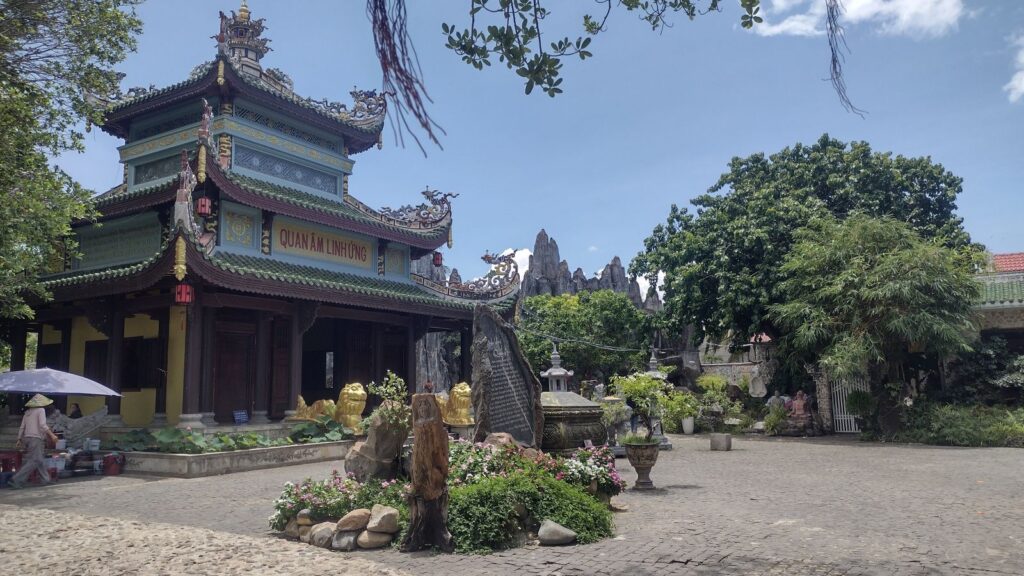
I came across Bao Tinh Pagoda (Chùa Bảo Tịnh) while wandering the streets of downtown Tuy Hòa. It’s a beautiful Buddhist temple with a lovely garden that’s perfect for escaping the mayhem of the noisy streets.
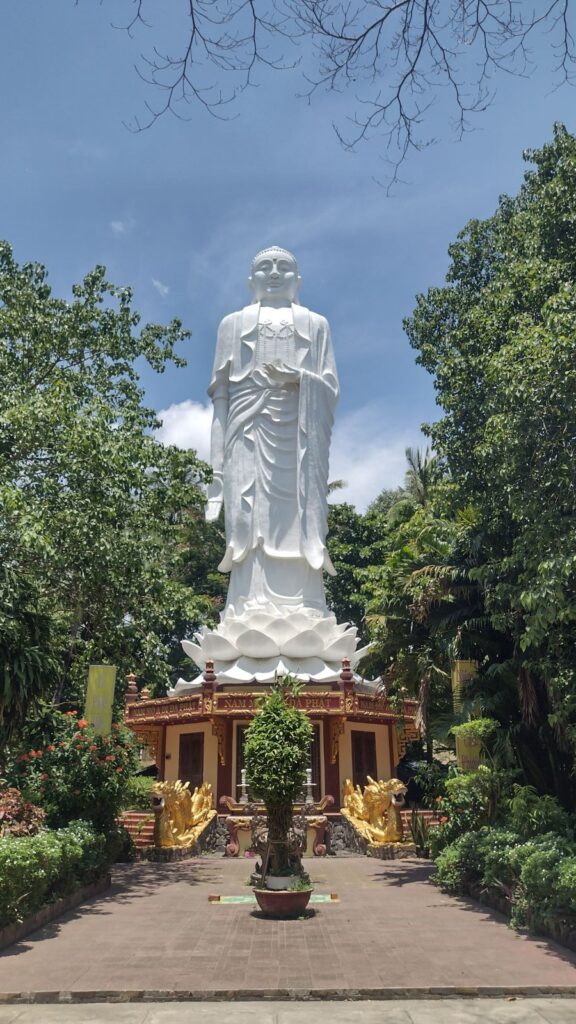
The first thing you’ll notice upon walking through the gates is a giant Bodhisattva sculpture overlooking the main temple and gardens. It’s a striking sight, painted a bright white and peaking out above the treeline.
Below it sit dozens of smaller statues, and next to it is the main temple, an intricate multistory complex with a huge prayer hall.
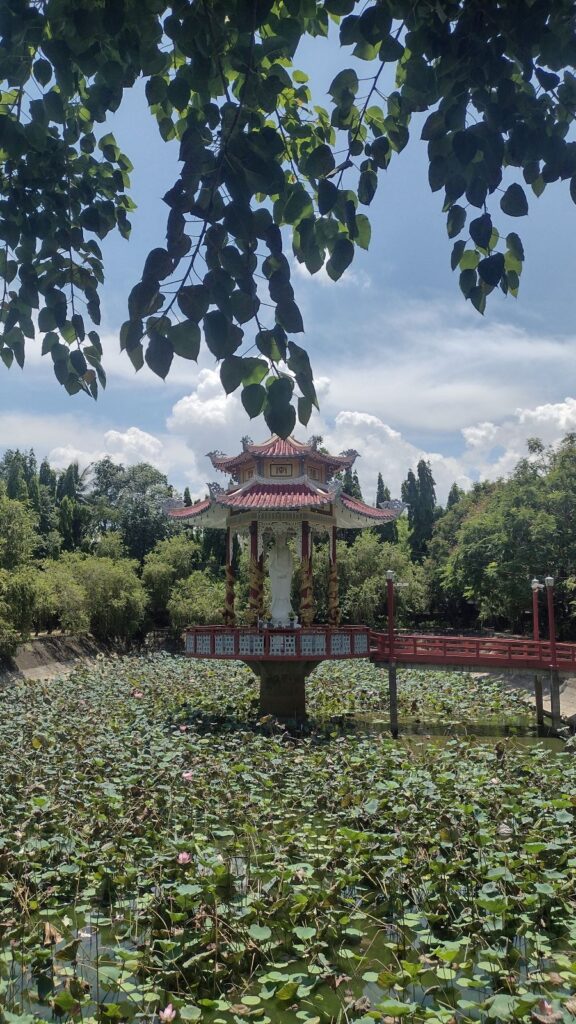
But what makes Bao Tinh Pagoda special is the small lotus pond. In the middle sits a pavilion that can be reached by a small walking bridge. When I was here, a couple of local ladies were tossing fish food into the water from the bridge, and hundreds of large, colorful carp were splashing around at the surface.
If you find yourself in the heart of the city, it’s a great place to stop for a bit of rest and tranquility.
RELAX IN THE GARDENS OF THANH LUONG PAGODA
Tucked away in the sprawling An Chan commune north of Tuy Hòa, Thanh Luong Pagoda (Chùa Thanh Lương) is probably the most unique temple in the area. It becomes apparent as you enter the complex and notice a wonderful mix of quirky sculptures and beautiful greenery.
The most iconic of those sights is a giant Buddha head emerging from a shallow lotus pond. The praying Buddha with sunglasses and a two-story-tall lotus leaf that leans against the temple gives it a run for its money.
This was one of my stops when visiting the ‘Sea Cliff of Stone Plates,’ and I’m happy I decided to have a rest here. Besides the cool architecture, it’s also a perfect cooldown spot on a hot day. There are shady trees near the small lake on the property and a few benches under the overhang.
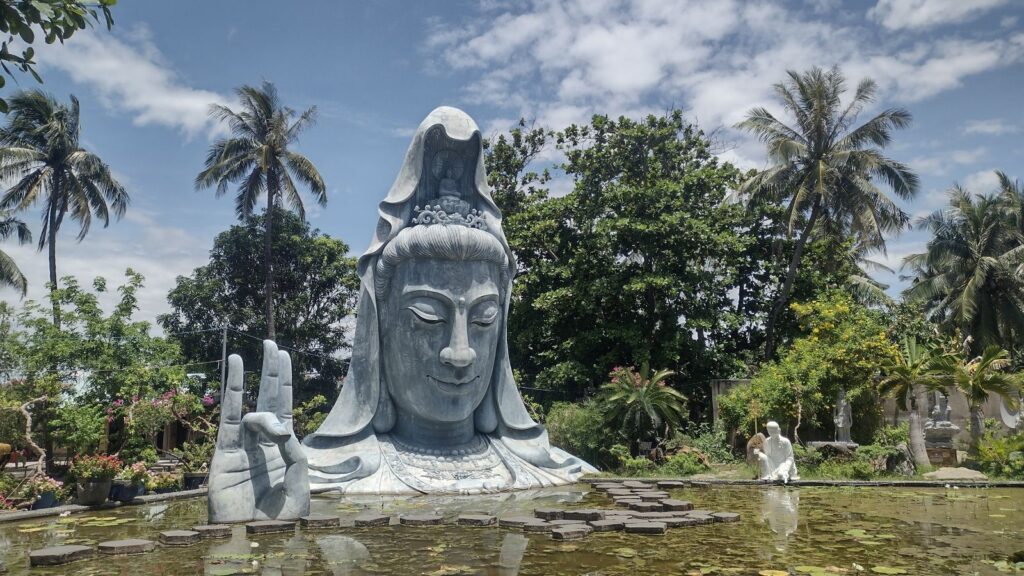
It’s also far enough away from town that the crowds are kept to a minimum. Most who come do so for the sculptures or as a pilgrimage to get close to Quan Am, the bodhisattva of compassion. There is an altar dedicated to her here, as local fishermen found a wooden sculpture of her in the sea and brought it here.
Entrance | Free
Other Pagodas To Visit:
- Bao Lam Pagoda (Chùa Bảo Lâm)
- Minh Son Pagoda (Chùa Minh Sơn)
- Ho Son Pagoda (Hồ Sơn cổ tự)
EXPERIENCE THE CHAOS OF TUY HOA MARKET
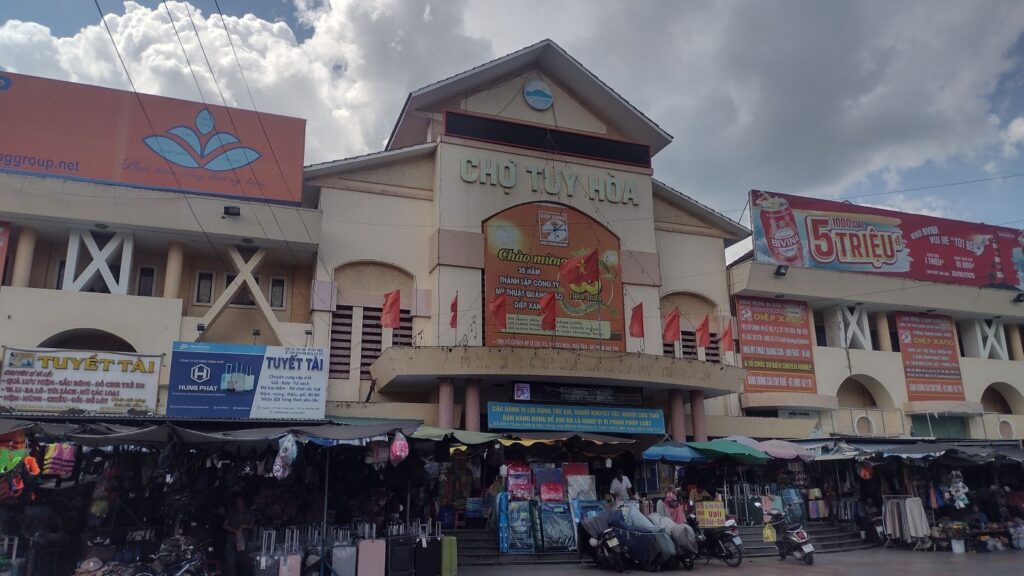
The Tuy Hòa Market is a massive maze of stalls selling everything from clothes to fresh produce. All while maintaining the chaotic charm one comes to expect from a Vietnamese market.
Don’t expect to see many foreigners roaming around, as it’s geared specifically to the locals’ needs. This means no English, plenty of bartering, and an authenticity you won’t find in the touristy spots of larger places like Ho Chi Minh City.
I spent an hour or so getting lost and perusing all sorts of small kiosks. The main portion of the market is set in the large multi-story building that has Chợ Tuy Hòa plastered on its exterior. You’ll find clothing in the front here, plus smaller household items.
In the back is where the butchers and produce are located. It’s a hot mess, with strong smells originating from dried-out fish and freshly cut meats.
This part also houses jarred spices, sweets, and pickled vegetables. It eventually runs into the street next to the market, which has various fresh fruits available for purchase. For the most part, these are sold by the kilo from smiling vendors who are happy to show off their product.
Exploring the Tuy Hòa Market is an experience to say the least, and I highly recommend it!
GETTING AROUND TUY HOA
If you’re in the city for a beach holiday and just plan to see nearby attractions, you can easily get by walking, grabbing a taxi, or using Grab. But, to fully see Tuy Hòa and many of the day trips I mentioned above, your best bet is renting a motorbike or car. This can usually be arranged by your accommodation. Motorbike rentals are usually around 150k VND, not including petrol.
When you arrive/depart Tuy Hòa by bus, it’ll most likely be from the Phu Yen Busline Transportation Station (maps). This has various long-distance buses to cities like Ho Chi Minh City, Dalat, Danang, Kon Tum, and Quy Nhon.
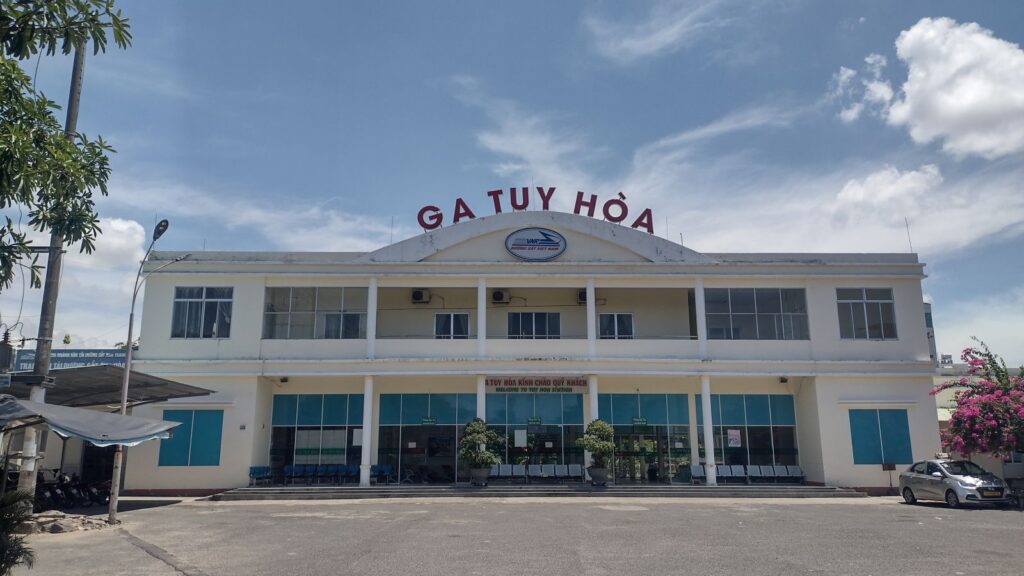
If you’re arriving/departing by train, then you’ll end up at the Tuy Hoa Railway Station (maps). From here, you can head anywhere north or south that is on the Vietnam railway. I suggest buying tickets in advance at either the bus station or online.
There are a few online ticketing services you can use, which I found on The Man in Seat 61 website. He keeps everything up to date and links to the official websites for each option, which I found to be a useful tool during my travels. This includes the official dsvn.com website, which is good for timetables, but doesn’t currently allow you to purchase tickets with a foreign bank card. He also shares a list of the unofficial Vietnamese railway websites.
WHERE TO STAY IN TUY HOA CITY
NẮNG HOMESTAY | A family-run homestay that’s perfect for travelers on a budget. My partner and I stayed here for a week and really enjoyed the location, the rooms, and the cleanliness. They do motorbike rentals and have filtered water in the kitchen downstairs.
Paradise Hotel & Homestay | Convenient for those planning to travel to/from Tuy Hòa by train. It’s a bit far from the beach, but it’s close to the city center and has modern amenities at a reasonable price.
Sala Tuy Hoa Beach Hotel | They offer a range of rooms from mid-tier to luxury at a convenient location near Tuy Hòa Beach. If you’re looking for a beach resort-type vacation, it’s a really nice option.
AMBERGRIS | A stylish boutique hotel close to the beach and Nghinh Phong Tower. They have an on-site restaurant, friendly staff, and some rooms offer indoor pools.
For more options, check here.
MORE VIETNAM GUIDES: